
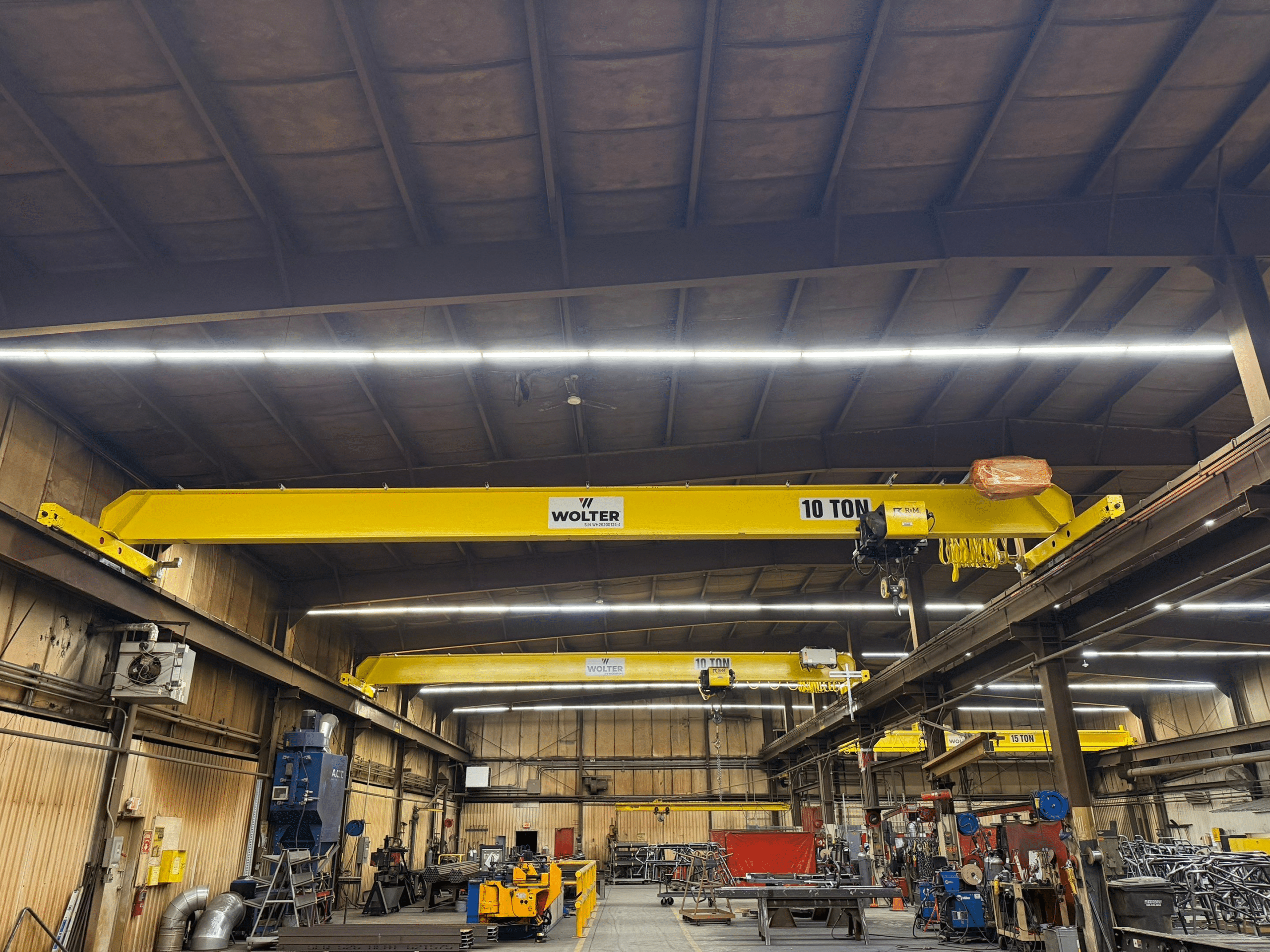
Bridge Cranes and Overhead Lifting Systems
Bridge crane systems, runway engineering, and turnkey installation for Midwest manufacturers that need reliable hook coverage, clean field execution, and a crane partner that understands the complete load path.
A Better Crane Starts With The Building
A bridge crane is not just a bridge, hoist, and runway. It is a load path, operator workflow, structural question, power path, installation plan, and long-term service responsibility.
Overhead crane selection involves three separate decisions: how the bridge runs, how the bridge is built, and how the load moves. Underhung and top-running describe the running style; single-, double-, multi-girder, and truss describe the bridge; hoist trolleys, powered monorail carriers, and interlocked transfers define load movement. IMH coordinates the crane, rail, supports, electrification, controls, installation, and commissioning around the building and load path.
Bridge Crane Decisions That Matter
Running Style
Top-running and underhung describe how the bridge interfaces with the runway. The building, wheel loads, headroom, hook approach, and required coverage help decide which is practical.
Bridge Construction
Single-, double-, multi-girder, workstation, jib, and gantry arrangements address different capacity, span, duty, service-access, and structural conditions.
Load Movement
Hoist trolleys, powered carrier monorails, switches, interlocks, electrification, controls, and transfer points determine how a load lifts and travels through the work area.
Runway Planning Is Where Good Crane Projects Separate
Runway alignment, column placement, rail condition, bracing, end stops, foundations, and clearances all affect how a bridge crane travels and how long it performs.
For existing buildings, IMH reviews what can be reused, what needs to be modified, and when a freestanding runway may create a cleaner long-term path than forcing the crane into the wrong structure.
Start With A Buildable Plan
Before budget, downtime, or engineering time is committed, the right project details need to be clear. IMH connects the desired outcome with the field conditions that decide whether the system can be installed cleanly and perform reliably after startup.
That means collecting photos, drawings, measurements, production goals, safety requirements, shutdown limits, and maintenance concerns early. It also means explaining tradeoffs in plain language: what should be engineered now, what can be phased later, what needs structural review, and what information is still missing before a final recommendation is responsible.
What IMH Needs To Quote A Bridge Crane
These details help define the bridge, hoist, runway, controls, installation plan, and structural questions.
| Quote input | Why it matters |
|---|---|
| Capacity and load details | Determines crane class, hoist, bridge, end trucks, wheel loads, runway loads, and structural requirements. |
| Span and runway length | Defines coverage area, bridge deflection considerations, rail alignment, support requirements, and building fit. |
| Lift height and headroom | Controls hoist selection and whether the hook can clear the work below. |
| Duty cycle | Separates occasional maintenance lifting from repetitive production lifting and helps define the required service class and component selection. |
| Controls and electrification | Pendant, radio, variable speed, conductor bar, festoon, disconnects, and safety zones affect operator workflow. |
| Building steel or freestanding support | Determines whether existing structure can support the crane or runway columns are needed. |
| Installation conditions | Access, rigging, power, shutdown windows, and safety rules drive field execution. |
Crane Planning Questions
The best crane conversations move from load weight into how the work actually happens.
Runway And Support Steel Should Preserve The Plant
Bridge crane and runway support decisions affect more than the lift. Column placement, runway support, bracing, and access below the crane can either support production or create new obstructions.
IMH approaches crane support and runway planning with the same floor-space discipline used on conveyor structures: keep the lift reliable while preserving useful access for equipment, people, and future changes wherever the building and application allow.
When freestanding runway or support steel is required, the structure needs to look professional and avoid creating bottlenecks on the plant floor.
Project Planning Guides For Crane Buyers
The bridge crane dropdown stays focused on crane types and installation services. These guide pages support high-intent buyers when they are gathering quote, installation, runway, power, and commissioning details.
Crane Selection Is A System Decision
Running style, girder configuration, hoist arrangement, runway support, electrification, controls, and installation access are connected decisions. A crane can be single-girder and top-running, double-girder and underhung, or part of a multi-runway system with carrier transfers.
IMH keeps those relationships visible so the final proposal describes the load path, building interface, operating duty, installation sequence, and service needs rather than relying on one product label.
For bridge crane and overhead lifting projects, that means reviewing capacity, span, hook coverage, runway support, lift height, duty cycle, controls, electrification, building structure, access below the crane, and installation phasing before recommending a path.
The result should be a crane system that can be quoted responsibly, installed cleanly, aligned correctly, operated confidently, and serviced after startup.
Four-Crane Replacement and Installation
The published project record documents removal of existing equipment and installation of two 15-ton double-girder and two 10-ton single-girder bridge cranes. The recorded scope includes field modifications, electrical integration, alignment, operational testing, and commissioning.
A crane that looks right on paper still has to fit the building, runway, power path, operator workflow, and installation window.
Bridge Crane Installation Proof
Installed work is the clearest evidence of IMH’s ability to take a crane project from equipment planning through field commissioning.
Frequently Asked Questions
What size bridge crane do I need?
Start with maximum load, span, lift height, hook coverage, duty cycle, and building conditions.
Should I use single-girder or double-girder?
Single-girder cranes often fit moderate capacities; double-girder cranes are commonly considered for higher capacities or demanding use.
Can an existing building support a bridge crane?
Sometimes, but existing steel, foundations, lateral loads, and clearances must be reviewed.
What is hook coverage?
Hook coverage is the usable area the hoist hook can reach across the crane span and runway travel.
Can IMH help with runway systems?
Yes. Runway planning and installation coordination are part of the crane project conversation.
Ready To Scope A Crane Project?
Send IMH your capacity, span, lift height, target coverage area, photos, and building information so we can help define the right crane path.