Paint and Finishing Overhead Conveyor Systems
Overhead conveyor systems for paint lines, finishing systems, washers, booths, ovens, cure zones, carrier control, dwell time, and retrofit planning.
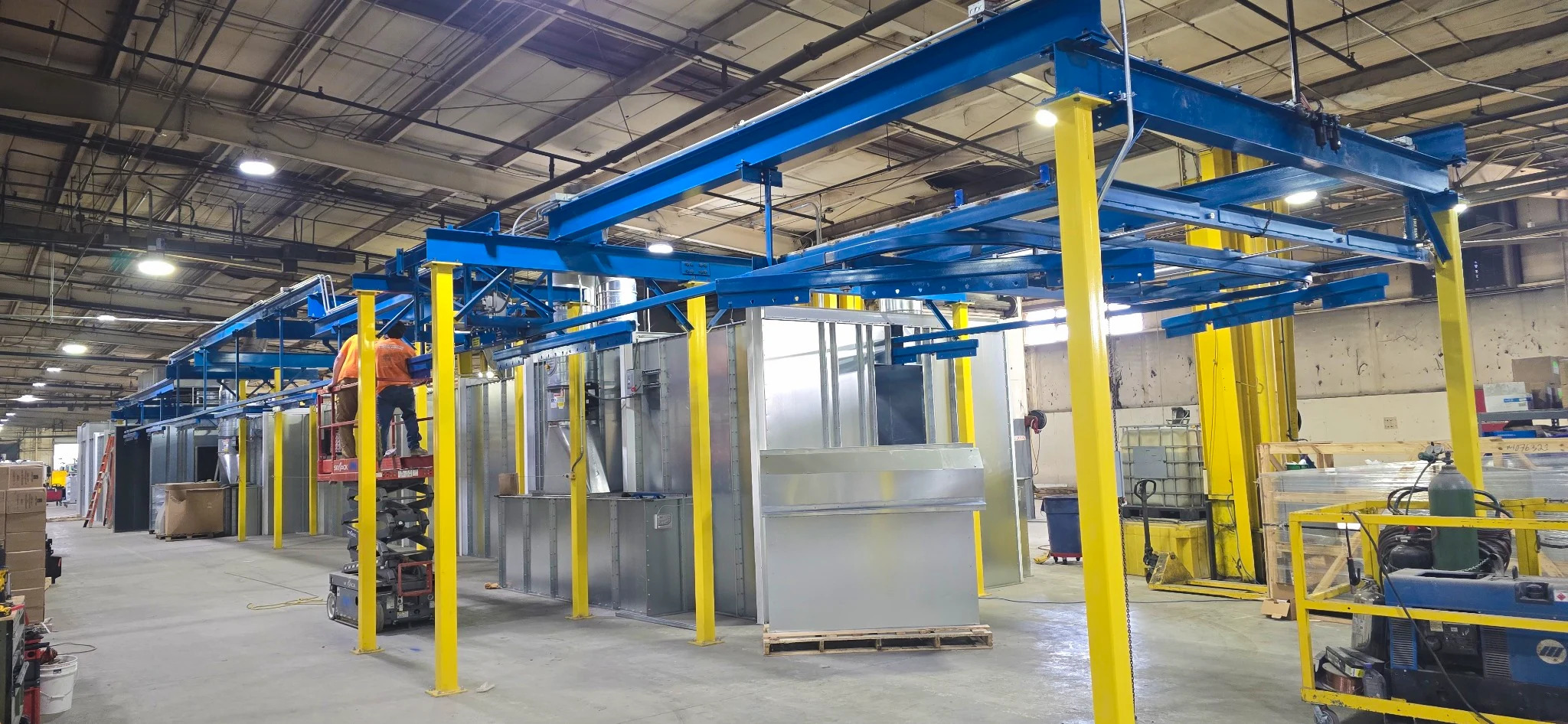
Overhead conveyor and support steel alongside finishing booths at Labrie.
Choose around the work you need to move.
Plan the route and support steel together.
Bring installation into the first plan.
Your project / Next step
Discuss your paint or finishing conveyor
Connect the conveyor discussion to the finishing process. Identify whether you need a new line, added process equipment or a retrofit within an existing layout.
See a conveyor installation projectUseful details for the first conversation
- Part dimensions, hanging orientation and production goal
- Process sequence, dwell times and equipment openings
- Existing layout, plant location and shutdown window
Share what you know. Leave unknown details open.
Email IMH salesThe details shape the system.
Designed for the application
Overhead conveyor systems for paint lines, powder coating, washers, booths, ovens, cure zones, and finishing operations where carrier control, dwell time, and clean installation matter.
A Finishing Conveyor Is Part Of The Process
Paint and finishing conveyor systems need consistent movement through pretreatment, wash stages, dry-off areas, booths, ovens, cure zones, inspection areas, and load/unload points.
IMH helps evaluate new layouts, carrier updates, replacement sections, and retrofits around process equipment that cannot simply move out of the way. The result is a conveyor conversation that protects finish quality, contamination control, production schedule, maintenance access, and the floor space below the system.
Finishing Line Priorities
Line speed, stops, accumulation, and process timing must support pretreatment, washers, booths, ovens, and cure zones.
Carrier design affects masking, contact points, drip spacing, finish quality, operator loading, clearance, and swing.
Drives, take-ups, lubrication points, inspection points, heat-rated components, and high-wear areas need service access after startup.
Retrofit Constraints Matter
Existing finishing lines often have fixed booth openings, washer entrances, oven clearances, utilities, roof steel, load stations, unload stations, and shutdown limits.
IMH reviews field conditions early so the conveyor route, carriers, booth clearance, heat exposure, lubrication strategy, installation sequence, support steel, and service points are realistic before the plant commits to downtime.
Finishing Conveyor Inputs
These details help determine the correct conveyor layout and installation approach.
| Input | Why it matters |
|---|---|
| Part size and orientation | Affects carrier design, booth clearance, oven clearance, drip spacing, and loading ergonomics. |
| Process dwell time | Determines speed, accumulation, stop zones, and power and free requirements. |
| Temperature and environment | Influences component selection, heat-rated parts, lubrication, maintenance, and carrier durability. |
| Washer, booth, and oven layout | Controls route, elevation, transfers, installation sequencing, and process-equipment clearance. |
| Finish protection | Reduces part damage, swing, contamination, contact marks, and rework. |
| Carrier contact and masking | Defines where parts can be supported, rotated, shielded, or touched without creating finish defects. |
| Service points | Paint and washer environments can require extra attention to trolley wheels, lubrication, guards, and inspection access. |
Best-Fit Applications
Paint and finishing conveyor planning starts with the process conditions that affect part quality, uptime, and service access.
Protect finish quality while creating predictable movement through each process stage.
Support Steel Should Not Create A Floor Problem
Paint and finishing lines often already have tight access around booths, washers, ovens, load stations, unload stations, and maintenance areas. A support structure with unnecessary columns can make those areas harder to use after the conveyor is installed.
IMH plans conveyor support steel to preserve usable floor space and equipment access whenever possible. Clean bolt-together support layouts can help keep installation more controlled, reduce field welding, and make future line changes easier.
Finishing Conveyor Confidence
IMH has documented overhead conveyor systems nationwide, including power and free conveyor work connected to paint and finishing applications.
Finishing conveyors need careful planning around dwell time, stop assemblies, accumulation, carrier stability, heat, lubrication, contamination control, booth openings, oven clearance, and service access. IMH connects those realities with structural support and installation planning so the system fits the process and the plant.
A good finishing conveyor protects the product, the schedule, and the people loading the line.
What conveyor is best for a paint line?
It depends on load, route, process timing, oven and booth layout, and accumulation needs.
Can IMH retrofit an existing finishing conveyor?
Yes. IMH can review route changes, replacement sections, carrier updates, and field constraints.
What information is needed for a quote?
Part size, weight, process steps, booth and oven dimensions, line speed, carrier style, photos, and shutdown timing.
Does carrier design matter?
Yes. Carriers affect part orientation, finish protection, operator ergonomics, spacing, and clearance.
Can IMH help with shutdown planning?
Yes. Finishing conveyor work often requires phased installation or shutdown coordination.
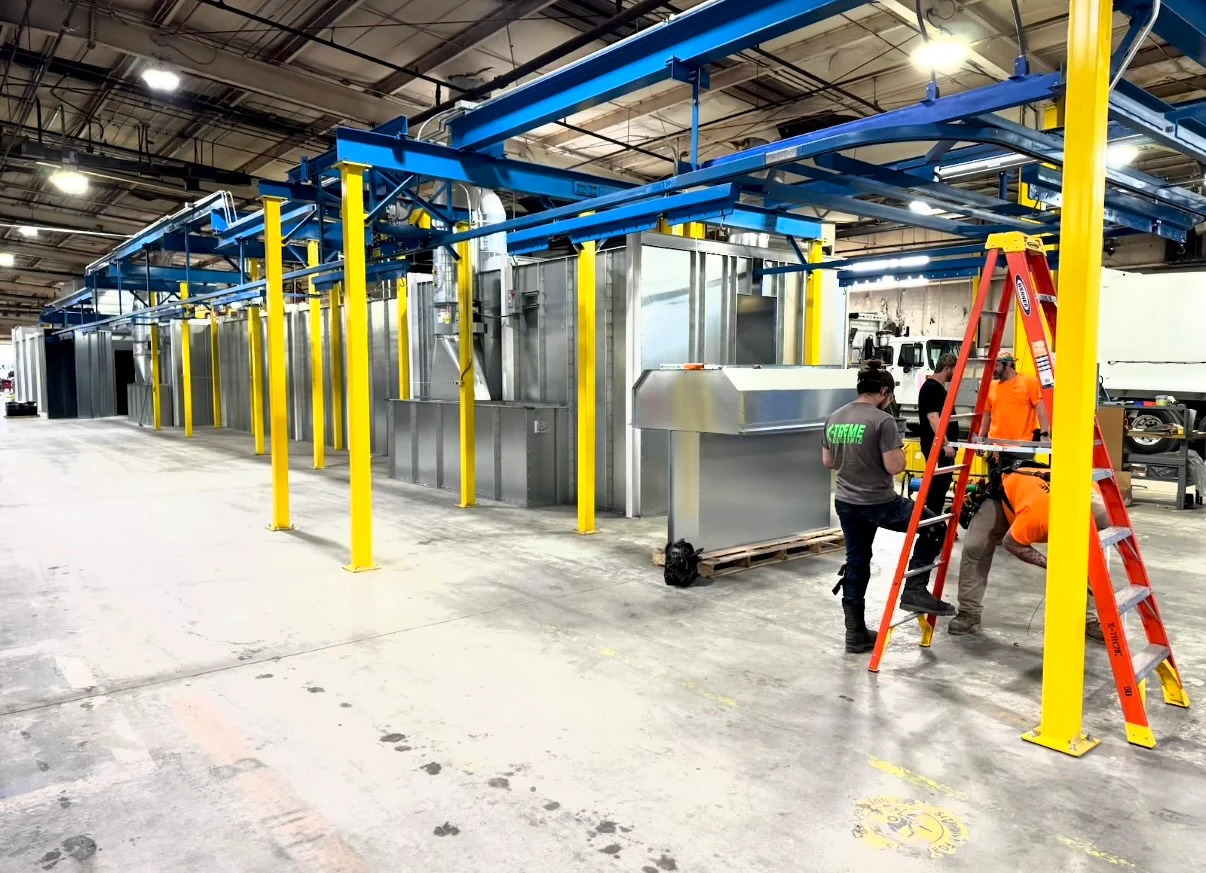
Enclosed-Track Conveyor & RTT Paint System
Design, fabrication, and installation of an enclosed-track conveyor integrated with an RTT paint system, including custom loadbars, support steel, and controls.
- IMH responsibility
- Design, fabrication & installation
Explore the arrangements.
Look closer at the configurations that suit your production.
Bring us the bottleneck.
We’ll help plan the movement.
Share what you move, where it needs to go, and what is holding production back. A photo or rough layout is a useful start. You do not need a finished specification.
Discuss my conveyor project Work through the planning questions Complex flow or unknown rates? Explore an engineering study Or call (812) 363-1819