Conveyor & Crane Maintenance & Repair
Maintenance and repair support for overhead conveyors, bridge cranes, hoists, drives, controls, carriers, and runways. Start with the symptoms and equipment condition.
Know who owns every interface.
Build the work around the site.
Agree what completion includes.
Bring clarity to the work.
Repair Work Should Find The Cause
Maintenance and repair work is most valuable when it finds why the problem keeps happening.
IMH reviews conveyor wear, chain stretch, trolley issues, drive overload, controls, carriers, crane runway concerns, hoist symptoms, access constraints, and safety needs so repair conversations can become better long-term decisions.
Repair Review Areas
Track, chain, trolleys, carriers, drives, take-ups, lubrication, and alignment.
Runway alignment, hoist performance, controls, electrification, and travel symptoms.
Sensors, interlocks, operator stations, drives, disconnects, and safety devices.
Maintenance Data Helps
Photos, part numbers, failure history, downtime timing, controls photos, and maintenance notes can shorten the path to a responsible repair plan.
IMH uses repair conversations to identify whether the plant needs a quick fix, planned repair, retrofit, modernization, or replacement.
Maintenance And Repair Inputs
These details help IMH understand the repair problem.
| Input | Why it matters |
|---|---|
| Problem description | Shows symptoms, frequency, and production impact. |
| System type | Identifies conveyor, crane, controls, hoist, carrier, or support scope. |
| Photos | Help review wear, access, components, and surrounding constraints. |
| Downtime window | Defines whether repair can be planned or urgent. |
| Maintenance history | Shows recurring issues and prior fixes. |
| Safety concerns | Clarifies hazards, lockout needs, and operating limits. |
Common Repair Triggers
Repair planning should separate symptoms from deeper system problems.
Restore reliable operation while identifying whether a larger repair or upgrade is the smarter move.
Repair Access Matters
The best repair plan accounts for how crews reach the equipment and how production restarts.
Maintenance Support
IMH’s maintenance and repair work connects directly to conveyor, crane, retrofit, modernization, and installation planning.
That gives buyers a path from immediate repair toward a better long-term system when needed.
A repair should solve the downtime, not just reset the clock.
Does IMH repair conveyors?
IMH can review conveyor repair needs including track, chain, carriers, drives, take-ups, support, and controls.
Does IMH repair cranes?
IMH can review crane and runway issues within the scope of its lifting and installation work.
What should I send?
Photos, symptoms, system type, failure history, and downtime limits.
Can repair lead to modernization?
Yes. Recurring repair needs often point toward retrofit or modernization.
Can IMH help during planned downtime?
Yes. Planned repair windows should be discussed early.
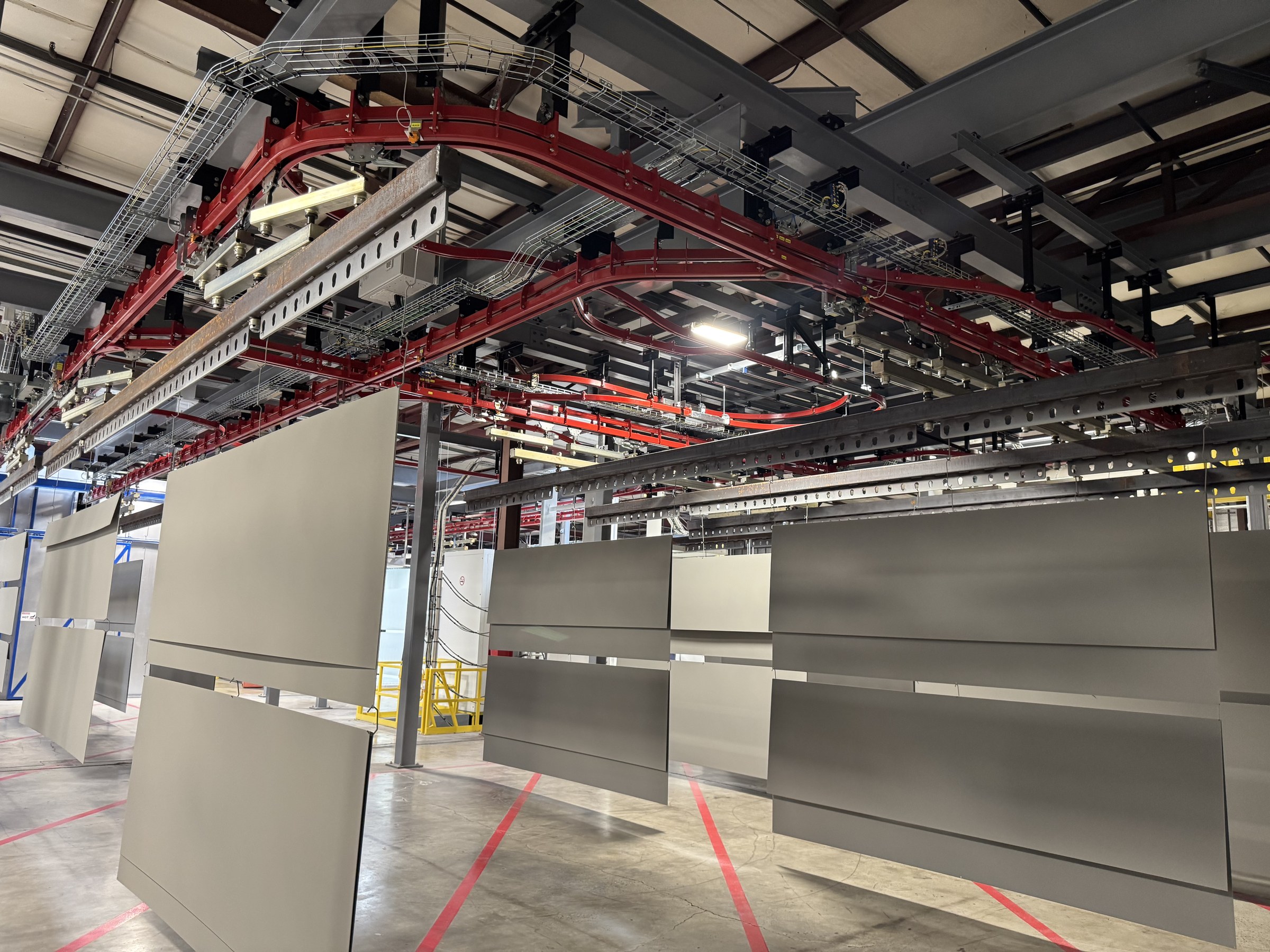
Power & Free. Installed for the Project Team.
Installation of a supplied power-and-free conveyor, with field layout coordination and overhead equipment integration in a finishing area.
- IMH responsibility
- Installation · design and equipment supplied by others
A field scope that fits.
Define delivery, access, assembly, utilities, and handover with the project team.
Tell us what
needs attention.
Share the equipment, symptoms, project location, and production impact. We’ll discuss the service scope and availability. For a time-sensitive need, call directly.
Discuss service Or call (812) 363-1819