
Underhung bridge cranes.
The bridge hangs below the runway beams. Check the support available overhead and the hook approach needed along the sides of the work area.
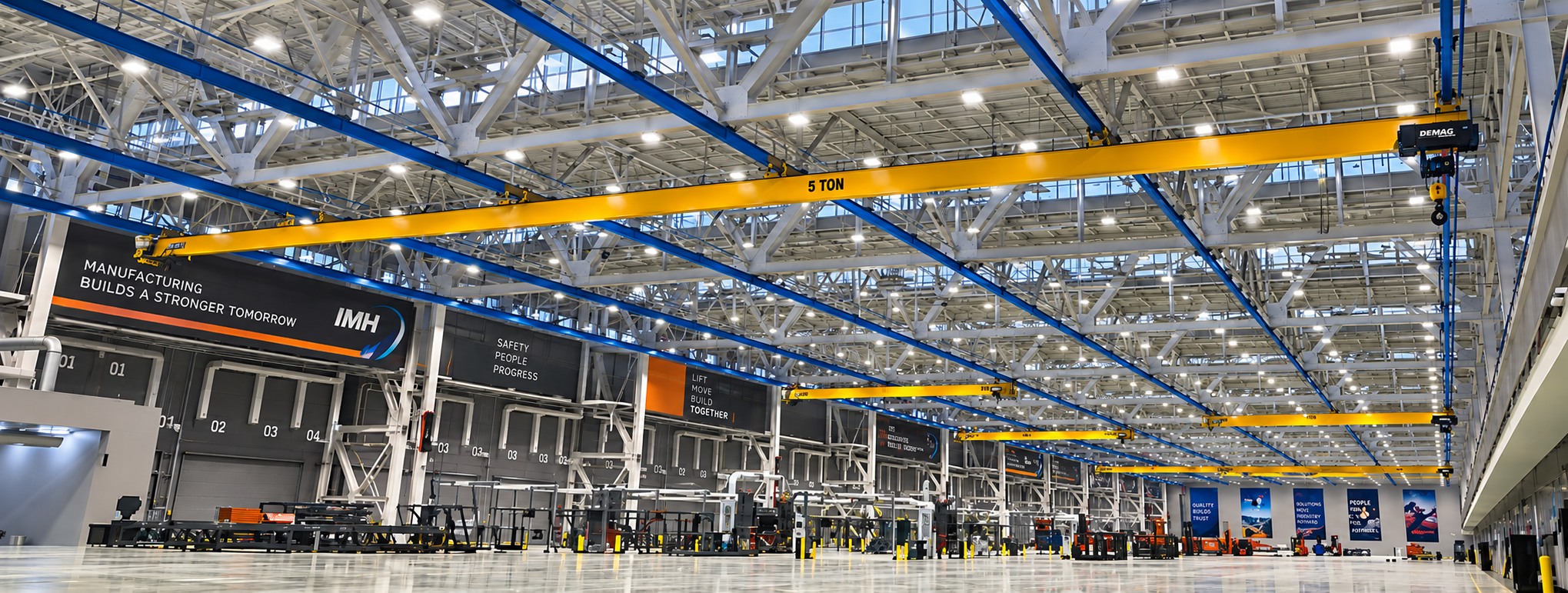
Check the wheel path and overhead steel.
An underhung bridge crane travels on the lower flanges of its runway beams, with the bridge below the runway. Where suitable overhead support is available, this arrangement can reduce the need for floor columns.
Underhung describes how the bridge runs. Single- or double-girder construction and the runway support arrangement are separate decisions shaped by the lift and building.
- Suspension points
- Locate the structural members above the proposed runway.
- Reach near a wall
- On a Demag EPDE, the girder can extend past the runway so the hoist can reach a machine near the wall. Mark that pickup on your plan.
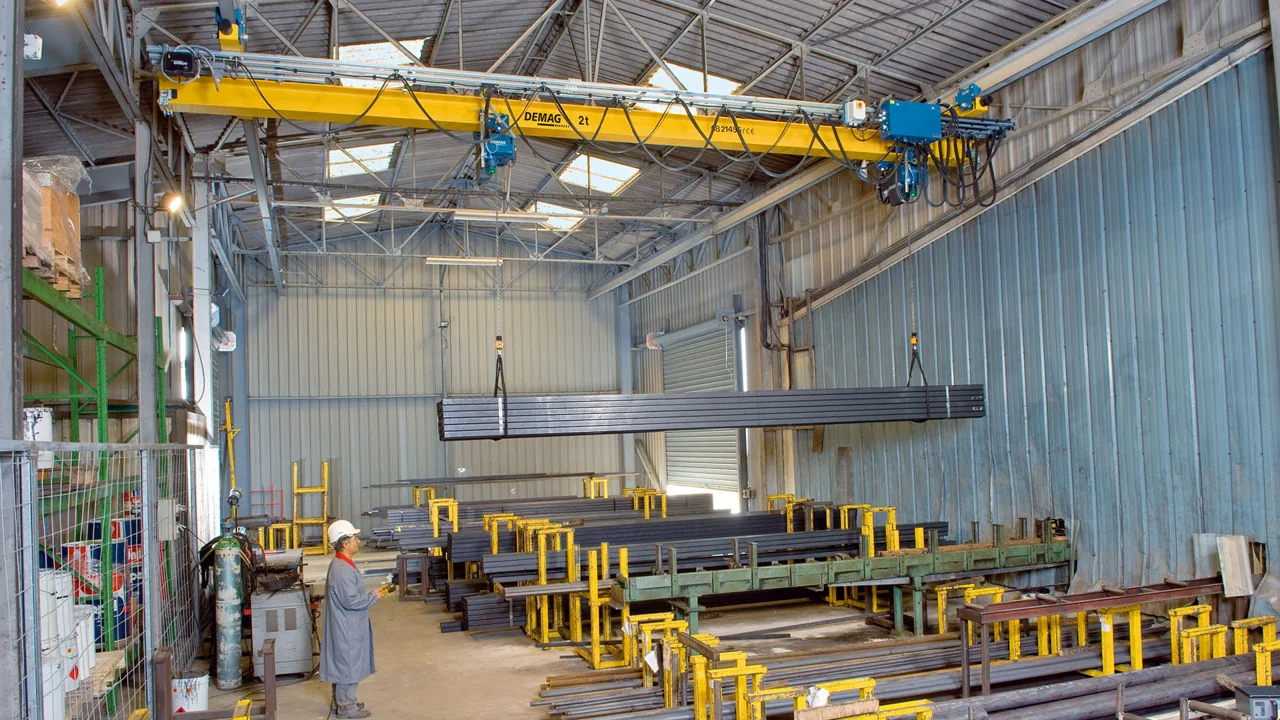
Selection and installation.
The supporting structure sets the limits
Existing steel, connections, bracing, runway attachments, and the load path require review for the proposed crane loads. Overhead steel cannot be assumed suitable support.
Lights, ducts, utilities, doors, and equipment can limit the runway path, hook height, and end approach. These clearances determine whether the crane reaches the required work.
Match the travel path to the operation
Compatible interlocks and monorail transfers can be considered where the handling process requires them.
IMH reviews coverage, supports, controls, and installation conditions together, and compares other crane arrangements when the building makes underhung support impractical.
What to bring for a quote
Mark the hook limits and overhead obstructions on a plan of the work area. A framing drawing helps us assess where the runway could hang.