
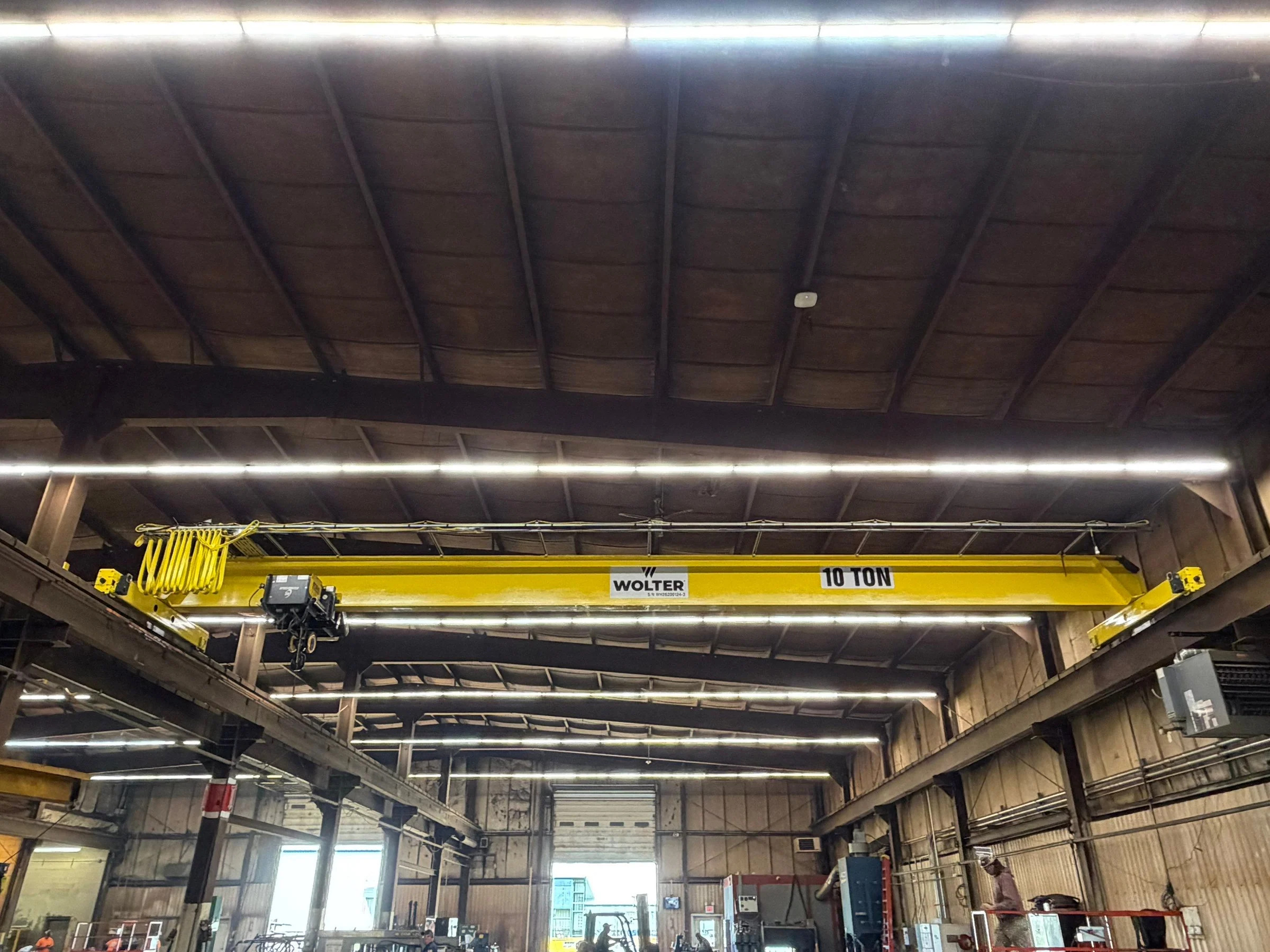
Crane Runway Alignment and Repair
Crane runway alignment and repair planning for bridge crane travel problems, rail condition, support steel, end stops, wheel wear, and long-term performance.
Crane and existing runway interfaces at Lejeune · Equipment context.
Lejeune four-crane replacementKnow who owns every interface.
Build the work around the site.
Agree what completion includes.
Bring clarity to the work.
Runway Problems Often Show Up As Crane Problems
A bridge crane can have travel issues even when the bridge and hoist look acceptable. Runway alignment, rail condition, end stops, support steel, bracing, column movement, and building conditions can all affect how the crane moves.
IMH reviews runway issues as part of the crane system, not as an isolated rail problem. That helps buyers compare adjustment, repair, modernization, or replacement with the installation work required.
Runway Review Areas
Rail condition, straightness, elevation, and end stops affect crane travel.
Runway beams, columns, bracing, and connections carry the loads.
Field work needs safe access, lifts, shutdowns, and startup checks.
Fix The Cause Behind Travel Symptoms
Wheel wear, skewing, hard travel, noises, or repeated drive issues may point back to runway condition.
IMH helps gather evidence, review access, and plan a repair path that accounts for structure, alignment, power, controls, and production timing.
Runway Repair Inputs
These details help define the runway review and repair path.
| Input | Why it matters |
|---|---|
| Crane symptoms | Shows whether the issue is travel, noise, wheel wear, skewing, controls, or load behavior. |
| Runway photos | Helps review rail, clips, supports, end stops, obstructions, and access. |
| Inspection or alignment data | Provides documented measurements, runway survey, elevation, span, or straightness findings when available. |
| Crane capacity and span | Connects runway condition to loads, wheel reactions, and coverage. |
| Building information | Identifies columns, foundations, bracing, connections, and support questions. |
| Shutdown window | Defines how measurement, repair, rail work, or replacement can happen safely. |
Common Runway Warning Signs
Runway issues should be reviewed before they become recurring crane downtime.
Restore reliable crane travel by reviewing the runway, support steel, and field repair plan together.
Runway Repair Is Structural Work
Runway repair decisions need to respect the load path. Rail, beam, column, foundation, bracing, end stop, and connection details all matter.
IMH reviews the repair path with installation access and startup requirements in view so the crane can return to dependable service.
Runway Alignment Planning
Review runway condition before repeatedly replacing crane components.
A crane can only travel as well as the runway lets it.
Why does runway alignment matter?
Poor alignment can cause hard travel, skewing, wheel wear, structural stress, and operating problems.
Can runway issues damage a crane?
Yes. Runway problems can contribute to wheel wear, travel problems, and repeated downtime.
Can IMH review an existing runway?
Yes. Runway condition, support, rail, end stops, access, and repair needs can be reviewed.
Do runway repairs need a shutdown?
Often, yes. Measurement, repair, rail work, or testing may require controlled downtime.
What should I send?
Photos, symptoms, inspection notes, crane capacity, runway length, and building information.
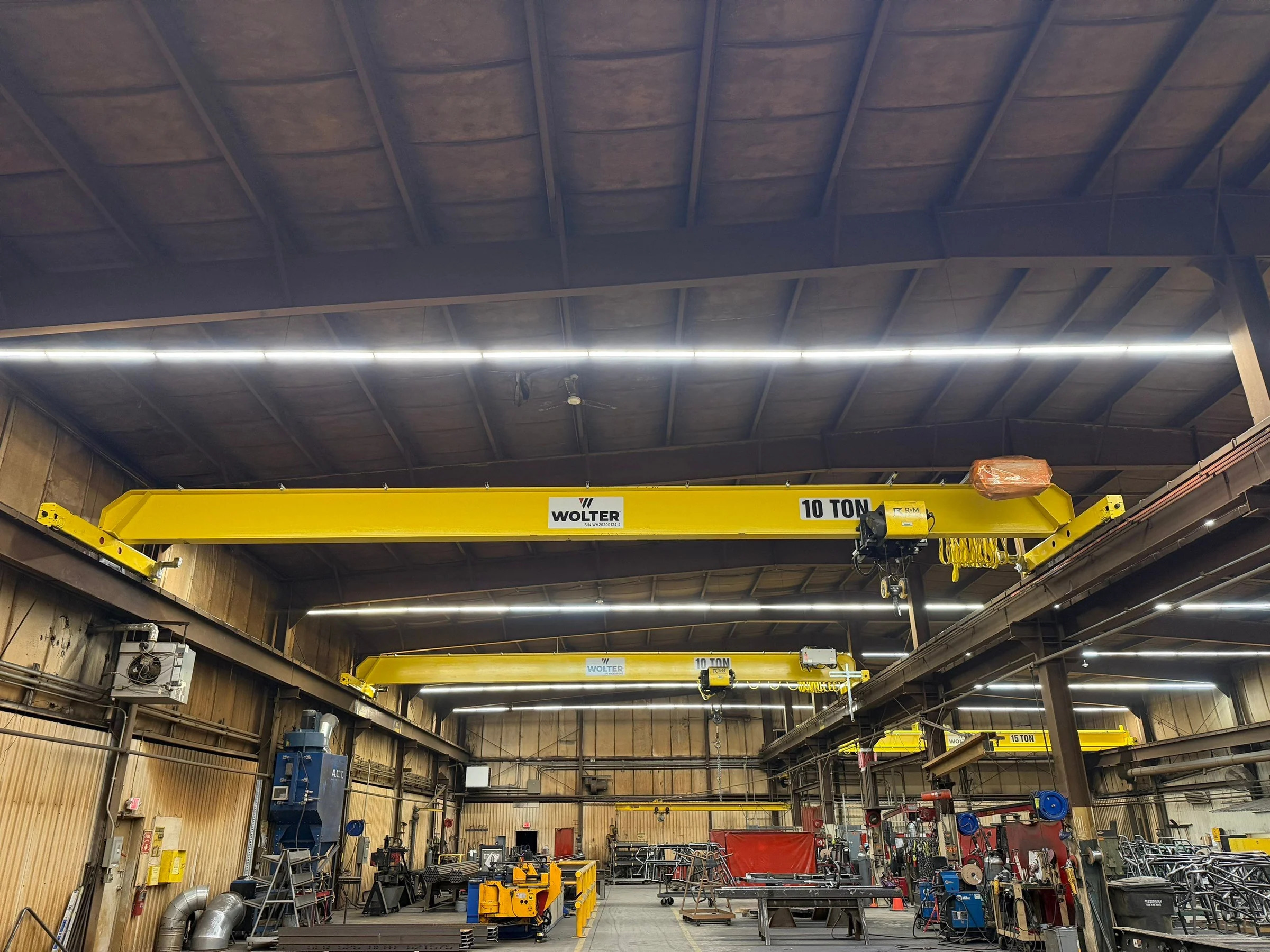
Four Cranes. One Coordinated Replacement.
Removal and replacement of two 15-ton double-girder and two 10-ton single-girder bridge cranes, with field modifications and electrical integration.
- IMH responsibility
- Field installation & replacement
A field scope that fits.
Define delivery, access, assembly, utilities, and handover with the project team.
Tell us what
needs attention.
Share the equipment, symptoms, project location, and production impact. We’ll discuss the service scope and availability. For a time-sensitive need, call directly.
Discuss service Or call (812) 363-1819