
Double Girder Bridge Cranes
Double girder overhead bridge cranes for higher-capacity lifting, longer spans, hook-height demands, runway planning, installation, and commissioning.
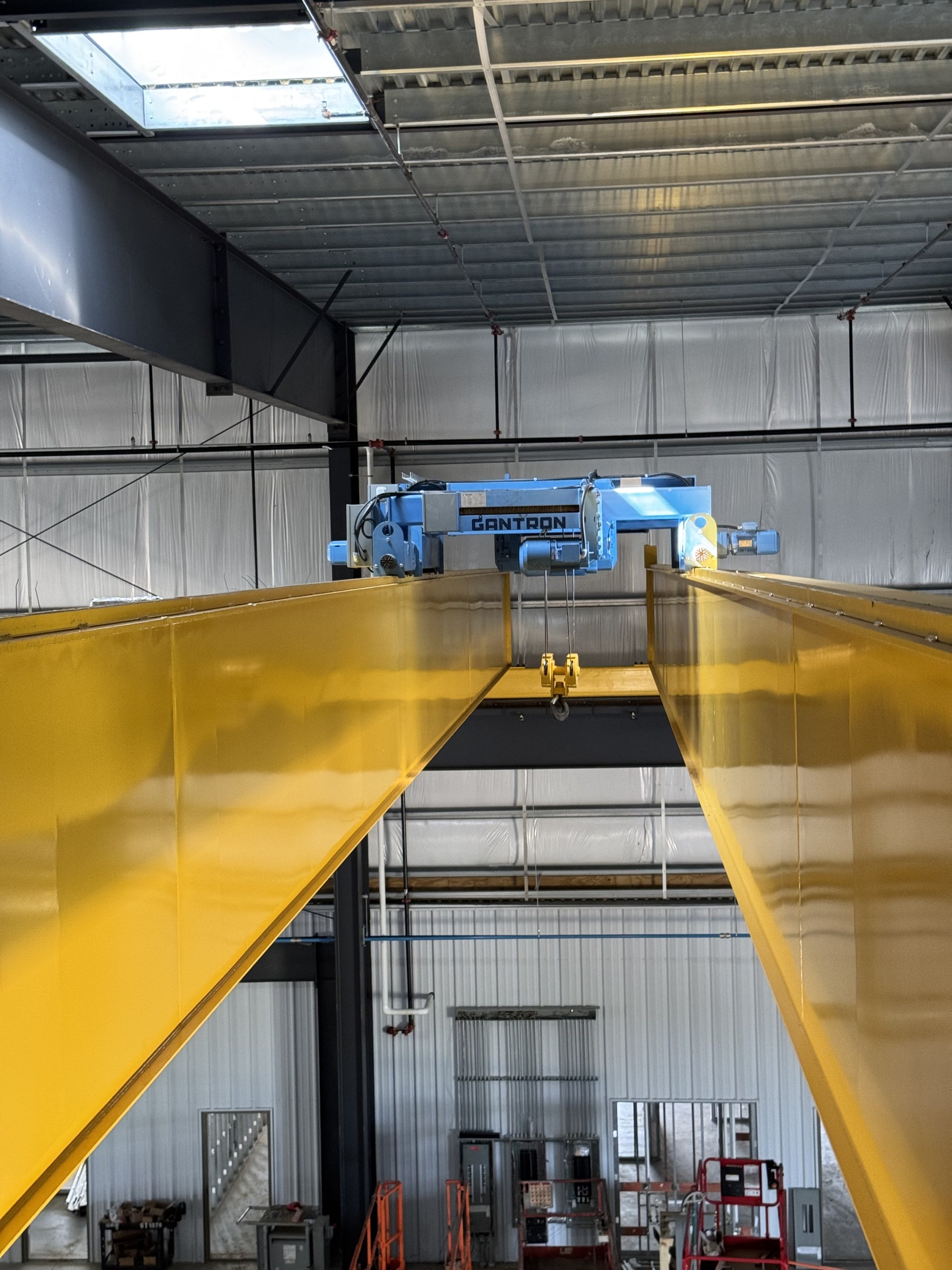
Blue hoist between the yellow girders of the 40-ton bridge crane.
40-ton bridge crane installationReach the work. Preserve useful floor space.
Crane, runway, steel, and field planning.
Four-crane replacement and installation.
The details shape the system.
Designed for the application
Double girder bridge crane planning for higher capacity lifting, longer spans, improved hook height, and production areas where runway design and installation sequencing matter.
Heavy Lifting Needs More Than A Bigger Crane
Double-girder bridge cranes are often considered when capacity, span, lift height, duty cycle, or service access pushes beyond a practical single-girder approach.
IMH reviews the full lift path, runway loads, building conditions, hoist access, electrification, rigging, installation window, and startup requirements before recommending a direction.
Double-Girder Priorities
Heavier loads and frequent lifts need the crane, hoist, runway, and structure reviewed together.
Higher hook height and better approach can be deciding factors.
Large components require access, rigging, staging, power coordination, and commissioning planning.
The Runway Cannot Be An Afterthought
A double-girder crane can place more demand on runway beams, columns, foundations, electrification, and installation access.
IMH treats support steel and field sequence as part of the crane decision, not a separate problem discovered after purchase.
When Double-Girder Fits
Double-girder cranes are most useful when the application needs more capacity, span, or hook coverage than simpler options provide.
Match heavy lifting needs with a runway and installation plan that can actually support the crane.
Support Steel Is Part Of The Crane
A double-girder crane should never be quoted as a bridge alone. Runway beams, columns, foundations, rail alignment, electrification, and building conditions determine whether the crane performs.
IMH reviews the lift and the building together so the final scope accounts for structure, access, installation, and future service.
Double Girder Is A Bridge Configuration
A double-girder crane can be underhung or top-running. It expands the structural, hoist, carrier, service-access, and transfer options available for demanding loads and spans, but the runway and building load path still govern the installed system.
IMH reviews girder configuration, running style, wheel loads, rail, electrification, rigging, and commissioning as one scope.
Heavy Lift Planning
IMH’s crane background includes documented large-capacity work and installation-focused planning.
The strongest crane projects clarify capacity, runway, rigging, power, controls, shutdown timing, and startup requirements early.
Double-girder crane planning succeeds when the runway and field work are solved with the crane.
When do I need a double-girder crane?
When capacity, span, hook height, duty cycle, or access requirements exceed a practical single-girder approach.
Does double-girder improve hook height?
It can, depending on hoist arrangement, bridge design, and building clearances.
Can existing runway support it?
That requires structural review of the runway, columns, foundations, building steel, and loads.
What should I send for a quote?
Capacity, span, lift height, runway length, drawings, photos, power requirements, controls, and install timing.
Can IMH help with installation?
Yes. IMH can review rigging access, runway installation, electrification, and startup needs.
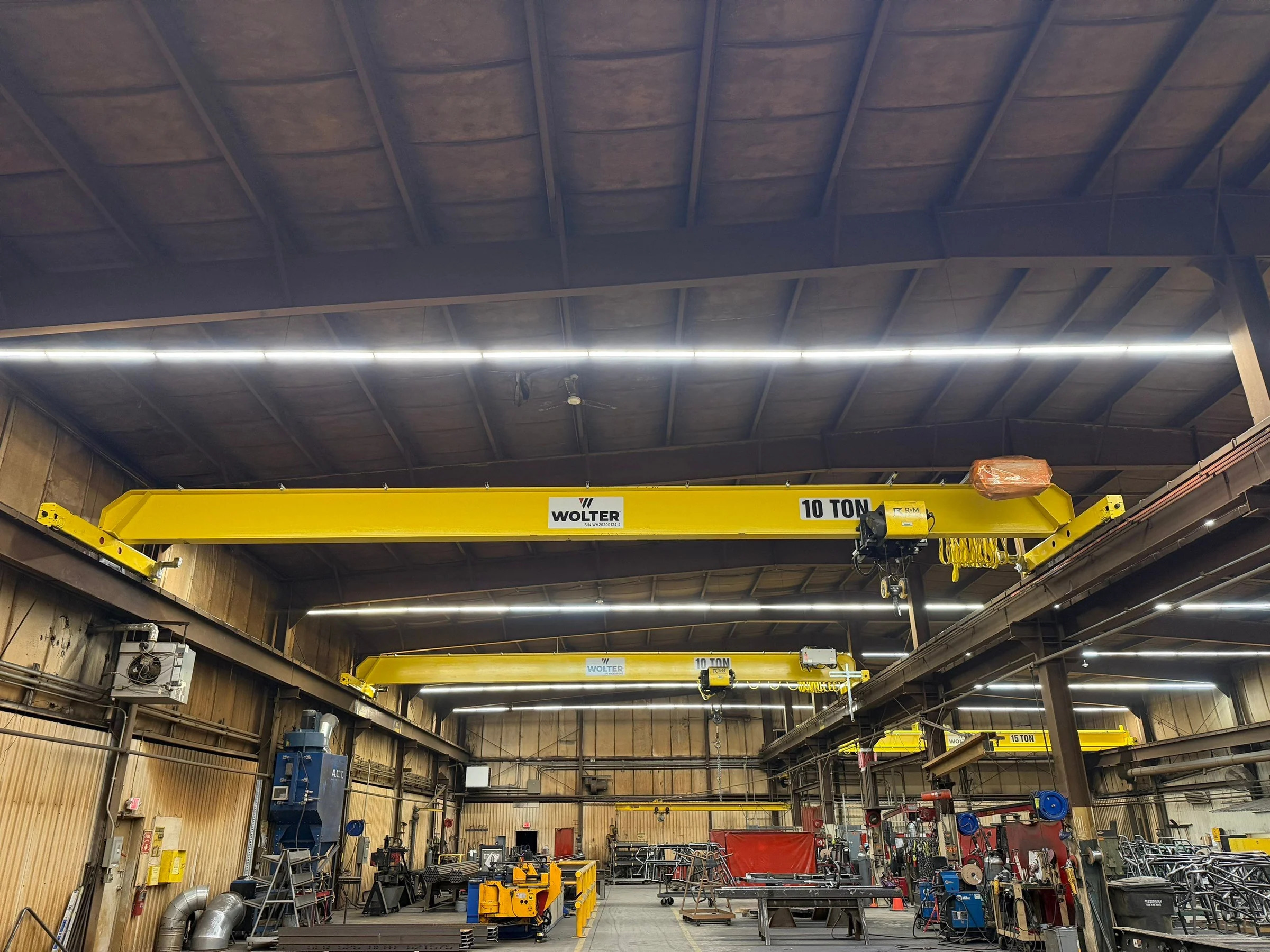
Four Cranes. One Coordinated Replacement.
Removal and replacement of two 15-ton double-girder and two 10-ton single-girder bridge cranes, with field modifications and electrical integration.
- IMH responsibility
- Field installation & replacement
Explore the arrangements.
Look closer at the configurations that suit your production.
Bring us the lift.
Let’s plan the whole project.
Start with what you lift, where it needs to go, and your project location. Photos, a rough layout, or an existing crane specification help. You can leave unknown details open.
Discuss my crane project Or call (812) 363-1819