Overhead Power & Free Conveyor Systems
Plan independent carrier stops, accumulation and routing with overhead power & free conveyors. Review process timing, controls, carriers and installation needs.
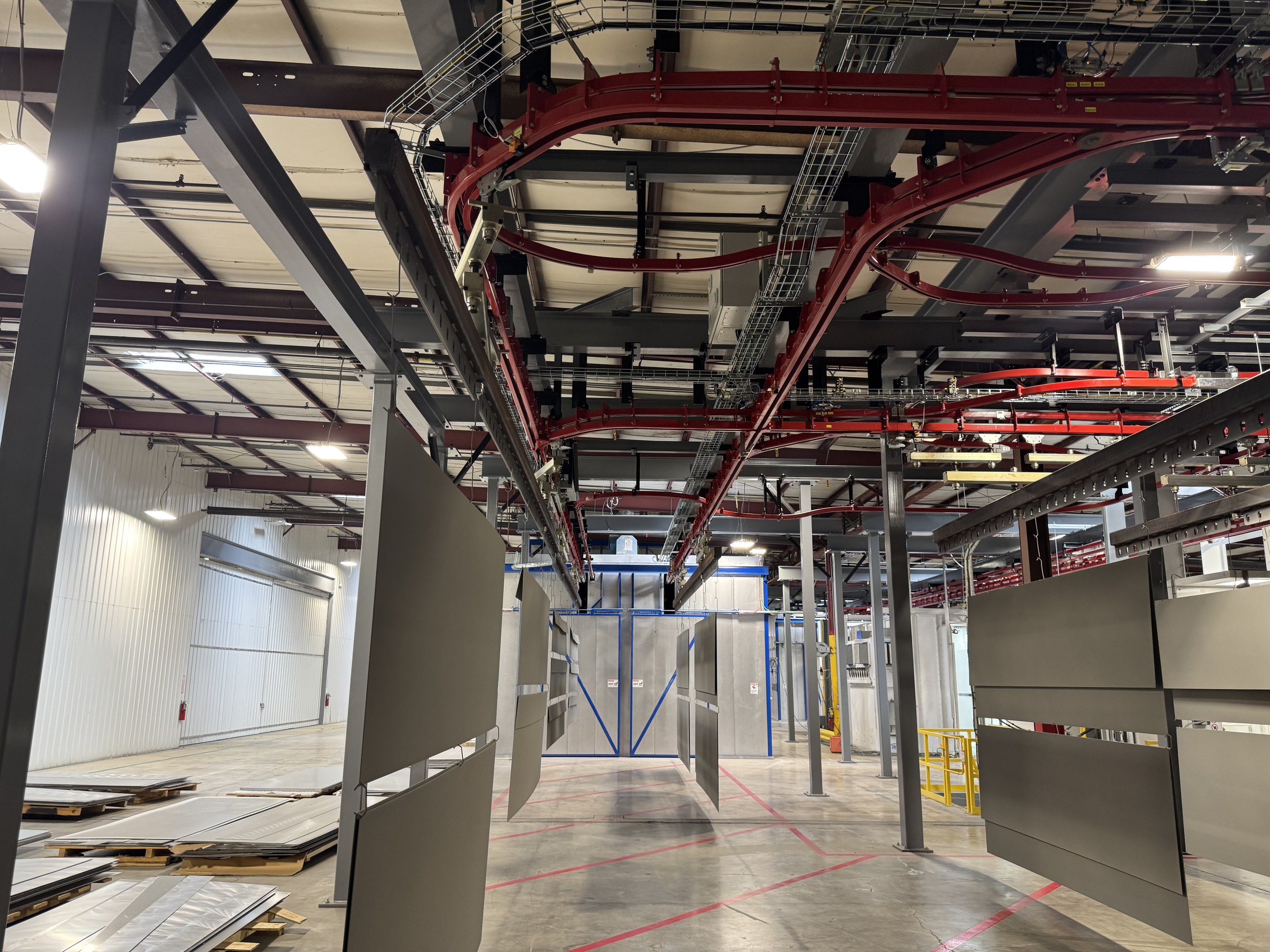
Red overhead power-and-free conveyor track with suspended panels, support steel, and finishing-area equipment.
Power & Free installationChoose around the work you need to move.
Plan the route and support steel together.
Bring installation into the first plan.
Your project / Next step
Scope your power & free conveyor project
Bring the operations that need independent stops or different process times. We can discuss a new system or review the constraints of an existing line.
See IMH’s power & free installation workUseful details for the first conversation
- Part and carrier dimensions, weight and orientation
- Required stops, accumulation zones and production rate
- Available layout, plant location and installation timing
Share what you know. Leave unknown details open.
Email IMH salesThe details shape the system.
Control the carrier without stopping the line.
Overhead power & free supports independent carrier movement, accumulation, and routing. Parts can stop at an operation while other carriers continue through the system.
IMH plans the carrier, route, controls, support steel, and installation around the production sequence. Load, process timing, and the required stopping and release behavior guide the arrangement.
How the carrier stops while the chain continues.
A powered chain moves carriers through an engagement mechanism. The carriers travel on a separate free track and can disengage at designed stops or accumulation zones. They rejoin the moving sequence when the release conditions are met.
Track construction and operating mode are separate choices: power & free can use an enclosed-track or I-beam arrangement. The chosen equipment determines the stops, switches, transfers and carrier geometry.
Match the operating behavior to the work.
Specify what each station needs to do before selecting the conveyor arrangement.
| Requirement | What it changes |
|---|---|
| Different process times | Define dwell and release conditions at each operation; the slowest process still constrains total output. |
| Accumulation | Define queue locations, carrier spacing and what happens when the next zone is full. |
| Alternative routes | Identify entry and exit switches, destination decisions and the required transfer behavior. |
| Load stability | Review the complete loaded carrier, its support points and clearance through turns and stops. |
| Controls coordination | Assign responsibility for sensors, process interlocks, operator modes and restart after a fault. |
Define controls with the conveyor layout.
Before laying out track, define where each carrier stops, what releases it, where it can route, and what happens when the next process is full.
Stops, switches, sensors, operator stations, process interlocks, and accumulation zones must fit both the operating sequence and the physical equipment. Define automatic and manual modes, fault recovery, and startup responsibilities with the project team.
- Carrier identification, spacing, and release sequence
- Switch positions, routing logic, and process interfaces
- Operator access, service access, and operating modes
- Existing controls and mechanical condition for a modification
Keep the space below useful.
Overhead routing should preserve access to the work below. IMH considers columns, bracing, drive and take-up locations, maintenance access, and surrounding equipment with the conveyor route.
The supporting structure and its connections need review for the proposed equipment loads and site conditions. Installation access and future changes belong in that plan.
When a simpler conveyor may fit.
Independent stopping and routing add carriers, track devices and control decisions to the installed scope. If every load can follow the same pace and route, compare a power-only conveyor. For occasional short transfers, consider hand-pushed movement.
Bring the part and the production sequence.
A finished specification is not required to start. Share the product, where it needs to go, and what needs to improve. IMH can work through the open questions with you.
- Loaded carrier weight, dimensions, and orientation
- Required rate, process dwell times, and accumulation
- Route, elevation changes, switches, and transfers
- Operating environment, support conditions, and controls interfaces
- Available drawings, photographs, location, and installation timing
Plan the conveyor installation
Unibilt power & free conveyor guide (PDF) Daifuku Automotive America · January 2024 · Printed pp. 2–3, 6–9
How power & free works.
Educational system illustration. Operation and configuration vary by application.
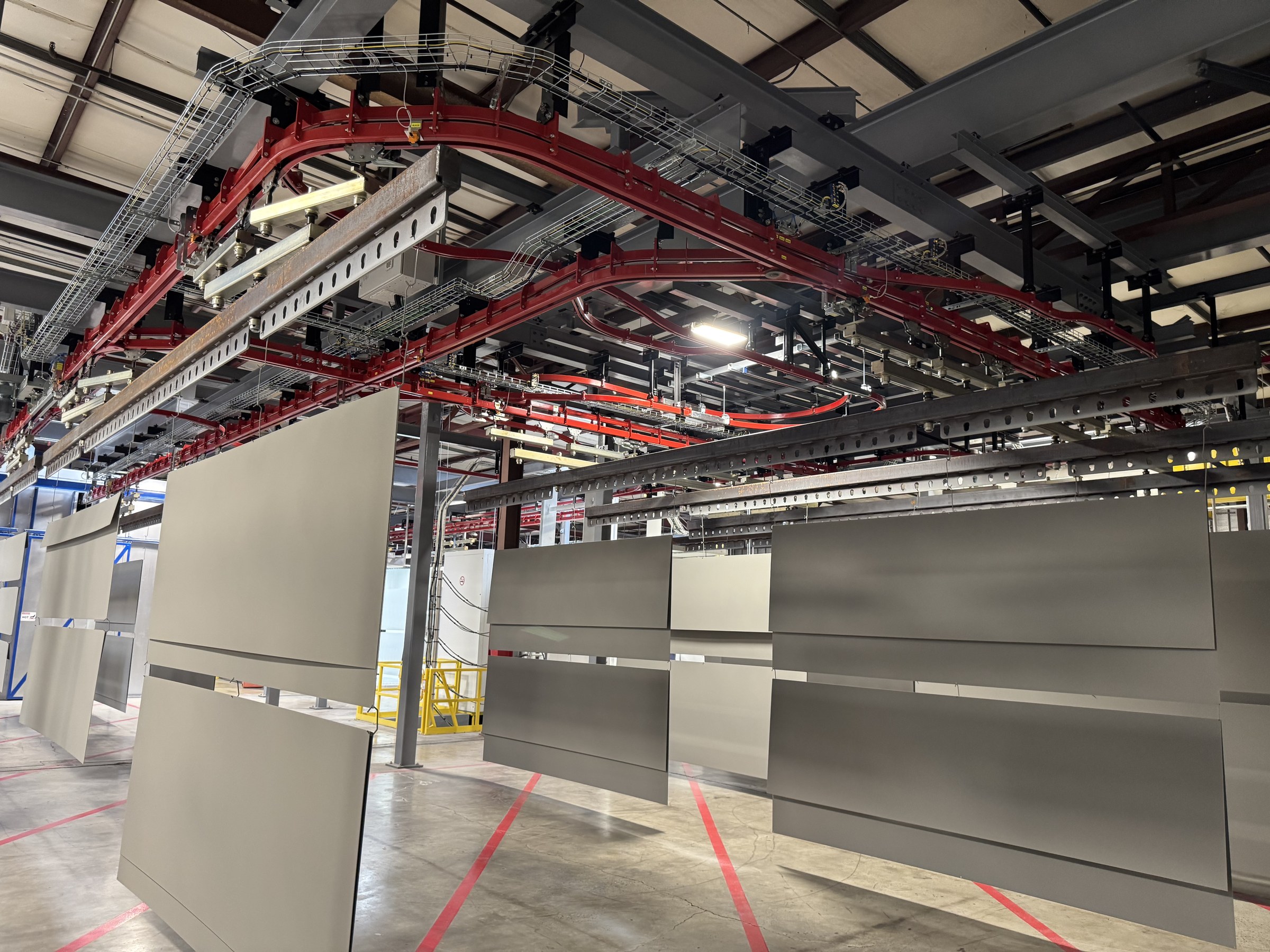
Power & Free. Installed for the Project Team.
Installation of a supplied power-and-free conveyor, with field layout coordination and overhead equipment integration in a finishing area.
- IMH responsibility
- Installation · design and equipment supplied by others
Explore the arrangements.
Look closer at the configurations that suit your production.
Bring us the bottleneck.
We’ll help plan the movement.
Share what you move, where it needs to go, and what is holding production back. A photo or rough layout is a useful start. You do not need a finished specification.
Discuss my conveyor project Work through the planning questions Complex flow or unknown rates? Explore an engineering study Or call (812) 363-1819