
Workstation Bridge Cranes
Workstation bridge crane systems for ergonomic, repeatable lifting with freestanding or ceiling-supported runways, hoists, controls, and installation.
Reach the work. Preserve useful floor space.
Crane, runway, steel, and field planning.
Four-crane replacement and installation.
The details shape the system.
Designed for the application
Workstation bridge crane planning for assembly cells, maintenance areas, ergonomic lifting, line-side support, and production spaces that need localized overhead coverage.
Localized Lifting For Real Work Areas
Workstation cranes can give operators repeatable lift coverage over assembly cells, maintenance stations, fabrication areas, and line-side work zones.
IMH reviews the part, lift frequency, coverage area, hook height, floor access, runway support, building structure, power, and installation timing so the crane supports the work instead of crowding it.
Workstation Crane Priorities
The crane should reach the work without forcing awkward load handling.
Lift path, tool access, and walking paths shape the layout.
Freestanding or building-supported options depend on structure, floor, and future flexibility.
Small Crane, Big Layout Decisions
A workstation crane may look simple, but floor columns, runway height, hook approach, power delivery, and nearby equipment can decide whether it feels useful.
IMH plans workstation lifting around the operator and the cell so the installed system improves the work instead of becoming another obstacle.
Workstation Crane Inputs
These details help define the right coverage and support approach.
| Input | Why it matters |
|---|---|
| Load weight | Sets crane, hoist, trolley, and support requirements. |
| Coverage area | Defines bridge span, runway length, hook reach, and end approach. |
| Work process | Shows how the operator loads, positions, rotates, or services the part. |
| Lift frequency | Separates occasional ergonomic assistance from frequent production lifting. |
| Support preference | Compares freestanding and building-supported options. |
| Floor and obstructions | Protects access around machines, carts, fixtures, and aisle traffic. |
| Power and controls | Coordinates hoist, pendant, radio, speed, and electrical needs. |
Where Workstation Cranes Fit
Workstation cranes help when local lifting improves safety, ergonomics, or repeatability.
Give the operator useful hook coverage without stealing floor space or creating a new bottleneck.
Support Steel Should Fit The Cell
Workstation crane supports need to be planned around equipment, carts, operators, maintenance access, and future cell changes.
IMH reviews column placement, clearances, anchor locations, power routing, and expansion paths so the crane feels integrated with the work area instead of blocking the work it is meant to improve.
Workstation Coverage Starts With The Operator
Workstation crane planning begins with the load, lift frequency, handoff points, fixture access, operator position, and usable hook approach inside a defined cell.
Support columns, runway height, hoist controls, power, and future cell changes are coordinated around the work area rather than treated as a smaller version of a full-bay crane.
Workstation Lifting Planning
IMH supports crane, conveyor, and installation planning inside active manufacturing environments.
Workstation crane planning benefits from the same field-first thinking: verify the work, the support, the access, and the installation path before committing.
The best workstation crane disappears into the work because it reaches exactly where it should.
When should I use a workstation crane?
When a defined work area needs repeatable local lifting without a larger bay crane.
Can workstation cranes be freestanding?
Often, yes. Floor and foundation conditions still need review.
What information is needed?
Load weight, coverage area, hook height, photos, layout, and power/control needs.
Can IMH install it?
Yes. IMH can review support, installation access, power coordination, and startup.
How is it different from a bridge crane?
A workstation crane is usually focused on a smaller work area or cell rather than full-bay coverage.
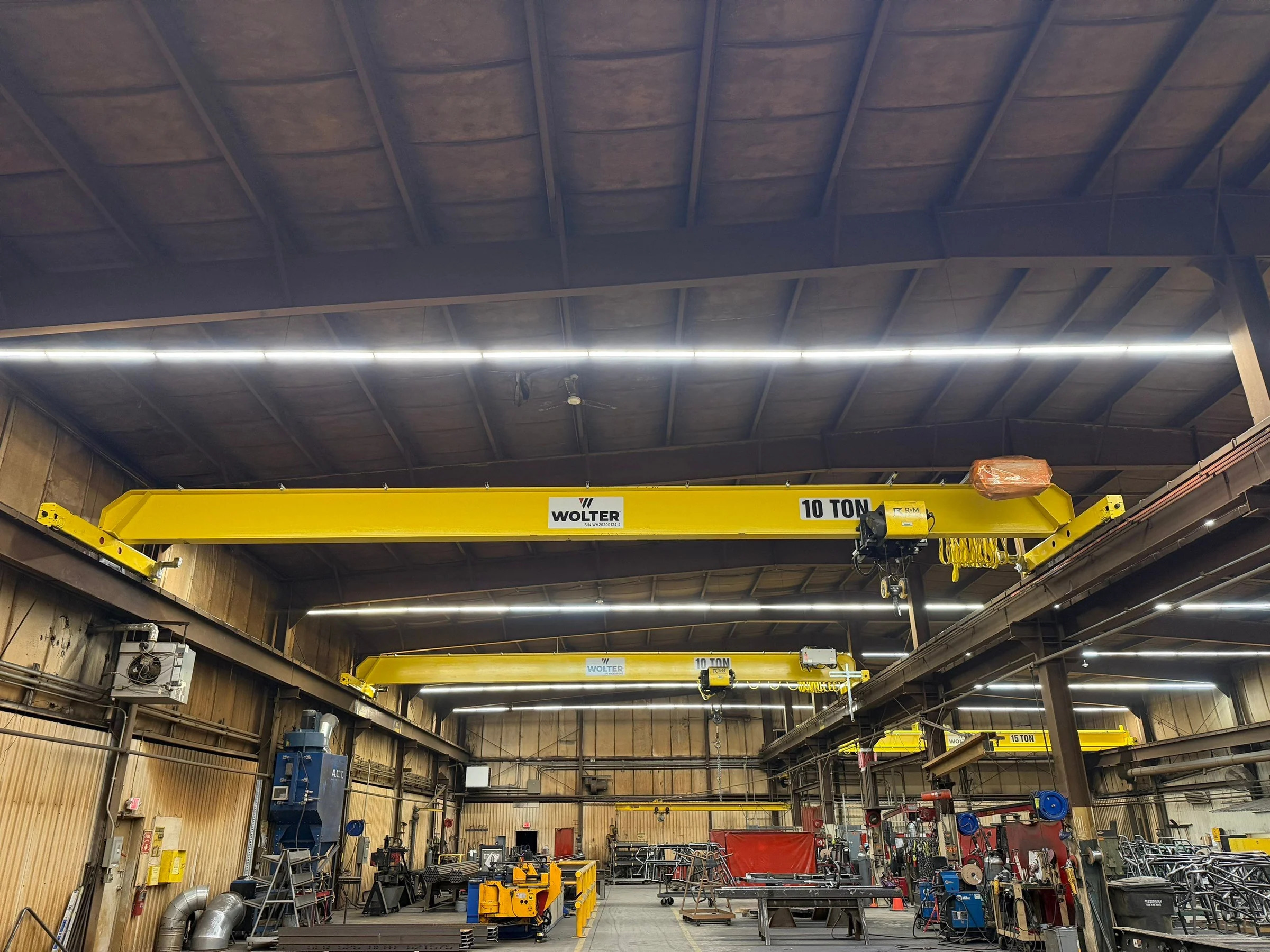
Four Cranes. One Coordinated Replacement.
Removal and replacement of two 15-ton double-girder and two 10-ton single-girder bridge cranes, with field modifications and electrical integration.
- IMH responsibility
- Field installation & replacement
Explore the arrangements.
Look closer at the configurations that suit your production.
Bring us the lift.
Let’s plan the whole project.
Start with what you lift, where it needs to go, and your project location. Photos, a rough layout, or an existing crane specification help. You can leave unknown details open.
Discuss my crane project Or call (812) 363-1819