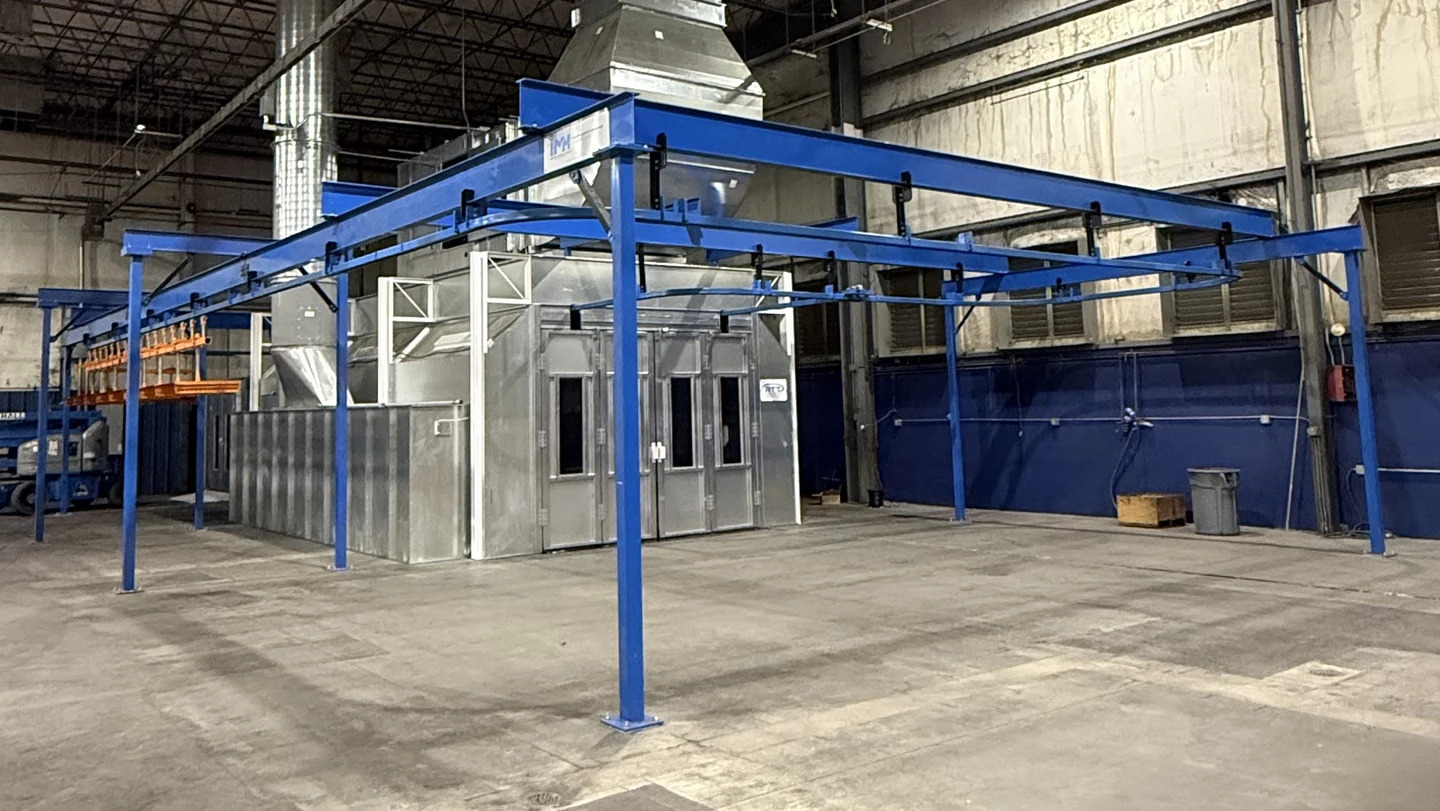
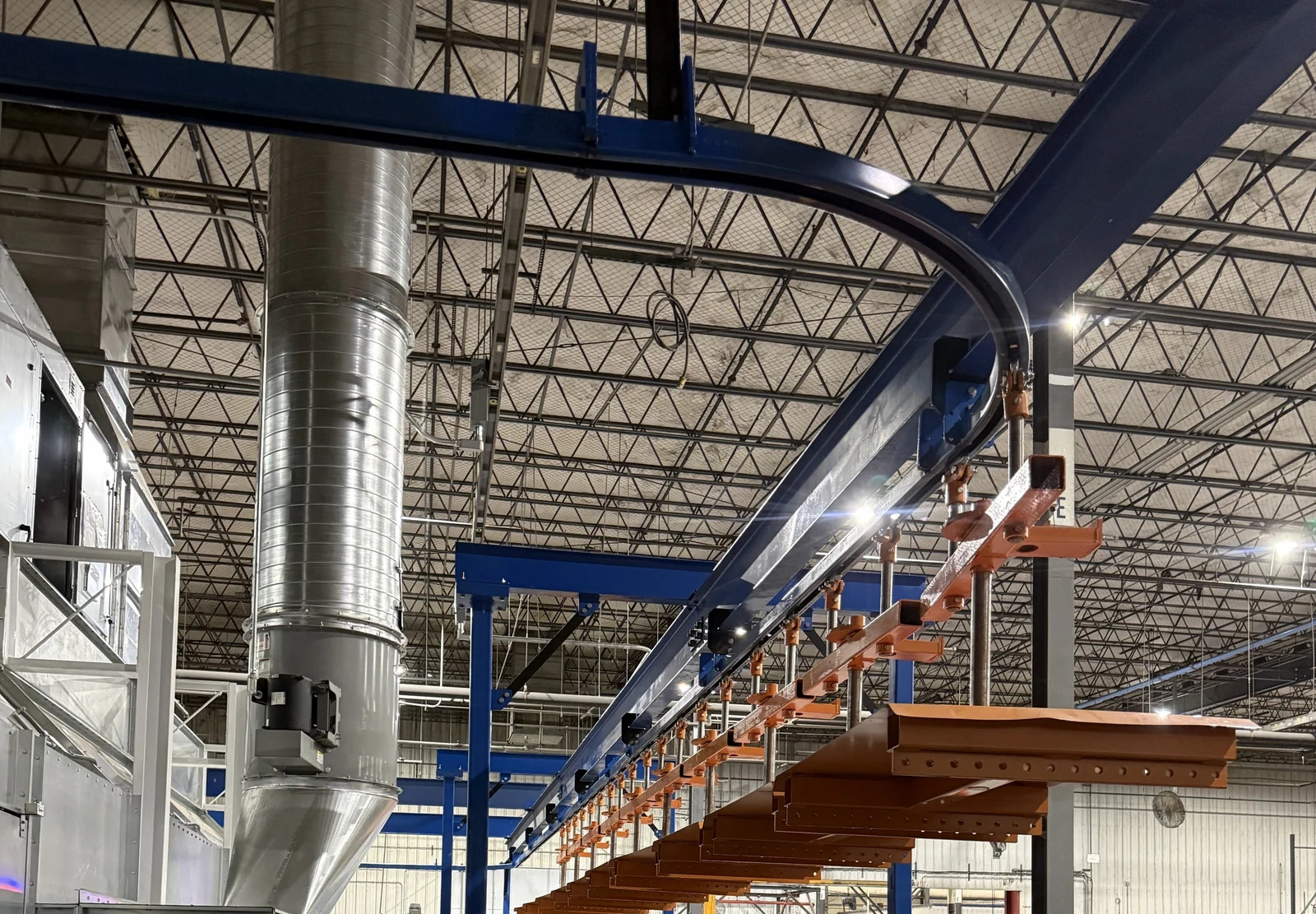
Hand-pushed monorail conveyor system installed in a manufacturing facility

Hand-Pushed Monorail Conveyor Systems

Hand-pushed monorail conveyor systems for simple overhead movement, manual transfers, work cells, maintenance areas, and production spaces that need a practical path above the floor without unnecessary automation.

Simple MovementManual overhead transfer without unnecessary controls
Lower ComplexityUseful where powered conveyor is not required
Clean StructureSupport steel planned around access and future changes

Simple Overhead Movement Still Needs Smart Design

A hand-pushed monorail can be the right answer when the plant needs to move parts overhead without the cost or complexity of a powered conveyor system.

IMH reviews load weight, carrier style, route length, operator effort, push/pull ergonomics, wheel material, curve radius, side sway, support steel, clearances, and installation access so the system feels simple in use instead of improvised in the field. Exact trolley capacity still needs to be verified around route, structure, carrier design, and operator effort.

Hand-Pushed Monorail Advantages

01

Practical Transfer

Move loads between nearby work zones, load points, unload points, or process areas.

02

Lower Control Needs

Avoid unnecessary automation where manual movement is the right fit.

03

Smooth Manual Travel

Side-guide rollers, ball-bearing wheels, and good route planning help reduce pushing effort and binding.

04

Flexible Layout

Use overhead space to reduce carts, floor staging, and awkward manual handling.

Hand-pushed monorail track and carrier system

Manual Does Not Mean Unplanned

Operator effort, carrier stability, route clearance, trolley selection, side sway, and support steel all affect how usable the system feels after it is installed.

A hand-pushed monorail should make the work easier, not trade one handling problem for another. The best designs keep the load stable, the trolley path clear, and the floor below the system useful.

Start With A Buildable Plan

Before budget, downtime, or engineering time is committed, the right project details need to be clear. IMH connects the desired outcome with the field conditions that decide whether the system can be installed cleanly and perform reliably after startup.

That means collecting photos, drawings, measurements, production goals, safety requirements, shutdown limits, and maintenance concerns early. It also means explaining tradeoffs in plain language: what should be engineered now, what can be phased later, what needs structural review, and what information is still missing before a final recommendation is responsible.

Hand-Pushed Monorail Planning Inputs

These inputs help determine whether manual overhead movement is practical and how the system should be laid out.

Input Why it matters
Load weight Determines whether manual movement is practical and which trolley/load-bar/carrier approach is needed.
Travel distance Affects operator effort, route shape, and whether powered movement should be considered.
Load orientation Controls hook, carrier, clearance, swing, side sway, and product protection.
Route and work zones Defines load points, unload points, turns, obstructions, and operator access.
Support structure Protects floor access and determines how cleanly the system installs.
Wheel and environment needs Nylon wheels, corrosion concerns, washdown, heat, or debris may change trolley and maintenance choices.
Future changes Helps decide whether the system should be easy to extend, reroute, or relocate.

Best-Fit Uses

Hand-pushed monorail works best where the movement is valuable but automation would be unnecessary.

Short transfersMove parts between nearby cells, fixtures, equipment, or process steps.
Maintenance handlingCreate overhead movement for tools, components, or service operations.
Low-frequency movesSupport occasional handling without overbuilding the conveyor system.
Space recoveryMove loads overhead instead of using carts and staging areas below.

Support Design Makes It Feel Professional

A hand-pushed monorail should not look like an afterthought. Clean support steel, planned column locations, proper clearances, and bolt-together concepts where appropriate make the system easier to install, maintain, expand, or relocate.

IMH treats even simple monorail systems as real engineered movement, because the structure and access below the track still affect the customer long after installation.

The Work IMH Is Built Around

IMH Systems is focused on engineered movement overhead, reliable lifting, and field execution inside real manufacturing plants. Overhead conveyors, bridge cranes, and service or installation work remain the center of that story, while secondary equipment is included only where it helps solve the larger project.

Buyers get practical answers instead of generic product language: what details matter, what decisions affect the installed system, what tradeoffs need review, and when a project is ready for a deeper conversation.

For conveyor projects, that means reviewing load weight, carrier behavior, drive and take-up locations, controls, support steel, access below the line, maintenance points, and shutdown phasing before recommending a path.

A strong system can be quoted responsibly, installed cleanly, and serviced after startup.

Monorail Experience

IMH has documented hand-pushed monorail, I-beam, power and free, modernization, and installation work nationwide.

The Unibilt brochure supports hand-pushed monorail as an economical enclosed-track option that uses the same overhead track and installation components, but IMH keeps the conversation practical: capacity, route, operator effort, support steel, and future flexibility all matter.

A simple monorail is successful when it makes the work easier every day.

Frequently Asked Questions

When is hand-pushed monorail a good fit?

It fits lower-frequency movement, shorter transfers, maintenance handling, and simple overhead routes where powered conveyor is not necessary.

How much weight can a hand-pushed monorail handle?

Unibilt hand-pushed trolley literature lists 250 lb per trolley and up to 1,000 lb with four trolleys connected in tandem with load bars. The final capacity must still be reviewed around route, carrier, support structure, operator effort, and building conditions.

Can the system be expanded later?

Often, yes, especially when the support structure and route are planned with future changes in mind.

What information is needed?

Load weight, dimensions, route, travel distance, photos, drawings, and how often the load moves.

Can IMH install the monorail?

Yes. IMH can support layout review, support steel, installation planning, and field execution.

Ready To Review A Hand-Pushed Monorail?

Send IMH your load, route, photos, drawings, and how often the move happens. We will help determine whether manual overhead movement fits.