
Emergency Conveyor and Crane Repair Services
Discuss conveyor and crane downtime with IMH, including equipment symptoms, site access, production impact, current availability, and repair planning.
Call to discuss current availability.
Know who owns every interface.
Build the work around the site.
Agree what completion includes.
Bring clarity to the work.
Downtime Needs Triage Before Action
When a conveyor or crane stops production, the first step is understanding safety, access, symptoms, and what can or cannot run.
IMH helps review emergency repair situations around conveyors, bridge cranes, drives, controls, carriers, hoists, support steel, and restart risk.
Emergency Review Priorities
Identify hazards, lockout needs, damaged parts, and operating limits.
Separate mechanical, electrical, structural, controls, and access problems.
Clarify temporary recovery, parts path, permanent repair, and restart checks.
Fast Still Needs Responsible
Emergency work can move quickly, but unsafe shortcuts can create larger failures.
IMH uses photos, symptoms, operating history, and site constraints to help define the smartest immediate and follow-up actions.
Emergency Repair Inputs
These details help triage the situation.
| Input | Why it matters |
|---|---|
| What stopped | Identifies conveyor, crane, drive, hoist, controls, support, or carrier issue. |
| Safety condition | Clarifies lockout, damaged equipment, and hazards. |
| Photos and video | Help review visible damage, access, and components. |
| Production impact | Shows urgency and restart constraints. |
| Parts on hand | May affect temporary or permanent repair path. |
| Access window | Defines when crews and equipment can reach the issue. |
Common Emergency Issues
Emergency repairs often expose deeper maintenance or modernization needs.
Stabilize the situation, protect people and production, then define the permanent repair path.
Emergency Work Needs Follow-Through
A temporary fix should not hide the cause of the failure.
IMH helps turn emergency triage into repair, retrofit, or modernization planning when the symptoms point to a larger issue.
What should I do first in an emergency?
Make the area safe, stop unsafe operation, document symptoms, and gather photos before repair planning.
What information helps most?
Photos, videos, system type, symptoms, failure time, and production impact.
Can IMH help with permanent repair after triage?
Yes. Emergency issues often lead into planned repair, retrofit, or modernization.
Can a conveyor run temporarily?
That depends on safety, damage, controls, and risk. Temporary recovery should be reviewed carefully.
Can IMH review crane downtime?
Yes, within the scope of crane, runway, controls, and lifting-system support.
Need Emergency Repair Review?
Send IMH photos, symptoms, system details, and the safest way to reach the equipment.
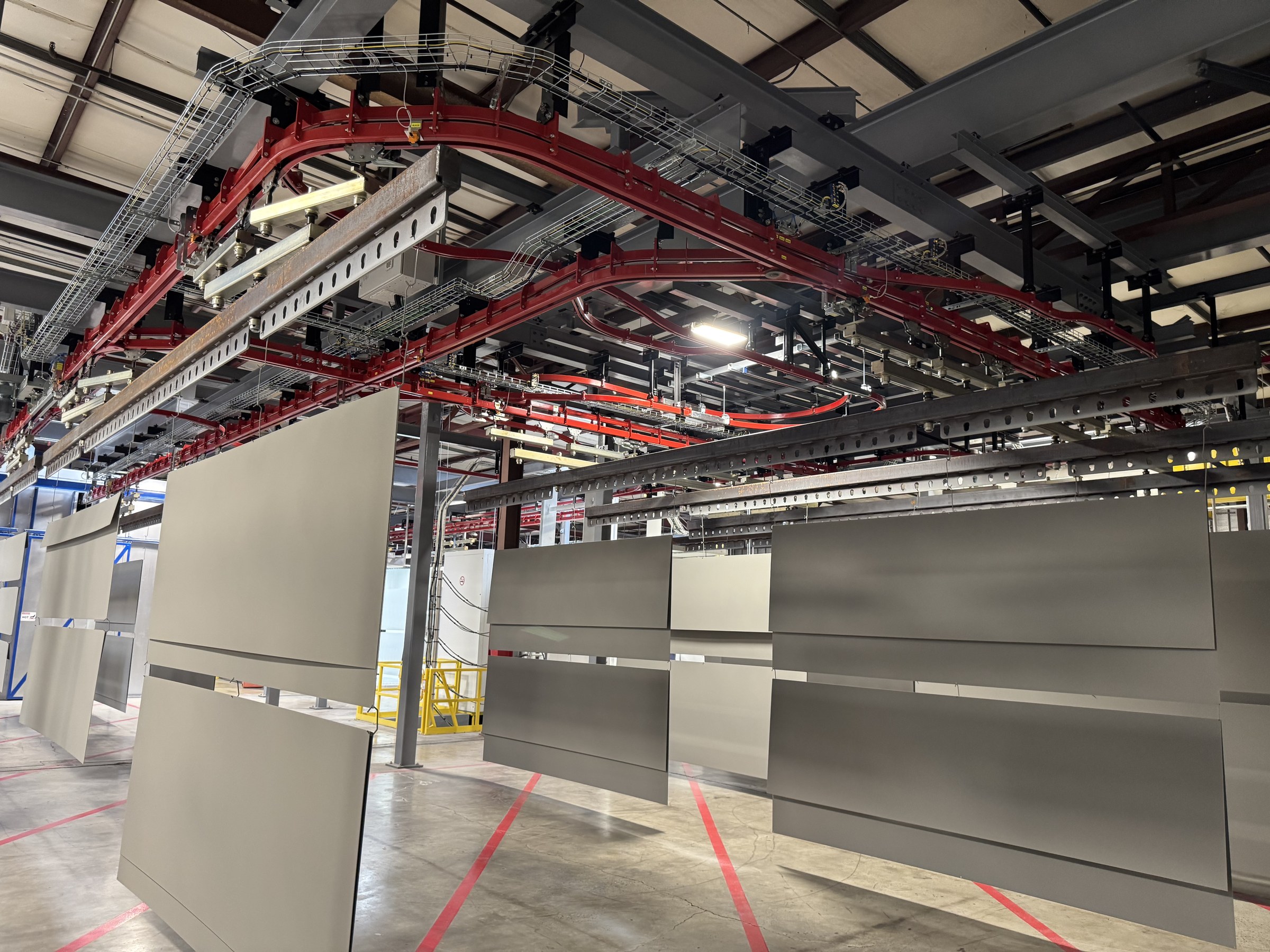
Power & Free. Installed for the Project Team.
Installation of a supplied power-and-free conveyor, with field layout coordination and overhead equipment integration in a finishing area.
- IMH responsibility
- Installation · design and equipment supplied by others
A field scope that fits.
Define delivery, access, assembly, utilities, and handover with the project team.
Tell us what
needs attention.
Share the equipment, symptoms, project location, and production impact. We’ll discuss the service scope and availability. For a time-sensitive need, call directly.
Discuss service Or call (812) 363-1819