
Enclosed Track Conveyor Systems
Evaluate enclosed track conveyors for your load, route and process. Compare operating modes, carrier clearance, environment and installation requirements.
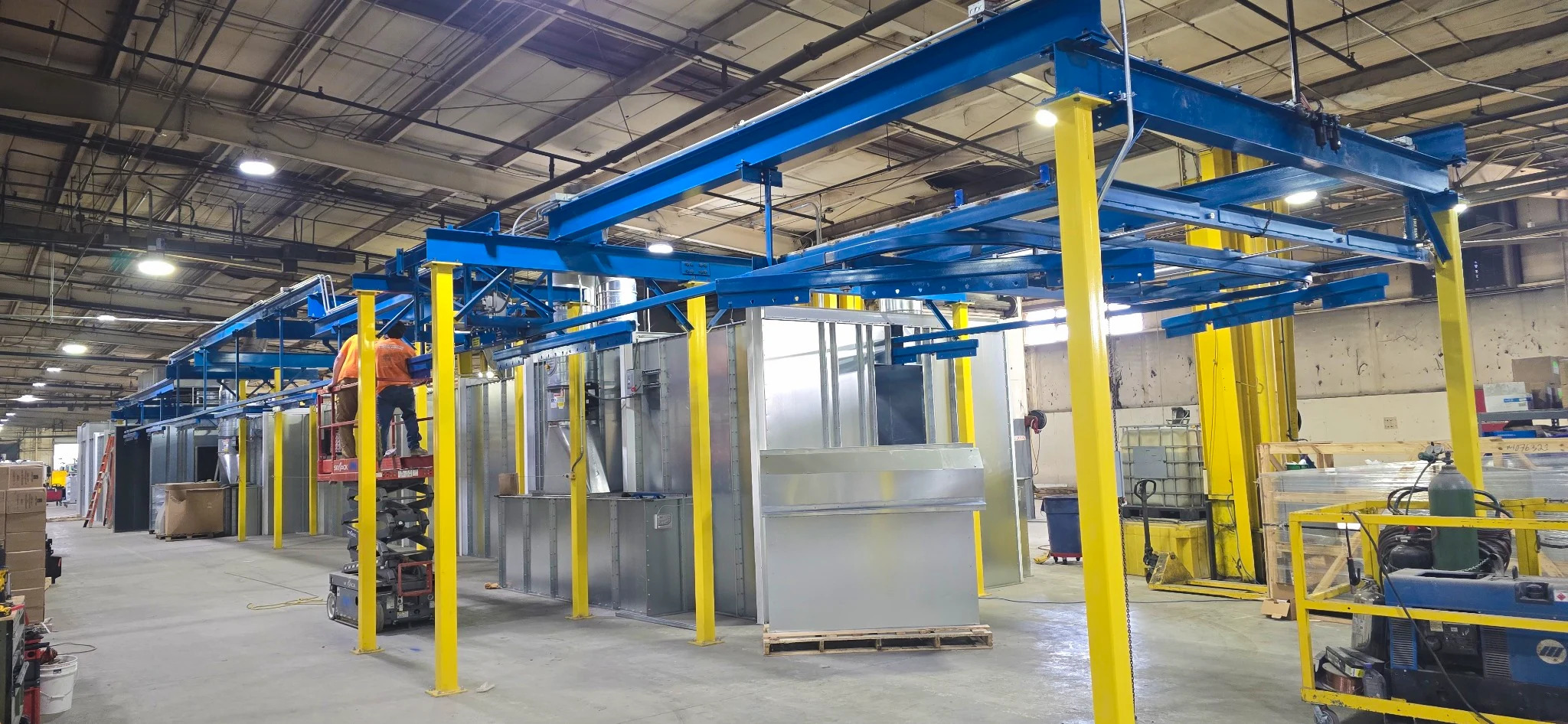
Enclosed-track conveyor and support steel alongside finishing booths at Labrie.
Choose around the work you need to move.
Plan the route and support steel together.
Bring installation into the first plan.
Your project / Next step
Plan an enclosed track conveyor with IMH
For a new line or a modification, start with what moves and where it needs to go. For existing equipment, include identification and photographs so compatibility can be reviewed.
Review the enclosed-track project scopeUseful details for the first conversation
- Loaded carrier size, weight and desired movement
- Rough route, process openings and support conditions
- Equipment identification, location and project timing
Share what you know. Leave unknown details open.
Email IMH salesThe details shape the system.
Compact track, selected around the load.
An enclosed track conveyor carries its running components inside a formed track section. It can support overhead part movement through assembly, finishing and transfer areas when the load, carrier and environment suit the selected equipment.
Choose the movement as well as the track.
Enclosed track describes the construction, not a single operating mode. A power-only arrangement moves loads with the chain; a power & free arrangement allows separate carrier stops and accumulation. Hand-pushed arrangements use manual movement.
Check the fit before choosing components.
A compact track does not make the suspended part smaller. Review the entire loaded carrier throughout the route.
| Factor | Decision it informs |
|---|---|
| Movement | Choose continuous or indexed chain movement, independent carrier control, or manual transfer. |
| Loaded carrier | Include the part, fixture and carrier when reviewing weight, support points and orientation. |
| Curves and openings | Check part swing, adjacent loads, elevation changes and clearance through process equipment. |
| Operating environment | Identify heat, washdown, chemicals or debris so materials, wheels and lubrication can be reviewed. |
| Service access | Keep access to drives, take-ups, inspection points and replaceable components in the layout. |
Where enclosed track needs closer review.
The enclosure shields portions of the mechanism, but does not make the system sealed or suitable for every clean or corrosive environment. Wheel materials, lubrication and track condition still matter.
A heavier load or a need for open access to running components may lead to an I-beam arrangement. Independent stopping leads to a power & free discussion; it is not created simply by choosing enclosed track.
Enclosed Track Conveyor Inputs
These details help define whether enclosed track is the right fit and how it should be installed.
| Input | Why it matters |
|---|---|
| Load weight and dimensions | Confirms whether enclosed track is appropriate for the application and which attachment or carrier approach should be considered. |
| Carrier style | Affects part orientation, swing, finish protection, and operator access. |
| Route layout | Controls turns, elevation changes, support points, and clearance requirements. |
| Drive and take-up location | For Unibilt power-only systems, Daifuku recommends a drive that pulls the loaded portion of the route, with the take-up after the drive in the direction of travel. Confirm placement, chain pull, and access for the selected configuration with the conveyor engineer. |
| Movement type | Determines whether continuous, manual, powered, or controlled movement is needed. |
| Building constraints | Identifies utilities, roof steel, columns, process equipment, and aisle conflicts. |
| Maintenance access | Protects serviceability after installation. |
Unibilt power-only component guide (PDF) Daifuku Automotive America · January 2024 · Printed pp. 3–11; hand-pushed trolley p. 28
Coordinate the route, supports and installation.
Track loading, hanger spacing, curves, drives and take-ups affect the support layout. Review the building, aisle clearances, loading height and maintenance access together before releasing track or steel for fabrication.
For an existing line, provide equipment identification and photographs along with the proposed change. Similar-looking track or chain is not enough to establish compatibility.
View the enclosed-track project scope
Plan the conveyor installation
Unibilt enclosed track overview (PDF) Daifuku Automotive America · January 2024 · PDF pp. 2–4
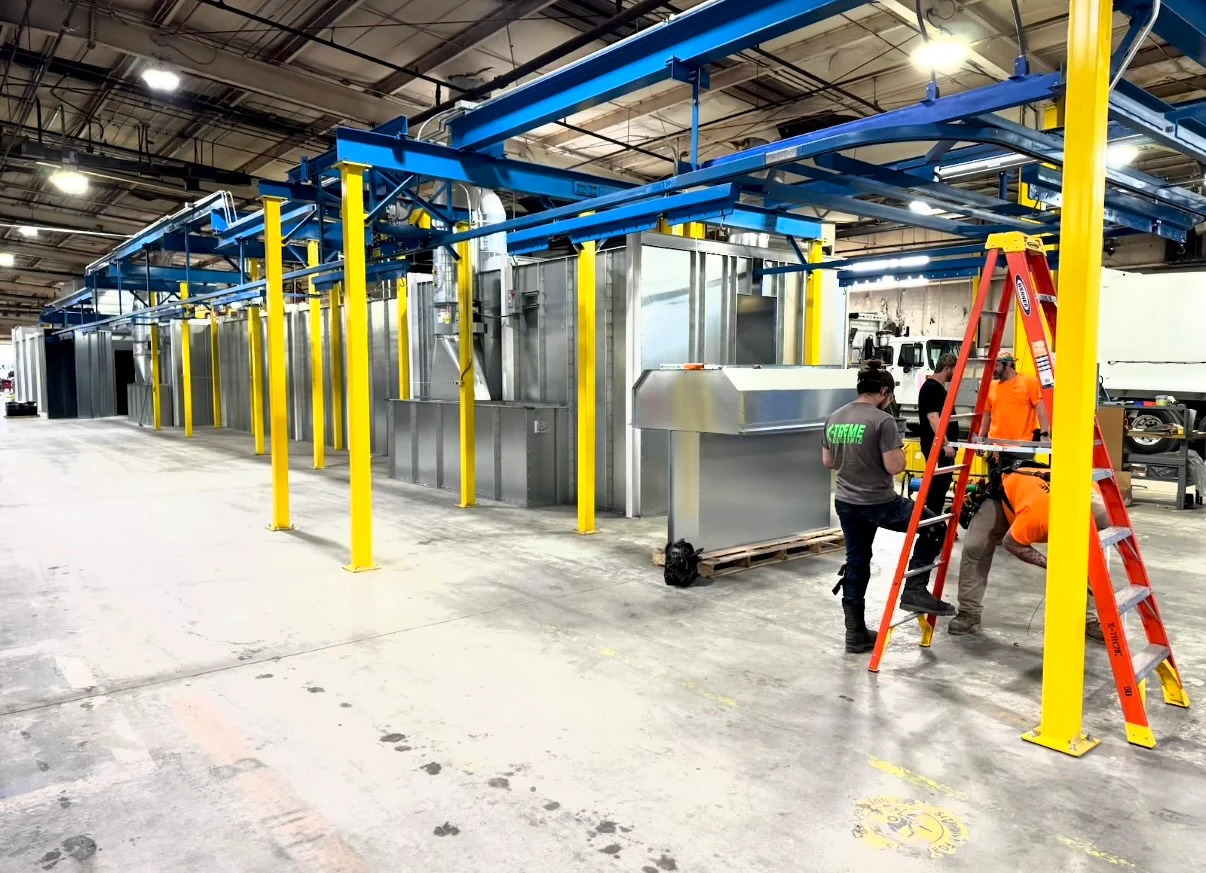
Enclosed-Track Conveyor & RTT Paint System
Design, fabrication, and installation of an enclosed-track conveyor integrated with an RTT paint system, including custom loadbars, support steel, and controls.
- IMH responsibility
- Design, fabrication & installation
Explore the arrangements.
Look closer at the configurations that suit your production.
Bring us the bottleneck.
We’ll help plan the movement.
Share what you move, where it needs to go, and what is holding production back. A photo or rough layout is a useful start. You do not need a finished specification.
Discuss my conveyor project Work through the planning questions Complex flow or unknown rates? Explore an engineering study Or call (812) 363-1819