Bridge Crane Modernization and Retrofit
Bridge crane modernization and retrofit planning for aging equipment, runway conditions, hoist updates, controls, electrification, and maintenance access.
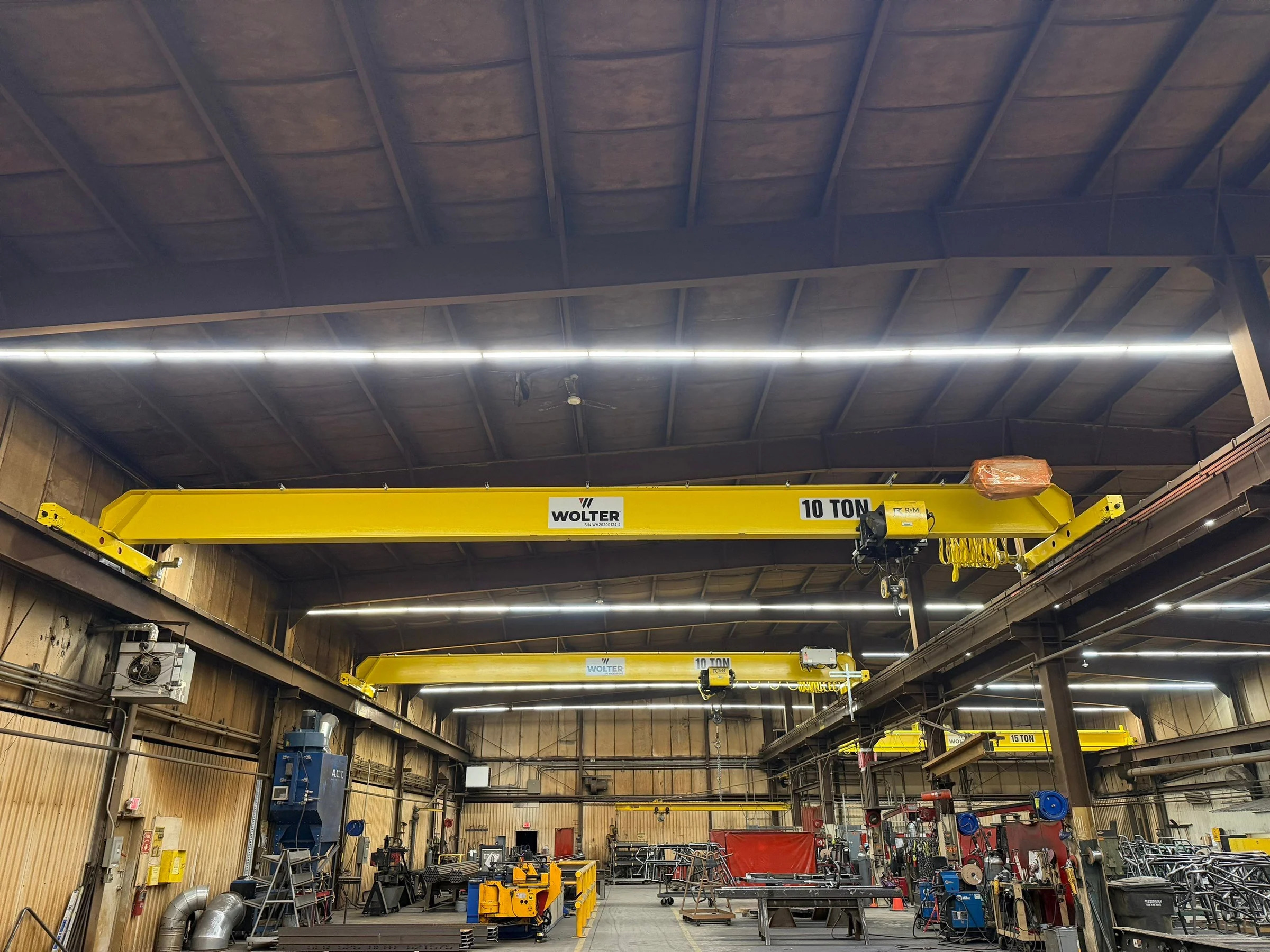
Replacement bridge cranes installed on the Lejeune runways.
Lejeune four-crane replacementKnow who owns every interface.
Build the work around the site.
Agree what completion includes.
Bring clarity to the work.
Modernization Should Solve The Right Crane Problem
An older bridge crane may not need full replacement, but the right answer depends on what is limiting the system. Hoist age, runway condition, controls, electrification, duty cycle, service access, safety requirements, and production goals all matter.
IMH reviews modernization conversations around practical field evidence: symptoms, inspection findings, downtime history, parts availability, operator complaints, access constraints, and what the plant needs the crane to do next.
Modernization Targets
Age, capacity needs, service access, and operator workflow can drive the upgrade.
Pendant, radio, variable speed, disconnects, and electrification may need review.
Alignment, rail, end stops, support steel, and building conditions can limit performance.
Repair, Retrofit, Or Replace
Modernization should separate symptoms from root causes. A travel problem might point to runway alignment. A control complaint might expose outdated electrification. A hoist issue might be tied to duty cycle or service access.
IMH helps buyers organize the evidence so the scope improves reliability, safety, serviceability, and production fit instead of replacing parts in isolation.
Crane Modernization Inputs
These details help define whether repair, retrofit, modernization, or replacement is the right path.
| Input | Why it matters |
|---|---|
| Crane age and type | Identifies likely compatibility, parts, documentation, and duty-class questions. |
| Problem history | Shows repeated downtime, travel issues, controls complaints, or hoist symptoms. |
| Inspection findings | Connects modernization to documented condition, safety concerns, and repair urgency. |
| Runway condition | Alignment, rail, supports, wheel wear, and end stops may drive the scope. |
| Controls and electrification | Obsolete components, operator stations, conductor bar, festoon, and power delivery affect reliability. |
| Hoist and trolley condition | Age, parts availability, duty, lift speed, and service access influence the upgrade decision. |
| Shutdown window | Defines phasing, testing, and handoff. |
When To Modernize A Bridge Crane
Modernization makes sense when the crane still has value but no longer supports the plant well.
Extend useful crane life while improving reliability, safety, serviceability, and operator confidence.
Modernization Should Improve The Next Ten Years
A bridge crane retrofit should not only address today’s symptom. It should make the next inspection, repair, production change, or operator handoff easier.
IMH reviews modernization with runway support, controls, access, power, documentation, and startup in the conversation.
Crane Modernization Planning
IMH’s broader conveyor, crane, installation, and retrofit work supports practical upgrade conversations.
The strongest modernization path is clear about what changes value for the plant and what still needs structural or service review.
Modernization works when it makes the crane easier to trust tomorrow, not just today.
Should I repair or replace my bridge crane?
That depends on crane condition, runway condition, controls, hoist age, duty cycle, parts availability, safety needs, and production goals.
Can controls be modernized?
Often, controls and electrification can be reviewed as part of a crane modernization scope.
Can a runway issue look like a crane issue?
Yes. Poor alignment, rail condition, or support movement can create travel symptoms.
Can modernization be phased?
Sometimes. Phasing depends on compatibility, downtime, access, and startup requirements.
What should I send first?
Photos, crane type, problem history, inspection notes, controls photos, runway photos, and shutdown timing.
Four Cranes. One Coordinated Replacement.
Removal and replacement of two 15-ton double-girder and two 10-ton single-girder bridge cranes, with field modifications and electrical integration.
- IMH responsibility
- Field installation & replacement
A field scope that fits.
Define delivery, access, assembly, utilities, and handover with the project team.
Tell us what
needs attention.
Share the equipment, symptoms, project location, and production impact. We’ll discuss the service scope and availability. For a time-sensitive need, call directly.
Discuss service Or call (812) 363-1819