
Freestanding Crane Runway Systems
Freestanding crane runway systems for facilities that need bridge crane coverage without relying entirely on existing building steel.
Reach the work. Preserve useful floor space.
Crane, runway, steel, and field planning.
Four-crane replacement and installation.
The details shape the system.
When The Building Should Not Carry The Crane
A freestanding crane runway uses its own support structure instead of depending entirely on existing building steel. That can be useful when the building was not designed for crane loads, when coverage needs to move outside the best structural bay, or when future flexibility matters.
IMH reviews capacity, span, runway length, floor and foundation conditions, column placement, hook coverage, power delivery, installation access, and production flow before recommending a freestanding runway approach.
Freestanding Runway Planning Priorities
Runway length, span, hook approach, and column layout decide whether the crane reaches the work.
Column locations, anchors, slab condition, and traffic paths affect the plant below the crane.
Support steel delivery, rigging, alignment, power, and startup need early planning.
Support Steel Should Not Create A New Problem
Freestanding runway systems can solve a structural problem while creating a floor-space problem if column placement is not reviewed carefully.
IMH plans runway support around equipment access, aisle movement, maintenance paths, future process changes, and how the steel will be installed in the real facility.
When Freestanding Runway Makes Sense
A freestanding runway is most useful when crane coverage is needed but building-supported runway is not the cleanest answer.
Create reliable hook coverage with support steel that protects the floor below it.
Column Placement Is A Production Decision
The best freestanding runway is not simply the strongest steel layout. It is the strongest layout that still lets the plant work.
IMH reviews support spacing, anchor points, floor traffic, forklifts, carts, operator access, maintenance zones, and future equipment moves before treating the runway layout as final.
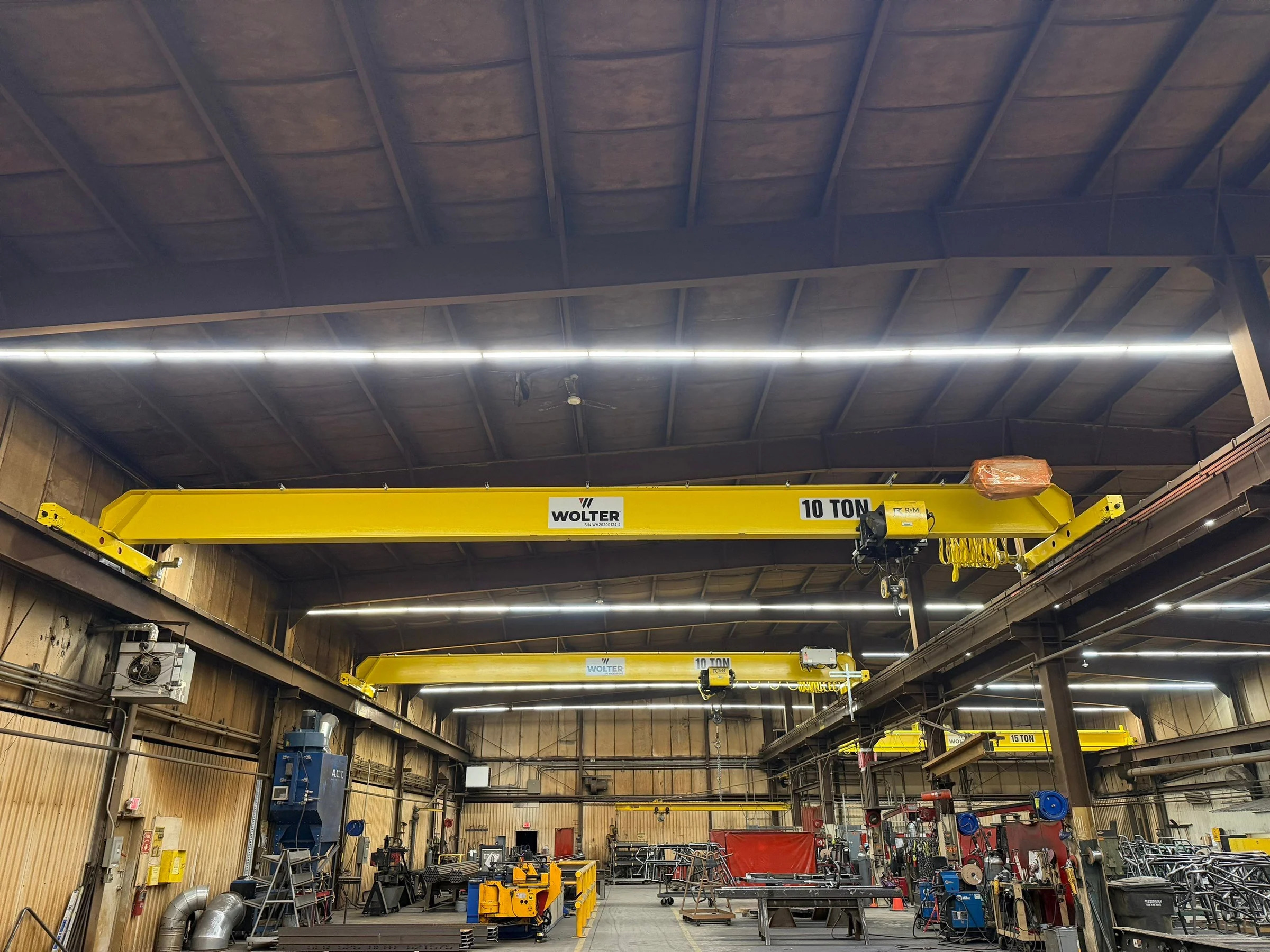
Four Cranes. One Coordinated Replacement.
Removal and replacement of two 15-ton double-girder and two 10-ton single-girder bridge cranes, with field modifications and electrical integration.
- IMH responsibility
- Field installation & replacement
Explore the arrangements.
Look closer at the configurations that suit your production.
Bring us the lift.
Let’s plan the whole project.
Start with what you lift, where it needs to go, and your project location. Photos, a rough layout, or an existing crane specification help. You can leave unknown details open.
Discuss my crane project Or call (812) 363-1819