Coverage that earns its place.
We start with the actual picks, placement points, load, and lift frequency. Hook approach, headroom, and operator access help shape a crane that serves the work you need to do.
Get a crane that fits your production, with the runway, support steel, and installation considered together. IMH connects equipment selection with real plant and field experience. Based in Indiana. Working nationwide.
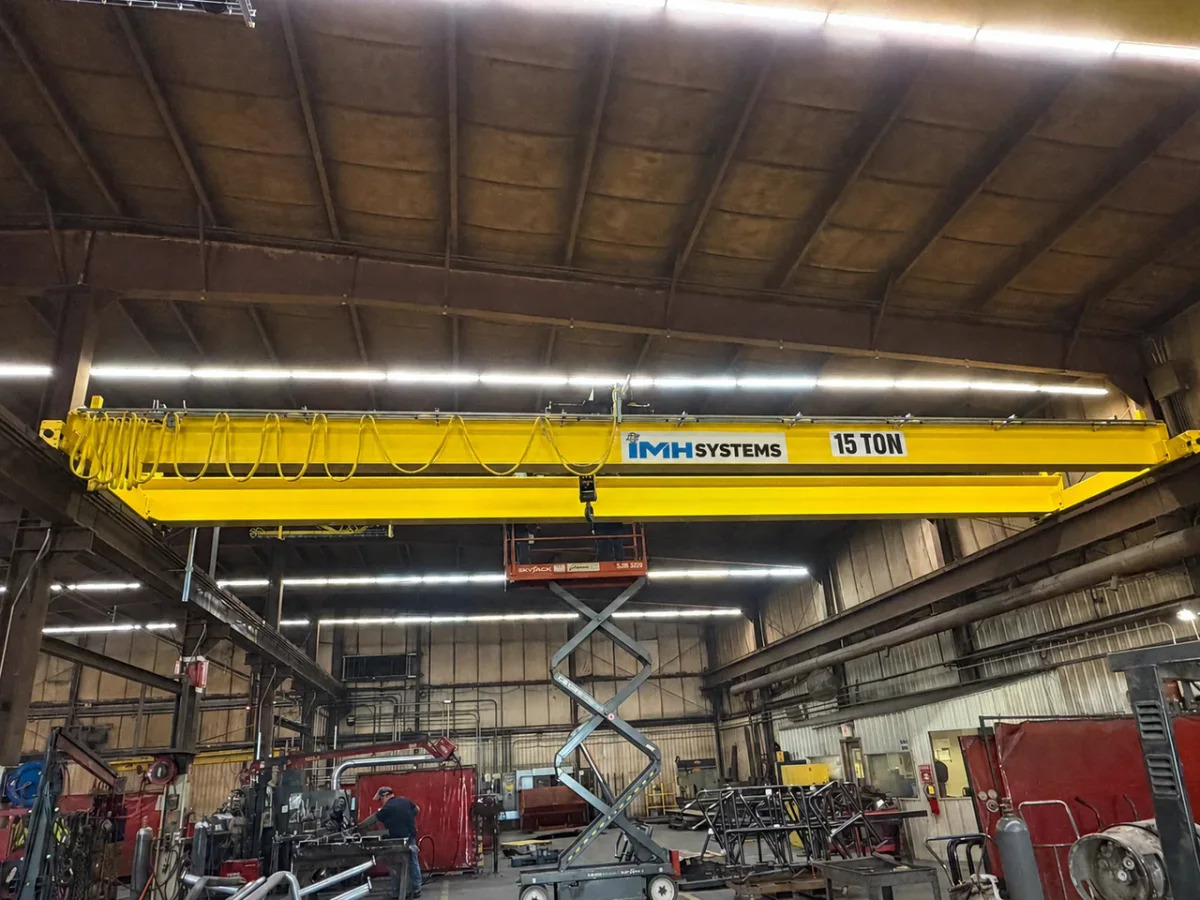
Yellow IMH Systems bridge crane marked 15 ton spanning a fabrication bay with an access lift below.
Your crane has to work with the building, the equipment below it, and the people running production. IMH brings crane selection, support steel, and installation planning together so those decisions stay connected.
Talk through your crane projectLicensed DEMAG distributor. Start with a sales engineer or complete a detailed DEMAG RFQ when you’re ready to share specifications.
We start with the actual picks, placement points, load, and lift frequency. Hook approach, headroom, and operator access help shape a crane that serves the work you need to do.
Runways, columns, bracing, and existing equipment affect the space you can use. We consider the crane and its supports together, including freestanding options where the application calls for them.
Equipment removal, rigging access, staging, power, and shutdown timing belong in the early conversation. Our installation experience helps identify the work required to bring the crane into your facility.
IMH also works with conveyors, powered hoist monorails, and industrial installations. When lifting meets a production line, we can discuss the load handoff, shared space, and installation sequence together.
IMH removed existing equipment and installed four replacement bridge cranes, with field modifications, electrical integration, alignment, operational testing, and commissioning. Access, staging, and runway interfaces were part of the same installation scope.
See the replacement projectIMH scope: equipment removal, replacement installation, field modifications, electrical integration, testing, and commissioning.
Compare the movement you need and the conditions around it. The configuration follows the application.
Find your starting pointLocal lifting around a station or a defined movable work area.
Lifting across a production bay or defined rectangular work area.
Focused handling around an assembly area or individual operation.
A runway support arrangement to evaluate when building support is unavailable.
Lifting and moving individual loads between points along a defined overhead route.
Your project / Next step
For industrial lifting projects, replacements and runway changes. Tell us what needs to move and the coverage you need; we will identify the open equipment and site questions.
See the four-crane replacement projectShare what you know. Leave unknown details open.
Email IMH salesThe load is the beginning. Where it starts, where it needs to land, how often it moves, and who operates the lift determine the system that belongs in your plant.
IMH brings crane selection, hook coverage, building interfaces, runway planning, controls, and installation into one conversation. You get a proposal shaped around the production task.
Top-running and underhung describe how a bridge travels on the runway. Single and double girder describe its construction. They are related decisions, with different implications for headroom, wheel loads, capacity, and maintenance access.
Runway alignment, column positions, bracing, foundations, clearances, and building capacity matter as much as the crane itself. Existing structure must be evaluated for the proposed loads; visual condition alone cannot establish suitability.
We evaluate coverage and support arrangements together to preserve useful floor space, equipment access, and the way operators work.
Access for delivery and lifting equipment, an agreed shutdown sequence, power availability, and clearly assigned responsibilities help a project move from a drawing into the plant.
Define inspection, testing, operator handover, and commissioning responsibilities in the project scope. Acceptance requirements depend on the equipment, application, and parties involved.
A preliminary conversation does not require a finished specification. Start with the load, the work area, and the production goal.
A useful crane proposal tells you what it takes to put the equipment to work. Bring these questions to your conversation with IMH.
Read the crane quote guideConfirm coverage, lift height, hook approach, load, and operating duty against the actual work.
Identify runway and support work, structural review, power, controls, and any work assigned to your team or other contractors.
Discuss removal, delivery, staging, rigging access, and the available installation window before setting the field plan.
Define testing, documentation, operator handover, warranty responsibilities, and the route for service support in the agreed scope.
Look closer at the configurations that suit your production.
Start with what you lift, where it needs to go, and your project location. Photos, a rough layout, or an existing crane specification help. You can leave unknown details open.
Discuss my crane project Or call (812) 363-1819