
Automotive and Assembly Overhead Conveyor Systems
Automotive and assembly overhead conveyor planning for power and free systems, accumulation, carrier control, station timing, support steel, and installation.
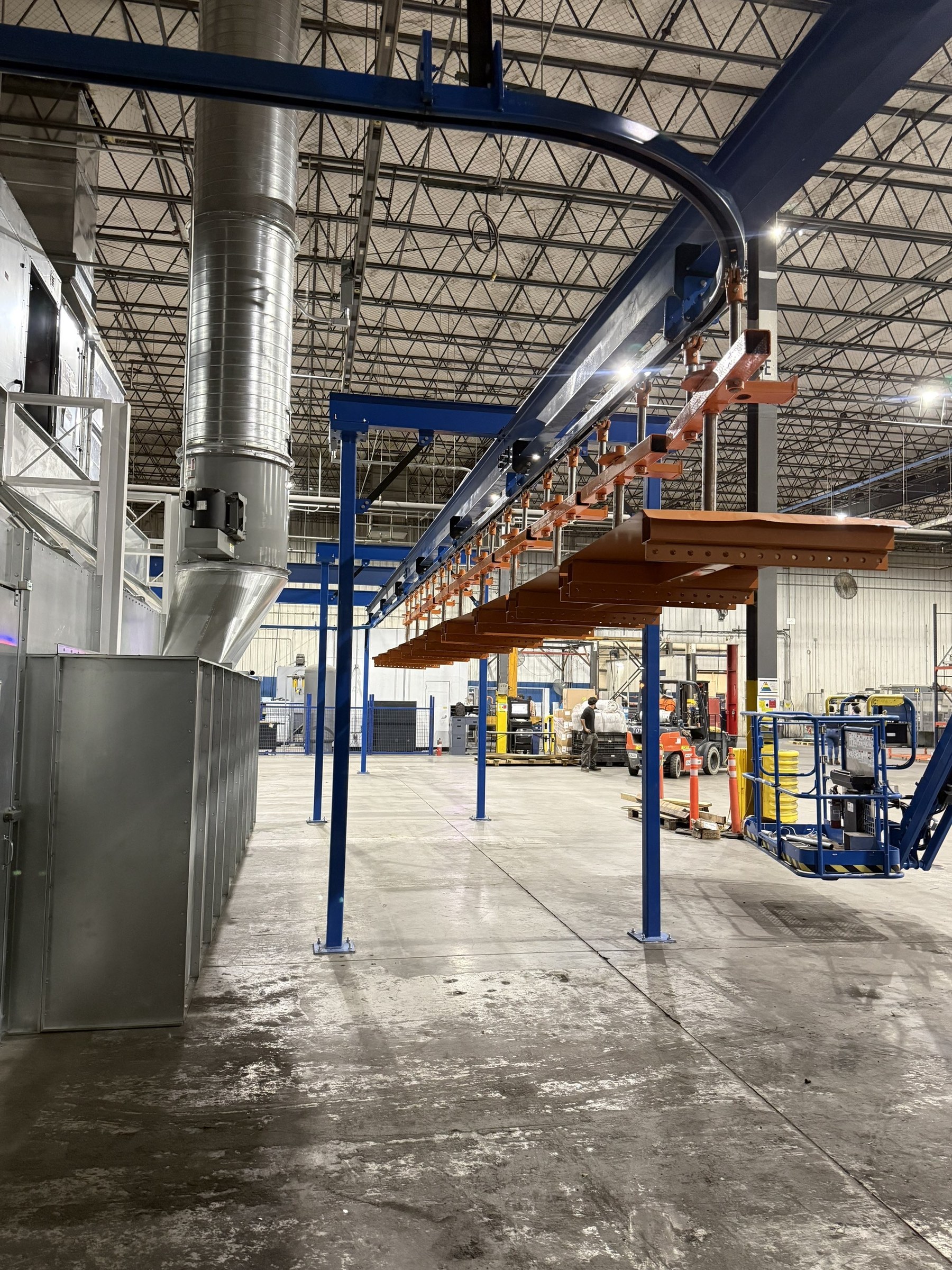
Hand-push finishing conveyor and suspended carriers at Martinrea.
Martinrea conveyor and finishing systemChoose around the work you need to move.
Plan the route and support steel together.
Bring installation into the first plan.
The details shape the system.
Designed for the application
Overhead conveyor systems for automotive suppliers, assembly operations, work-in-process movement, sequencing, and operator-friendly production flow above the plant floor.
Move Product The Way Operators Work
Assembly operations need product movement that supports the people at each station, not a conveyor layout that forces operators to work around the equipment.
IMH helps plan conveyor routes, carriers, WIP buffers, sequencing, load zones, unload zones, support steel, and installation around existing equipment, aisle clearance, takt time, mixed-model flow, and changing production needs.
Assembly Conveyor Priorities
Parts must arrive at a workable presentation height and orientation without blocking tools, fixtures, or movement.
Line speed, stops, accumulation, station loops, and carrier spacing should support real takt time.
Mixed-model production may require flexible carriers, repeatable location, sequencing, kitting, or routing choices.
Power And Free For Controlled Flow
Power and free conveyor can help when carriers need to stop, accumulate, route, switch to work loops, feed line-side storage, or move through stations at different timing.
A continuous conveyor may fit steady movement, but assembly operations often benefit from controlled carrier behavior, defined work zones, WIP buffers, ergonomic presentation, and the ability to keep production moving while individual carriers wait for operator or process time.
Assembly Conveyor Inputs
These details help IMH connect conveyor planning to real station work.
| Input | Why it matters |
|---|---|
| Part size and weight | Defines carrier, trolley/load-bar arrangement, spacing, and support needs. |
| Station locations | Controls route, stops, load zones, unload zones, switches, operator station loops, and access. |
| Takt time | Determines speed, accumulation, WIP buffer size, and whether independent carrier control is needed. |
| Part orientation | Affects ergonomics, tooling access, presentation height, side sway, and finish protection. |
| Sequencing and kitting | Helps decide whether carriers need repeatable position, route control, storage loops, or line-side delivery. |
| Future product changes | Helps plan carriers and routes with reasonable flexibility for mixed-model flow. |
Where Assembly Conveyors Help
Production-flow problems are solved by matching the conveyor path to the product, operator, station layout, and required pace.
Support throughput, operator access, and future flexibility without crowding the floor.
Designed To Keep The Floor Working
Assembly operations need clear movement below the conveyor. Forklifts, carts, fixtures, workstations, service equipment, and product flow all compete for floor space. A structure with too many posts can solve the overhead problem while creating a new floor-level bottleneck.
IMH designs overhead conveyor support steel with open access and future flexibility in mind. Bolted structural assemblies can support cleaner installation, easier expansion, and a more professional appearance than field-welded support frames.
Assembly Conveyor Confidence
IMH’s documented conveyor project history spans manufacturing applications where route, carrier, support steel, and installation details matter.
Assembly conveyor planning should include stops, switches, accumulation, carrier spacing, work loops, load-bar arrangements, WIP buffers, ergonomic presentation, and future product mix. IMH connects those details to real station work and documented systems nationwide.
The conveyor should fit the operator, the product, and the pace of the line.
Why use overhead conveyor in assembly?
It can reduce floor congestion, improve part flow, support sequencing, and present parts at a useful height.
Is power and free useful for assembly?
Yes, when carriers need to stop, accumulate, route, or move through stations at different timing.
Can carriers be customized?
Carrier requirements should be reviewed around the part, operator access, finish protection, and process needs.
Can overhead conveyor support WIP storage?
Yes. Depending on the system type, overhead conveyor can create organized buffer areas.
What should I prepare for a quote?
Part size, weight, orientation, route, station locations, takt time, photos, drawings, and installation timing.
Explore the arrangements.
Look closer at the configurations that suit your production.
Bring us the bottleneck.
We’ll help plan the movement.
Share what you move, where it needs to go, and what is holding production back. A photo or rough layout is a useful start. You do not need a finished specification.
Discuss my conveyor project Work through the planning questions Complex flow or unknown rates? Explore an engineering study Or call (812) 363-1819