
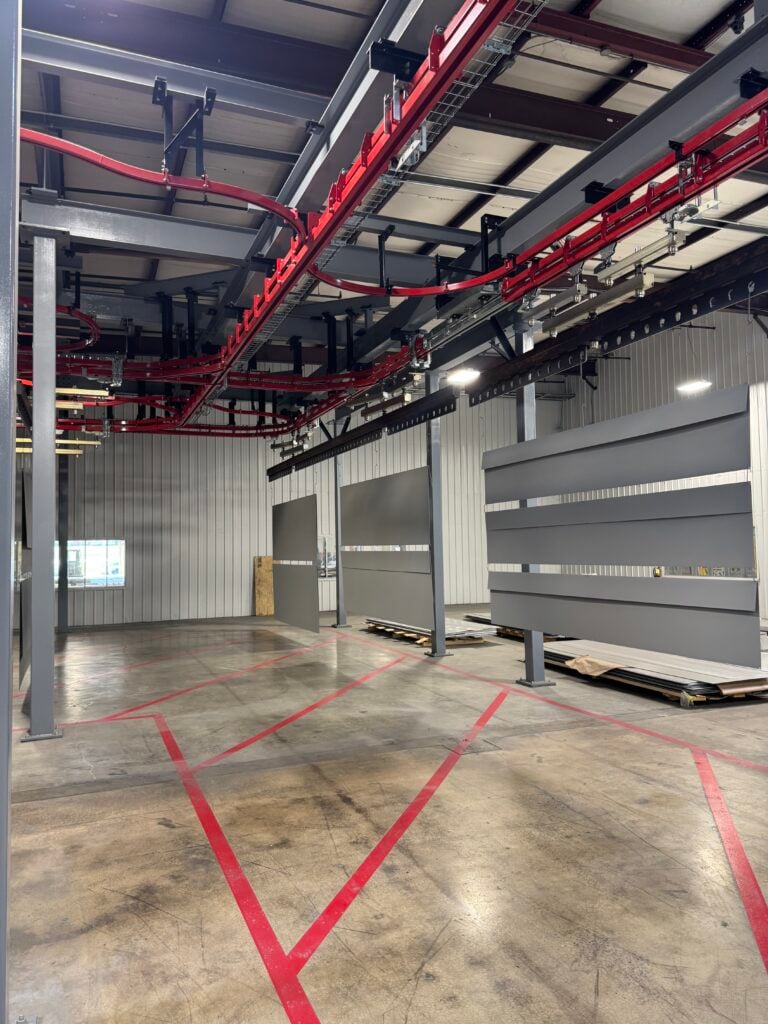
Overhead Conveyor Quote Checklist
A practical checklist for gathering the load, carrier, route, controls, support steel, and installation details needed before requesting an overhead conveyor quote.
Better Conveyor Quotes Start With Better Inputs
A useful overhead conveyor quote needs more than a product name. The system has to fit the load, route, carrier, controls, support steel, production schedule, and plant conditions around it.
This checklist helps buyers collect the details IMH needs to compare power and free conveyor, enclosed track, I-beam monorail, hand-pushed monorail, retrofit options, and installation scope before the project reaches engineering or purchasing.
Quote Details To Gather First
Load And Carrier
Part weight, dimensions, center of gravity, orientation, hook points, carrier style, load bar, and finish-protection needs.
Route And Process
Line length, turns, elevation changes, load zones, unload zones, process equipment, dwell time, takt time, and accumulation needs.
Facility And Field Work
Photos, drawings, columns, roof steel, utilities, floor access, support steel, lift equipment, and shutdown timing.

Send The Details That Change The Recommendation
A plant may ask for an enclosed track conveyor and end up needing power and free controls. Another may ask for I-beam because the load is heavy, then discover the installation path or support steel is the real decision point.
IMH uses the first quote conversation to separate fixed requirements from assumptions, so the project can move toward a practical scope instead of a generic product response.
Start With A Buildable Plan
Before budget, downtime, or engineering time is committed, the right project details need to be clear. IMH connects the desired outcome with the field conditions that decide whether the system can be installed cleanly and perform reliably after startup.
That means collecting photos, drawings, measurements, production goals, safety requirements, shutdown limits, and maintenance concerns early. It also means explaining tradeoffs in plain language: what should be engineered now, what can be phased later, what needs structural review, and what information is still missing before a final recommendation is responsible.
Overhead Conveyor Quote Checklist
These inputs help IMH understand the system, the building, and the installation reality.
| Checklist item | What to include |
|---|---|
| Part details | Weight, dimensions, center of gravity, orientation, temperature, finish sensitivity, and handling concerns. |
| Carrier requirements | Hooks, racks, load bars, rotation, masking, product spacing, load/unload ergonomics, and custom carrier needs. |
| Production flow | Rate, takt time, line speed, dwell time, accumulation, WIP buffer, sequencing, and process timing. |
| Route | Start and end points, length, turns, vertical curves, elevation changes, switches, transfers, and process zones. |
| Track preference | Power and free, enclosed track, I-beam, hand-pushed, electrified monorail, or unknown. |
| Facility conditions | Drawings, column lines, roof steel, ceiling height, utilities, mezzanines, aisles, doors, and obstructions. |
| Environment | Paint, powder, washdown, ovens, heat, steam, abrasive dust, chemicals, or contamination concerns. |
| Installation limits | Shutdown windows, lift access, staging space, safety rules, active production, and commissioning expectations. |
Files And Photos To Send
Good visual inputs can shorten the first review and reveal constraints before the site visit.
Support Steel Belongs In The Quote Conversation
Support steel can affect cost, installation, floor access, future expansion, and the day-to-day usefulness of the conveyor.
IMH reviews column placement, bracing, aisle clearance, support spacing, access to drives and take-ups, and whether a cleaner bolted support approach can reduce future field disruption.
The Work IMH Is Built Around
IMH Systems is focused on engineered movement overhead, reliable lifting, and field execution inside real manufacturing plants. Overhead conveyors, bridge cranes, and service or installation work remain the center of that story, while secondary equipment is included only where it helps solve the larger project.
Buyers get practical answers instead of generic product language: what details matter, what decisions affect the installed system, what tradeoffs need review, and when a project is ready for a deeper conversation.
For conveyor projects, that means reviewing load weight, carrier behavior, drive and take-up locations, controls, support steel, access below the line, maintenance points, and shutdown phasing before recommending a path.
A strong system can be quoted responsibly, installed cleanly, and serviced after startup.
Useful Inputs Create Useful Quotes
The overhead conveyor hub asks buyers for load, carrier, route, controls, building, environment, and shutdown details. This checklist turns that guidance into a practical project-review tool.
Every overhead product and retrofit page gives buyers a clear next step when they are ready to request review.
A good checklist turns a vague conveyor request into a buildable conversation.
Frequently Asked Questions
What is the first detail needed for an overhead conveyor quote?
Start with the part: weight, dimensions, orientation, center of gravity, and how it needs to be carried.
Do I need drawings before contacting IMH?
Drawings help, but photos, measurements, and a clear description of the problem can start the review.
Should I choose the conveyor type before asking for a quote?
Not always. IMH can help compare power and free, enclosed track, I-beam, hand-pushed, and retrofit paths.
What photos are most helpful?
Route area, ceiling steel, columns, utilities, product handling, existing conveyor components, drives, take-ups, and surrounding equipment.
Can this checklist help retrofit projects?
Yes. Retrofit work benefits from photos, old drawings, current system type, wear history, controls condition, and shutdown limits.
Ready To Start An Overhead Conveyor Quote?
Send IMH your checklist details, photos, drawings if available, and the production goal you need the system to solve.