
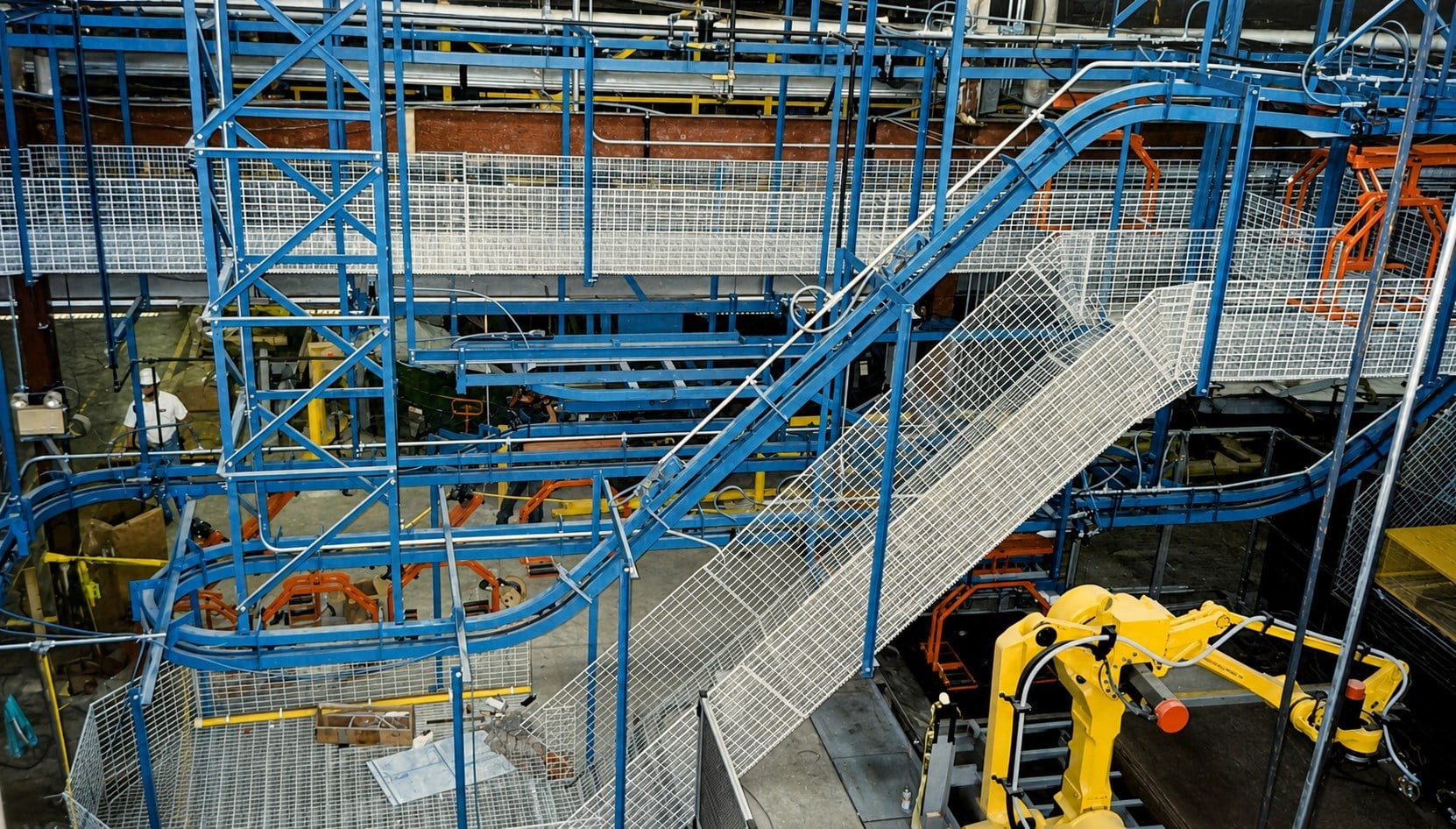
Power & Free Conveyor Systems
Power & Free conveyor systems for manufacturers that need controlled carrier movement, accumulation, transfers, routing, process timing, paint and finishing flow, and reliable overhead production movement.
Control The Carrier Without Stopping The Line
A Power & Free conveyor system is built for production areas where every carrier does not need to move the same way at the same time. It is one of the strongest overhead conveyor choices when the plant needs open floor space plus carrier control.
IMH uses power and free conveyor planning to help manufacturers separate movement from process timing, so carriers can stop, accumulate, transfer, inspect, index, buffer, sequence, or move through work zones without treating the entire line as one continuous chain. The right design depends on load, carrier control, routing, drive chain pull, accumulation needs, switches, support steel, and field access.
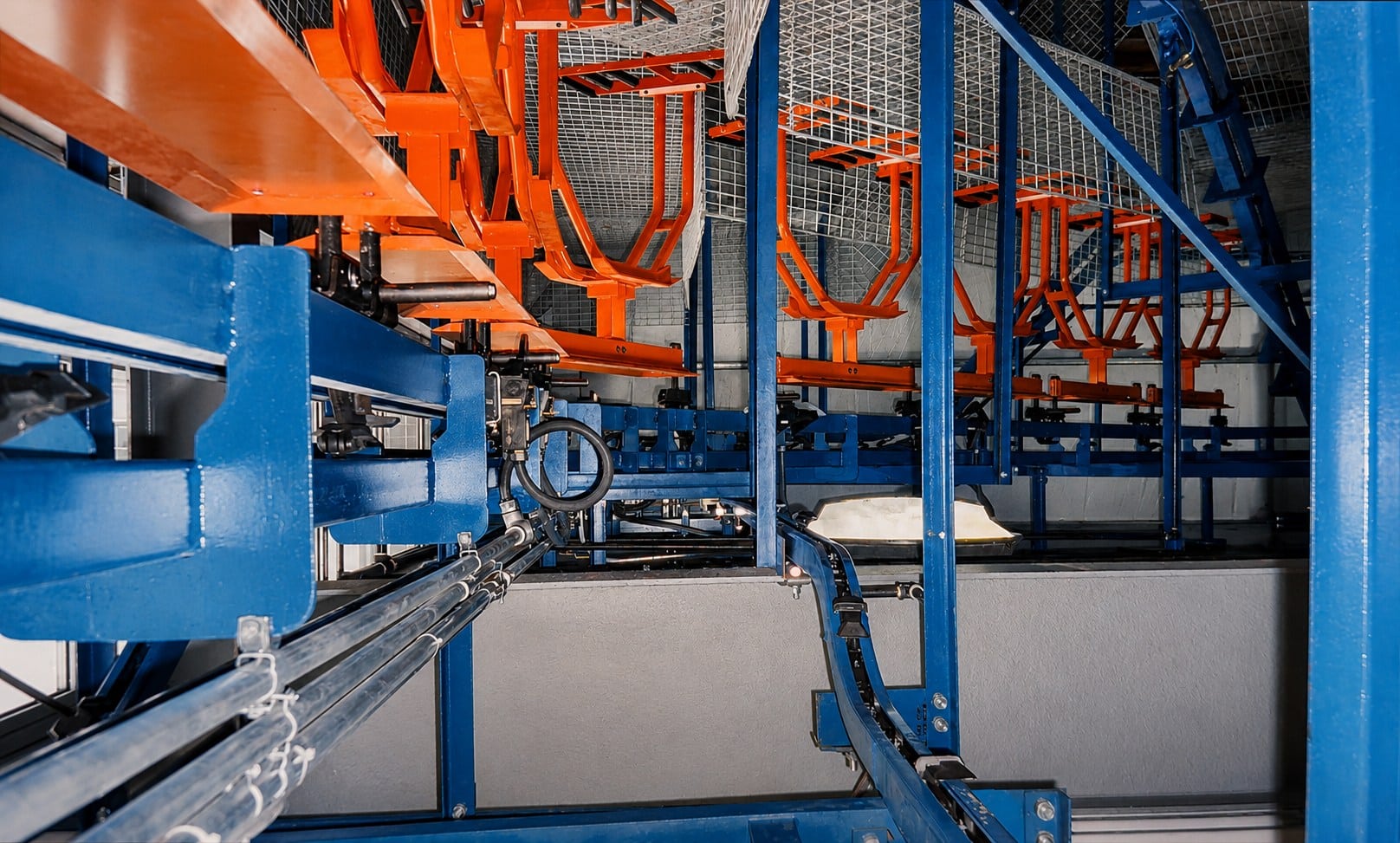
Overhead or Inverted. Control Every Carrier.
Accumulation
Build controlled buffer zones before process equipment, work cells, inspection areas, paint booths, ovens, or unload stations.
Routing And Transfers
Move carriers through branch paths, load switches, unload switches, transfers, and different process sequences.
Workstation Control
Stop carriers where operators need stable access instead of forcing every station to chase line speed.
Variable Process Timing
Hold carriers for different dwell times through paint, cure, cooling, inspection, assembly, or other process steps without slowing the entire line.
Automated Sequencing
Release and route carriers based on production logic, downstream availability, part type, or process status so material arrives where it is needed in the correct order.
Overhead or Inverted. Same Carrier Control.
Choose the arrangement that gives the process the right access, product stability, and routing path.
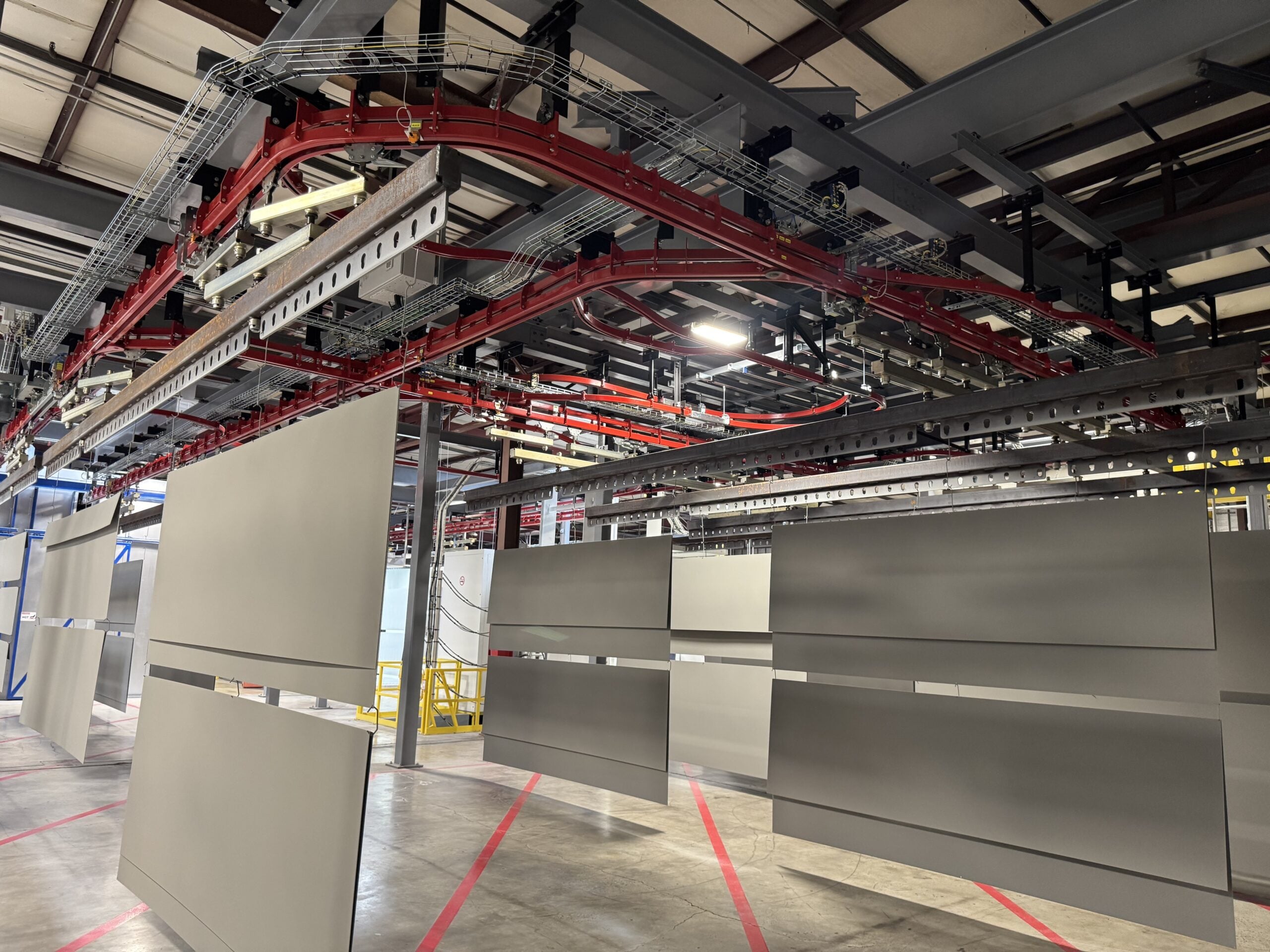
Overhead Power & Free
Keep the floor open and move product through the process from above. Best suited for applications where overhead routing provides the cleanest path through production.
- Paint and finishing lines
- Washers, ovens, and cure processes
- Assembly and workstations
- Accumulation and buffer zones
- Complex routing and elevation changes
- Applications where floor space must remain open
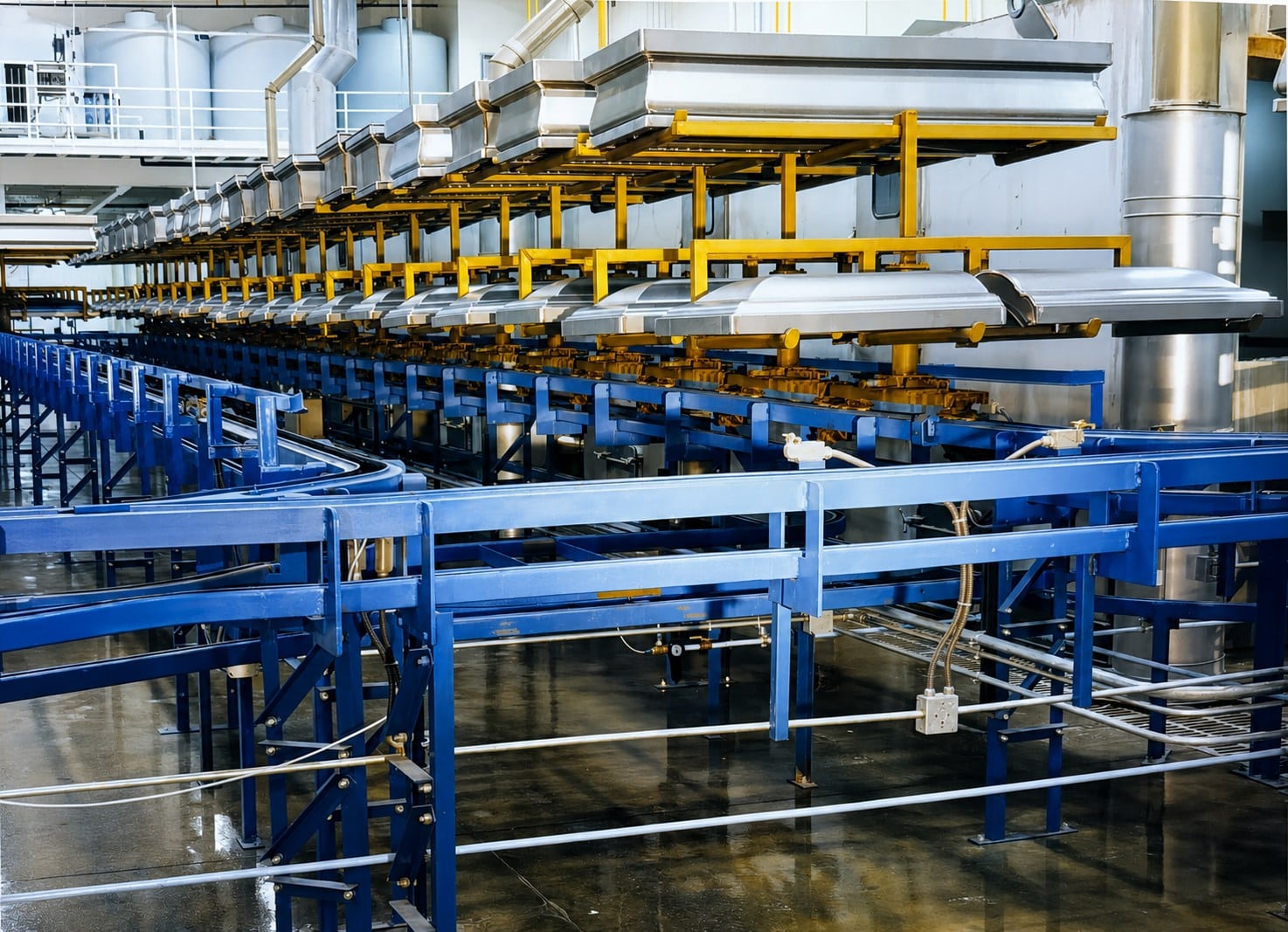
Inverted Power & Free
Put the conveyor below the product and keep the workpiece open from above. A strong option where product stability, access, presentation, or overhead clearance makes an inverted arrangement more practical.
- Paint and finishing applications
- Assembly operations
- Stable carrier positioning
- Operator access around the product
- Automated work cells
- Applications requiring a clear overhead area
Before We Lay Out Track, We Map The Process
A power & free system starts with the decisions each carrier needs to make. Where does it stop? How long does it stay? What releases it? Where can it route? What happens when the next process is full?
IMH maps that production sequence first, then develops the accumulation zones, stops, switches, carrier spacing, sensors, process interlocks, control logic, and operator interfaces required to make it happen. The conveyor layout and automation are developed around the same operating sequence so mechanical movement and controls work as one system.
Power And Free Conveyor Planning Inputs
These details help define carrier spacing, stops, transfers, drives, controls, support structure, and installation scope.
| Input | Why it matters |
|---|---|
| Load weight and carrier style | Determines whether Unibilt, Dog Magic, I-beam, or another approach fits; capacities depend on trolley/load-bar configuration, level versus inclined travel, carrier design, and structure. |
| Power and free family | Enclosed-track, two-rail, I-beam, and heavier-duty power and free options should be compared around load, carrier behavior, routing, environment, and controls. |
| Process zones | Shows where carriers need to stop, accumulate, transfer, inspect, load, or unload. |
| Dwell and takt time | Connects line speed, stops, buffers, and process timing. |
| Route and elevation | Defines curves, switches, vertical changes, clearances, drives, and take-ups. |
| Drive and speed control | High chain-pull systems may need caterpillar-drive planning, single or multi-drive review, fixed or variable speed, and correct drive/take-up relationship. |
| Control requirements | Coordinates stop assemblies, limit switch actuators, sensors, interlocks, operator stations, and process equipment handoff. |
| Support steel and access | Protects floor movement, maintenance access, and installation quality. |
| Shutdown or install window | Determines phasing, preassembly, tie-ins, and startup planning. |
When Power & Free Is The Right System
Power & free makes sense when production needs more control & automation than a continuously moving conveyor can provide.
Support Steel Still Decides The Experience
A power and free system can be technically correct and still frustrate the plant if the support layout creates blocked aisles, cramped maintenance access, or excessive columns below the line.
IMH plans the overhead support steel, route, and equipment access together. When the application allows, bolt-together structural assemblies with A325 hardware can support cleaner installation, tighter tolerance control, future expansion, and a more professional finished system.
Mechanical, Controls & Structure Built as One System
Power and free gets complicated when the conveyor layout, controls, and support steel are developed separately. Stops and switches need room to operate. Sensors need reliable targets. Drives and take ups create concentrated loads. Accumulation zones need access. Controls need to match the actual carrier movement in the field.
IMH Advantage
Automation Built Into The Layout
Stops, switches, sensors, accumulation zones, operator stations, and process interfaces are located as part of the conveyor design.
Structure Where It Is Needed
Drives, take ups, curves, switches, and loaded accumulation areas are supported around the actual system loads and reactions.
Maintenance Access Preserved
Serviceable components remain reachable without burying drives, controls, stops, or switches behind unnecessary steel.
Designed For Field Installation
Track splices, steel connections, equipment access, erection sequence, and startup requirements are considered before material reaches the plant.
Power & Free Experience
IMH has documented conveyor and material handling systems nationwide, including power and free work, monorail systems, modernization, custom carriers, and installation support.
Power-and-free planning can range from enclosed-track configurations for controlled lighter to moderate loads to heavier mechanical-control systems for larger carriers and more demanding production routes. IMH reviews drive capacity, speed control, chain pull, take-up location, carrier behavior, pusher-dog engagement, switches, anti-backups, and field access so the final system is more than a product match.
Power and free is not just a conveyor type. It is a way to control production flow.
Documented Power & Free Project Proof
Power and free buyers need evidence that the team can handle carrier control, routing, installation, and startup in real production environments. These project examples support that conversation.
A documented power and free conveyor project supporting controlled overhead production movement and assembly-flow planning.
View project
Power & FreeToledo, Ohio Production Conveyor SystemProject proof for overhead carrier movement where timing, routing, installation, and production conditions matter.
View project
Power & FreeMacon, Georgia Power & Free ConveyorA dedicated power and free project example for buyers comparing serious overhead conveyor partners.
View project
Frequently Asked Questions
What is a Power & Free conveyor system?
It is an overhead conveyor approach that allows carriers to move, stop, accumulate, transfer, index, or route independently from the main powered chain behavior.
When is power and free better than continuous conveyor?
It is usually stronger when parts need accumulation, variable timing, work zones, transfers, storage loops, sequencing, or process dwell time.
How much weight can power and free handle?
It depends on the product family and engineered configuration. Unibilt power and free literature shows configurations up to 3,000 lb with a four-trolley load bar, while Dog Magic literature covers heavier-duty systems up to 8,000 lb on level systems. IMH verifies capacity around level versus incline, live load, carrier centers, trolley count, load-bar arrangement, pusher-dog engagement, switches, drive chain pull, support structure, and controls before making a recommendation.
Can power and free be used for paint lines?
Yes. Paint and finishing applications often use power and free concepts for controlled movement through washers, booths, ovens, cure zones, and inspection areas.
What details are needed for a Power & Free conveyor quote?
Load weight, carrier requirements, route, process zones, dwell time, accumulation needs, controls, photos, drawings, and installation timing.
Can IMH retrofit a power and free system?
Yes. IMH can review replacement sections, route changes, carrier updates, structural support, controls coordination, and installation phasing.
Ready To Review A Power & Free Conveyor System?
Send IMH your route, part details, process timing, photos, drawings, and production goal. We will help determine whether power and free is the right fit.