
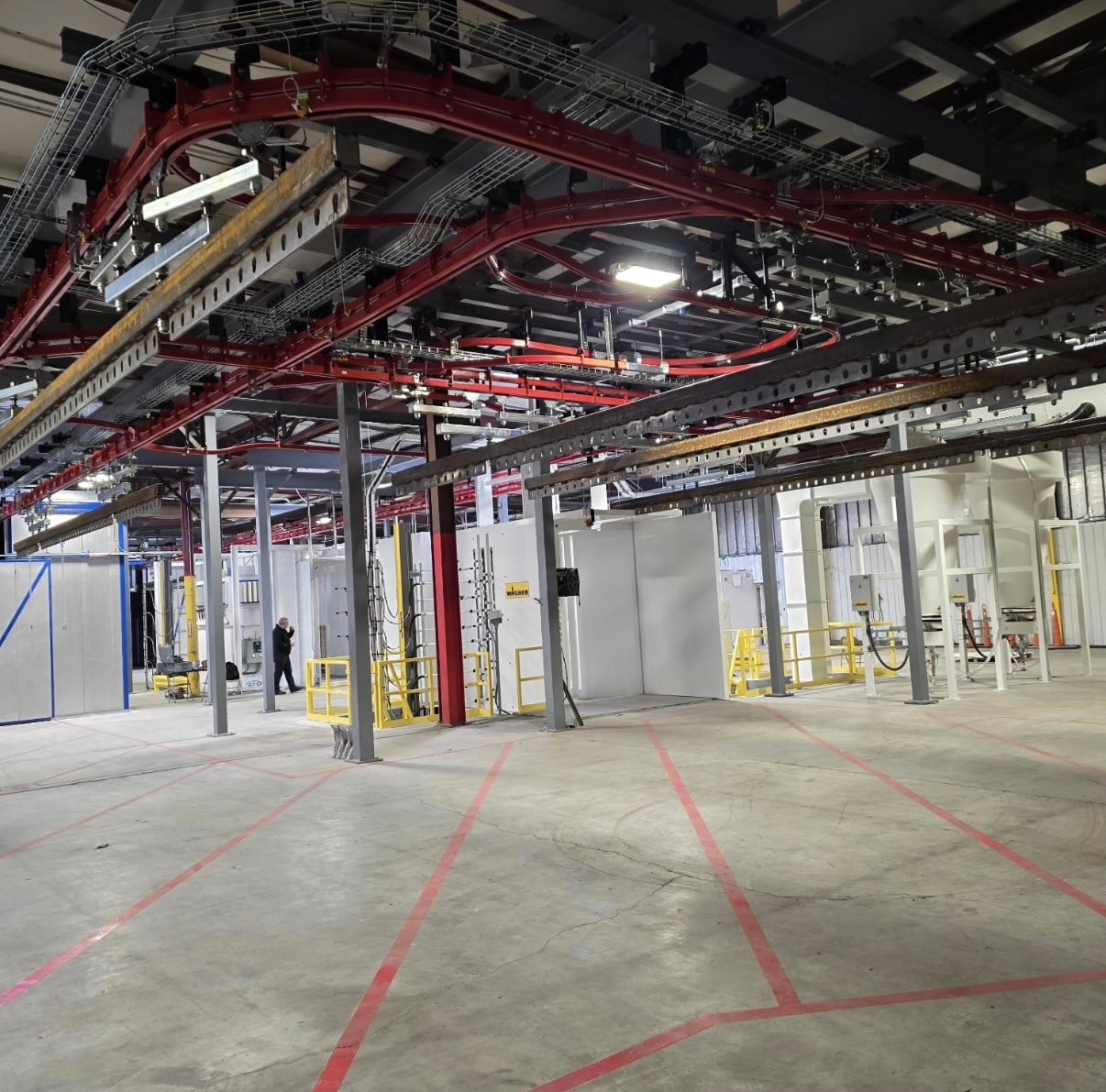
Overhead Conveyor Systems
Engineered overhead conveyor systems for manufacturers that need cleaner flow, stronger structure, better floor access, and installation support from a team that understands the field work behind the equipment.
Built Around The Way Your Plant Actually Runs
An overhead conveyor is not just track in the air. It is a route, carrier, drive, controls package, support structure, installation plan, and maintenance strategy that has to fit the plant around it.
IMH Systems helps manufacturers choose and install power and free conveyors, enclosed-track systems, heavy-duty trolley chain conveyors, hand-pushed monorail, electrified monorail, carriers, load stations, unload stations, and retrofit options with real plant constraints in the conversation from day one.
Common Overhead Conveyor Choices
Power and Free
For controlled production flow where carriers need to stop, accumulate, transfer, index, or move through different process timing without shutting down the entire line.
Unibilt Enclosed Track
A clean, compact choice for lighter to moderate loads, continuous movement, tight routing, and efficient use of overhead space.
Heavy-Duty Trolley Chain
A powered, power-only option using rugged S-beam track for heavier loads, harsh environments, long runs, and serviceable industrial duty.

System Planning Comes Before Product Selection
Many buyers start with a product name because that is what they found online. IMH uses that conversation to confirm whether the equipment actually fits the load, route, process, structure, controls, maintenance access, and installation window.
A paint line with accumulation may lead the conversation toward enclosed-track power and free, heavy-duty trolley chain conveyor, or heavier power-and-free equipment depending on load, route, dwell time, carrier control, environment, and support steel. A simple transfer may only need a hand-pushed monorail. When each load needs its own motorized travel and optional onboard hoist, the better fit may be a powered carrier hoist monorail rather than a chain-driven conveyor. The right answer is the system that improves flow without creating new problems under the equipment.
Start With A Buildable Plan
Before budget, downtime, or engineering time is committed, the right project details need to be clear. IMH connects the desired outcome with the field conditions that decide whether the system can be installed cleanly and perform reliably after startup.
That means collecting photos, drawings, measurements, production goals, safety requirements, shutdown limits, and maintenance concerns early. It also means explaining tradeoffs in plain language: what should be engineered now, what can be phased later, what needs structural review, and what information is still missing before a final recommendation is responsible.
What IMH Needs To Quote An Overhead Conveyor
A stronger quote starts with better operating details. These inputs help IMH separate a rough concept from a buildable overhead conveyor system.
| Quote input | Why it matters |
|---|---|
| Part weight and dimensions | Determines carrier, trolley/load-bar arrangement, track family, chain, spacing, clearances, and safety requirements. |
| Carrier style and load orientation | Controls how the part hangs, rotates, protects finish, and moves through process equipment. |
| Route and elevation changes | Impacts curves, vertical bends, supports, drives, take-ups, and installation complexity. |
| Accumulation or process dwell time | Helps determine whether power and free, stops, zones, or storage sections are needed. |
| Controls and operator stations | Affects starts, stops, interlocks, load zones, unload zones, and process handoff. |
| Building constraints | Column lines, roof steel, utilities, mezzanines, aisles, and access determine the real installation plan. |
| Service environment | Heat, washers, paint, abrasive dust, steam, or caustic conditions affect trolley wheels, lubrication, guards, and maintenance planning. |
| Shutdown window | Defines how work can be phased without creating unnecessary downtime. |
Where Overhead Conveyors Fit Best
Overhead movement creates the most value when it improves flow, opens floor space, protects product quality, or supports process timing.
Structural Support Design That Protects Floor Space
The steel support design is a major part of an overhead conveyor system. A low-detail support package can rely on excessive floor columns, weak column spacing, field-fit bracing, or weld-together structures that create bottlenecks after the installer is gone. Those layouts may carry the equipment, but they can eat up floor space, block forklift routes, make equipment moves harder, and turn the area below the conveyor into a long-term logistics problem.
IMH designs conveyor support structures with the plant floor in mind. Column spacing, header steel, bracing, anchor locations, aisle clearance, maintenance access, and future expansion points are reviewed before the support layout is treated as finished. In many scenarios, IMH uses bolt-together structural designs with A325 structural hardware rather than relying on heavy field welding, grinding, and cut-apart future modifications.
That approach supports tighter installation tolerances, cleaner fit-up, easier future expansion, cleaner disassembly if a system is ever relocated or sold, and a more professional finished appearance. IMH treats support steel as part of the conveyor design, not an afterthought.
Project Planning Guides For Serious Conveyor Buyers
The dropdown stays focused on systems buyers recognize. These planning guides support quote-ready conversations once the buyer is comparing options, timing, controls, and installed value.
The Work IMH Is Built Around
IMH Systems is focused on engineered movement overhead, reliable lifting, and field execution inside real manufacturing plants. Overhead conveyors, bridge cranes, and service or installation work remain the center of that story, while secondary equipment is included only where it helps solve the larger project.
Buyers get practical answers instead of generic product language: what details matter, what decisions affect the installed system, what tradeoffs need review, and when a project is ready for a deeper conversation.
For conveyor projects, that means reviewing load weight, carrier behavior, drive and take-up locations, controls, support steel, access below the line, maintenance points, and shutdown phasing before recommending a path.
A strong system can be quoted responsibly, installed cleanly, and serviced after startup.
Published Conveyor Project Records
IMH’s published project records include completed power-and-free assembly and paint systems in Toledo, Ohio, and Gainesville, Georgia. The Toledo record documents four assembly lines, four paint booths, a mix room, hoists and rail, and related ducting.
Review the Toledo Power & Free Project · Review the Gainesville Power & Free Project
IMH can walk the plant, solve the route, install the system, and support it after startup.
Frequently Asked Questions
What is the best overhead conveyor system for my plant?
The best system depends on load weight, carrier style, route, process timing, accumulation, controls, support structure, maintenance access, and building constraints.
When should I choose power and free conveyor?
Power and free is a strong fit when carriers need to stop, accumulate, transfer, or move through different process timing.
Can IMH modify an existing overhead conveyor?
Yes. IMH can review route changes, replacement sections, carrier updates, installation upgrades, and modernization options.
Can overhead conveyor free up floor space?
Often, yes. Moving product overhead can reduce floor congestion, forklift traffic, carts, and staging areas.
What should I prepare before requesting a quote?
Load weight, part dimensions, route, elevation changes, speed or takt time, accumulation needs, photos, drawings, and shutdown timing are useful.
Ready To Review An Overhead Conveyor Project?
Send IMH your layout, part details, photos, and production goal. We will help determine the conveyor approach that fits the plant and the installation reality.