
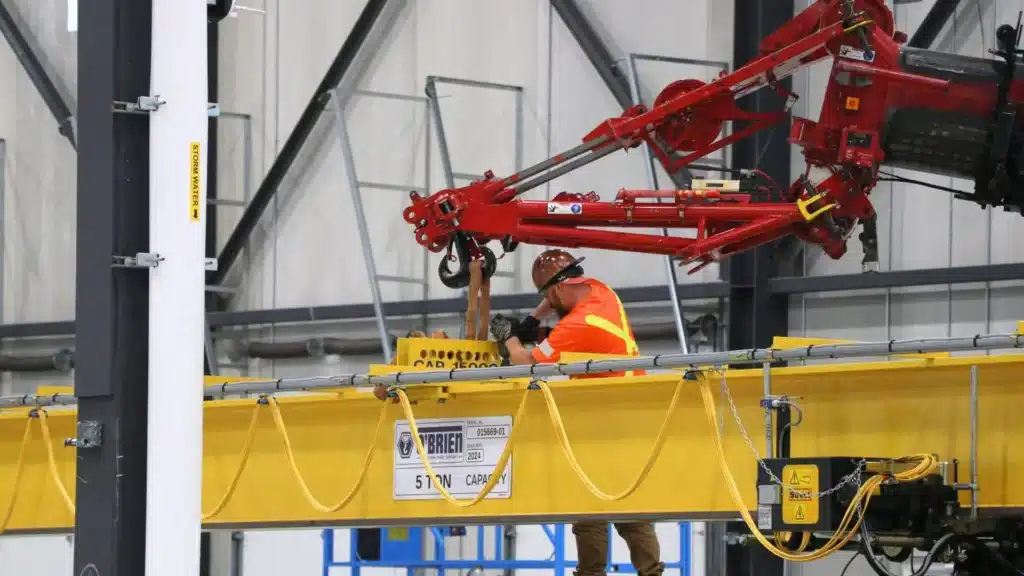
Emergency Conveyor and Crane Repair Services
Emergency repair support for conveyor and crane downtime, with practical triage around safety, access, production impact, temporary recovery, and permanent repair planning.
Downtime Needs Triage Before Action
When a conveyor or crane stops production, the first step is understanding safety, access, symptoms, and what can or cannot run.
IMH helps review emergency repair situations around conveyors, bridge cranes, drives, controls, carriers, hoists, support steel, and restart risk.
Emergency Review Priorities
Make It Safe
Identify hazards, lockout needs, damaged parts, and operating limits.
Define The Failure
Separate mechanical, electrical, structural, controls, and access problems.
Plan Recovery
Clarify temporary recovery, parts path, permanent repair, and restart checks.
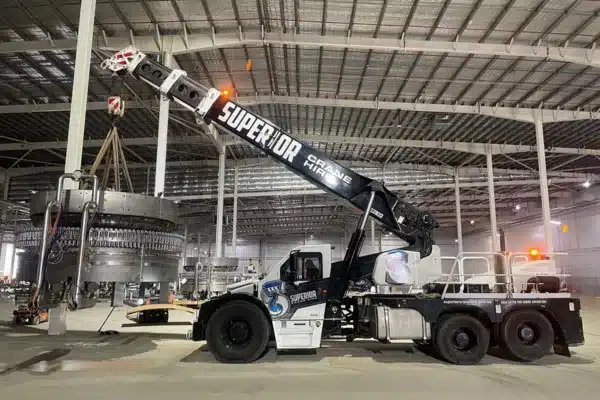
Fast Still Needs Responsible
Emergency work can move quickly, but unsafe shortcuts can create larger failures.
IMH uses photos, symptoms, operating history, and site constraints to help define the smartest immediate and follow-up actions.
Start With A Buildable Plan
Before budget, downtime, or engineering time is committed, the right project details need to be clear. IMH connects the desired outcome with the field conditions that decide whether the system can be installed cleanly and perform reliably after startup.
That means collecting photos, drawings, measurements, production goals, safety requirements, shutdown limits, and maintenance concerns early. It also means explaining tradeoffs in plain language: what should be engineered now, what can be phased later, what needs structural review, and what information is still missing before a final recommendation is responsible.
Emergency Repair Inputs
These details help triage the situation.
| Input | Why it matters |
|---|---|
| What stopped | Identifies conveyor, crane, drive, hoist, controls, support, or carrier issue. |
| Safety condition | Clarifies lockout, damaged equipment, and hazards. |
| Photos and video | Help review visible damage, access, and components. |
| Production impact | Shows urgency and restart constraints. |
| Parts on hand | May affect temporary or permanent repair path. |
| Access window | Defines when crews and equipment can reach the issue. |
Common Emergency Issues
Emergency repairs often expose deeper maintenance or modernization needs.
Emergency Work Needs Follow-Through
A temporary fix should not hide the cause of the failure.
IMH helps turn emergency triage into repair, retrofit, or modernization planning when the symptoms point to a larger issue.
The Work IMH Is Built Around
IMH Systems is focused on engineered movement overhead, reliable lifting, and field execution inside real manufacturing plants. Overhead conveyors, bridge cranes, and service or installation work remain the center of that story, while secondary equipment is included only where it helps solve the larger project.
Buyers get practical answers instead of generic product language: what details matter, what decisions affect the installed system, what tradeoffs need review, and when a project is ready for a deeper conversation.
For bridge crane and overhead lifting projects, that means reviewing capacity, span, hook coverage, runway support, lift height, duty cycle, controls, electrification, building structure, access below the crane, and installation phasing before recommending a path.
The result should be a crane system that can be quoted responsibly, installed cleanly, aligned correctly, operated confidently, and serviced after startup.
Emergency Repair Perspective
IMH’s conveyor, crane, installation, and modernization focus helps connect urgent downtime to practical follow-up planning.
The right emergency response should reduce risk and make the permanent fix clearer.
Emergency repair is about getting control of the situation, not guessing faster.
Frequently Asked Questions
What should I do first in an emergency?
Make the area safe, stop unsafe operation, document symptoms, and gather photos before repair planning.
What information helps most?
Photos, videos, system type, symptoms, failure time, and production impact.
Can IMH help with permanent repair after triage?
Yes. Emergency issues often lead into planned repair, retrofit, or modernization.
Can a conveyor run temporarily?
That depends on safety, damage, controls, and risk. Temporary recovery should be reviewed carefully.
Can IMH review crane downtime?
Yes, within the scope of crane, runway, controls, and lifting-system support.
Need Emergency Repair Review?
Send IMH photos, symptoms, system details, and the safest way to reach the equipment.