
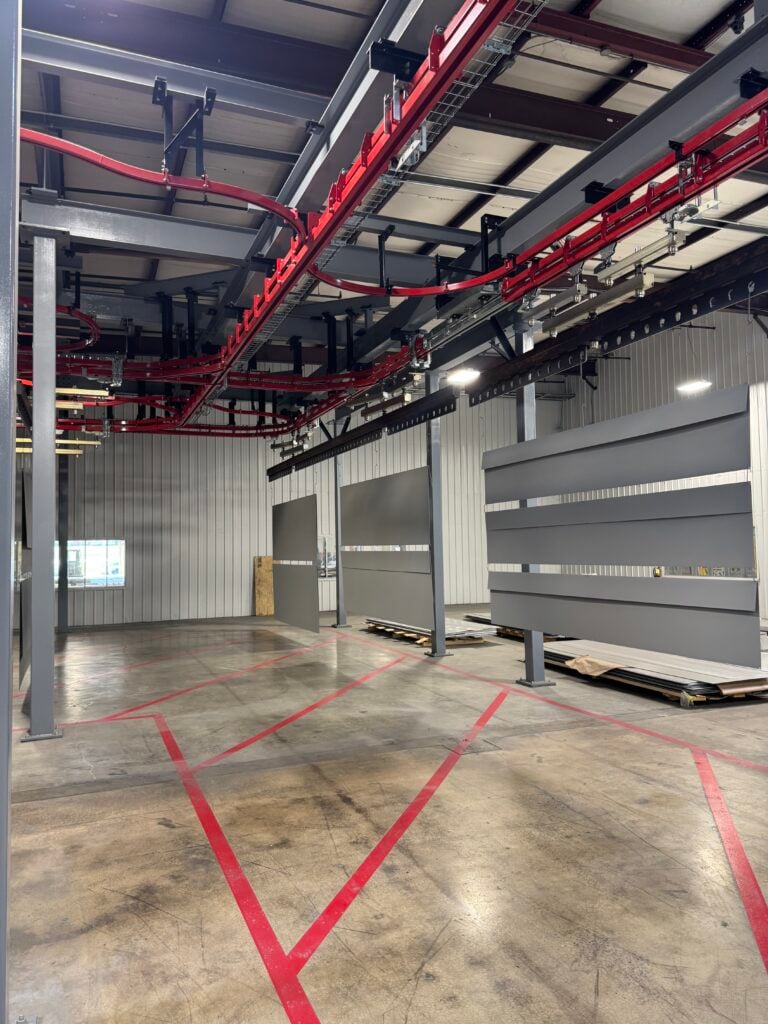
Overhead Conveyor Selection Guide
A decision guide for comparing power and free conveyor, enclosed track, I-beam monorail, hand-pushed monorail, and retrofit options around real plant conditions.
Start With The Application, Not The Catalog
The best overhead conveyor selection depends on what the plant needs the system to do. Load weight matters, but so do carrier control, process timing, curves, vertical changes, environment, floor access, maintenance, and the shutdown window.
IMH uses the selection conversation to compare system types against the plant instead of forcing every project into one equipment family.
The Main Selection Questions
Does The Carrier Need Control?
Stops, accumulation, transfers, sequencing, and process dwell time point toward power and free or controls-heavy layouts.
How Rugged Is The Load?
Heavier loads, harsh areas, longer runs, and abuse tolerance may point toward I-beam monorail.
How Clean And Compact Is The Route?
Lighter loads, tight turns, and clean continuous movement may point toward enclosed track or Unibilt-style systems.

There Is No Universal Best Conveyor
A paint line with accumulation, an assembly line with operator stations, and a fabrication area moving heavy parts may all need overhead movement, but they rarely need the same system.
The selection process should weigh load, carrier behavior, speed, process timing, route, support steel, service environment, maintenance access, and field installation before narrowing the options.
Start With A Buildable Plan
Before budget, downtime, or engineering time is committed, the right project details need to be clear. IMH connects the desired outcome with the field conditions that decide whether the system can be installed cleanly and perform reliably after startup.
That means collecting photos, drawings, measurements, production goals, safety requirements, shutdown limits, and maintenance concerns early. It also means explaining tradeoffs in plain language: what should be engineered now, what can be phased later, what needs structural review, and what information is still missing before a final recommendation is responsible.
Overhead Conveyor Selection Table
Use this table as a starting point, then validate the choice against the actual route and building.
| Conveyor type | Best fit | Watch closely |
|---|---|---|
| Power and free conveyor | Paint lines, assembly flow, accumulation, routing, stops, transfers, and variable process timing. | Controls, stops, switches, drive pull, carrier spacing, support steel, and startup testing. |
| Enclosed track conveyor | Lighter to moderate loads, compact routing, cleaner environments, steady production movement, and tight turns. | Load limits, drive/take-up location, curve layout, carrier swing, and service access. |
| I-beam monorail | Heavier loads, rugged environments, longer runs, fabrication areas, and durable overhead movement. | Chain/trolley family, support structure, drive pull, lubrication, wear points, and access below the line. |
| Hand-pushed monorail | Simple manual movement, work cells, low-volume transfer, and economical overhead handling. | Operator effort, route length, turns, grade, load stability, and ergonomics. |
| Electrified monorail or advanced controls | Powered carrier movement, intelligent routing, high-control processes, and complex production flow. | Power delivery, controls integration, safety zones, commissioning, and maintenance support. |
Selection Factors IMH Reviews
These factors often change the answer more than the initial product preference.
Selection Includes The Steel Below The Track
A selected track type is not enough if the support structure creates a floor-level problem.
IMH reviews support steel, column spacing, bracing, installation access, and future flexibility as part of the selection process so the conveyor solves more problems than it creates.
The Work IMH Is Built Around
IMH Systems is focused on engineered movement overhead, reliable lifting, and field execution inside real manufacturing plants. Overhead conveyors, bridge cranes, and service or installation work remain the center of that story, while secondary equipment is included only where it helps solve the larger project.
Buyers get practical answers instead of generic product language: what details matter, what decisions affect the installed system, what tradeoffs need review, and when a project is ready for a deeper conversation.
For conveyor projects, that means reviewing load weight, carrier behavior, drive and take-up locations, controls, support steel, access below the line, maintenance points, and shutdown phasing before recommending a path.
A strong system can be quoted responsibly, installed cleanly, and serviced after startup.
Selection Guidance For Real Plants
IMH has documented experience across power and free, I-beam, enclosed track, hand-pushed, electrified monorail, carrier, retrofit, and installation projects.
The selection guide should function as the central educational page between the overhead conveyor hub and the specific product pages.
The right conveyor is the one that fits the plant after it is installed.
Frequently Asked Questions
How do I choose an overhead conveyor?
Start with load, carrier behavior, process timing, route, environment, support steel, maintenance access, and installation constraints.
When should I choose power and free?
When carriers need to stop, accumulate, route, transfer, or move at different timing from the powered chain.
When is enclosed track better than I-beam?
Enclosed track can fit lighter loads and compact routes; I-beam is often better for heavier or more rugged applications.
Is hand-pushed monorail still useful?
Yes, when manual overhead movement is practical and powered conveyor is unnecessary.
Can IMH help compare options?
Yes. IMH can compare system types around the application and facility conditions.
Ready To Compare Overhead Conveyor Options?
Send IMH your load, route, process timing, photos, drawings, and the problem you need the system to solve.