
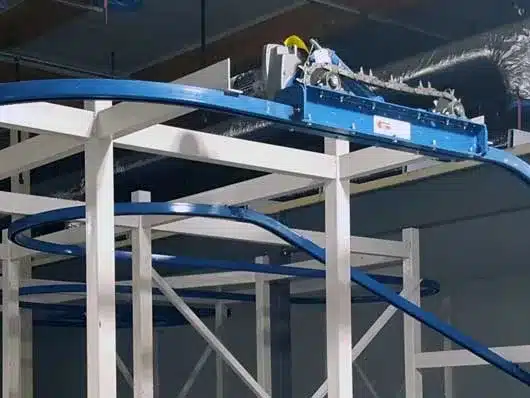
Unibilt Enclosed Track Conveyor Systems
Unibilt enclosed track conveyor planning for clean, compact overhead movement, lighter to moderate loads, tight routing, and production spaces that need efficient use of overhead space.
Compact Overhead Movement For Clean Routes
Enclosed track conveyor systems can be a strong fit when the load, environment, and production flow call for compact overhead movement instead of a heavier I-beam approach.
IMH helps evaluate enclosed track conveyor layout, carrier requirements, support steel, access, drive and take-up location, installation timing, and retrofit constraints before the system is treated as a product-only purchase. Enclosed-track systems can be assembled with standard track, turns, drives, take-ups, hangers, splices, and carriers, but the installed result still depends on support layout, access, and field verification.
Enclosed Track Strengths
Clean Layout
A compact overhead path for lighter to moderate loads and efficient use of space.
Protected Chain Path
The enclosed track helps shield moving parts and helps keep contamination away from the chain and bearing surfaces.
Tight Spaces
Shorter-radius curves and compact drive options can help where building clearances or process equipment limit the route.
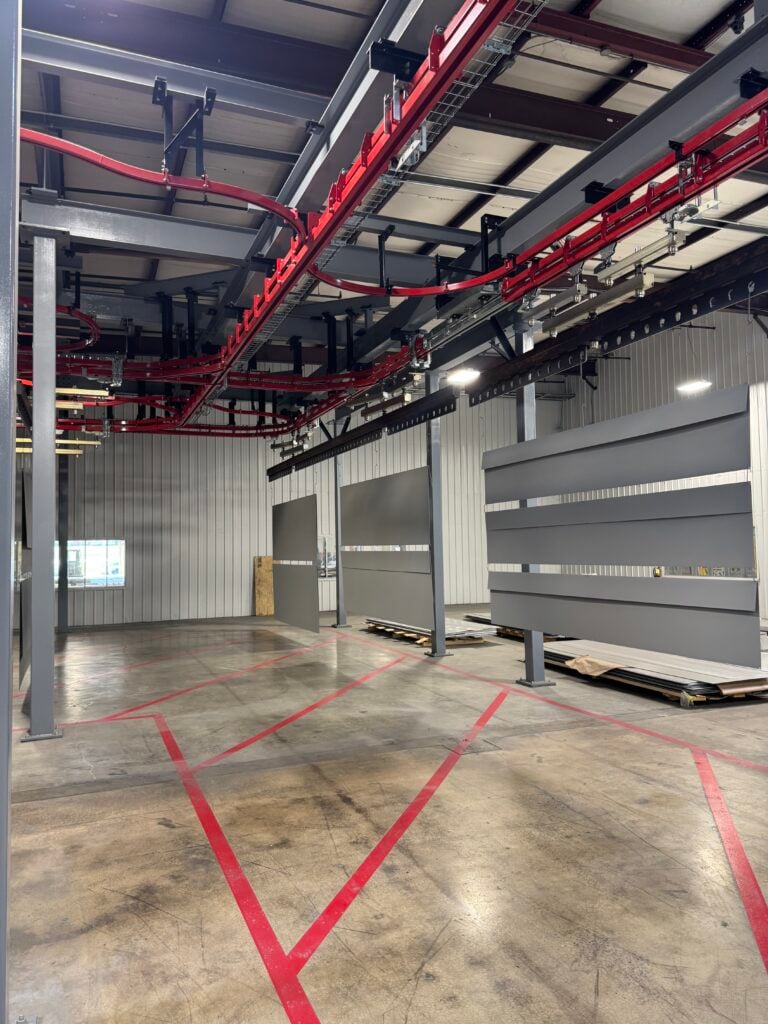
Small Track Decisions Affect The Whole Plant
Enclosed track may look simple, but carrier spacing, turns, vertical curves, supports, drives, take-ups, load points, unload points, and maintenance access still decide whether the system works well.
IMH reviews the complete route and field conditions so the finished system supports production instead of only matching a catalog description.
Start With A Buildable Plan
Before budget, downtime, or engineering time is committed, the right project details need to be clear. IMH connects the desired outcome with the field conditions that decide whether the system can be installed cleanly and perform reliably after startup.
That means collecting photos, drawings, measurements, production goals, safety requirements, shutdown limits, and maintenance concerns early. It also means explaining tradeoffs in plain language: what should be engineered now, what can be phased later, what needs structural review, and what information is still missing before a final recommendation is responsible.
Enclosed Track Conveyor Inputs
These details help define whether enclosed track is the right fit and how it should be installed.
| Input | Why it matters |
|---|---|
| Load weight and dimensions | Confirms whether enclosed track is appropriate for the application and which attachment or carrier approach should be considered. |
| Carrier style | Affects part orientation, swing, finish protection, and operator access. |
| Route layout | Controls turns, elevation changes, support points, and clearance requirements. |
| Drive and take-up location | Unibilt planning guidance emphasizes pulling the load, locating the drive at a favorable loaded section, and placing take-up after the drive in the direction of travel. |
| Movement type | Determines whether continuous, manual, powered, or controlled movement is needed. |
| Building constraints | Identifies utilities, roof steel, columns, process equipment, and aisle conflicts. |
| Maintenance access | Protects serviceability after installation. |
Where Enclosed Track Fits
Enclosed track is strongest when clean overhead movement and efficient routing matter more than heavy-duty capacity.
Clean Track Needs Clean Support Steel
A compact enclosed track system can still create floor problems if the support structure is cluttered or treated as an afterthought.
IMH plans the support layout, route, and installation approach together so enclosed track conveyor systems preserve access below the line and remain serviceable after startup.
The Work IMH Is Built Around
IMH Systems is focused on engineered movement overhead, reliable lifting, and field execution inside real manufacturing plants. Overhead conveyors, bridge cranes, and service or installation work remain the center of that story, while secondary equipment is included only where it helps solve the larger project.
Buyers get practical answers instead of generic product language: what details matter, what decisions affect the installed system, what tradeoffs need review, and when a project is ready for a deeper conversation.
For conveyor projects, that means reviewing load weight, carrier behavior, drive and take-up locations, controls, support steel, access below the line, maintenance points, and shutdown phasing before recommending a path.
A strong system can be quoted responsibly, installed cleanly, and serviced after startup.
Overhead Conveyor Experience
IMH supports enclosed track, power and free, I-beam, hand-pushed monorail, retrofit, and installation conversations as part of a larger overhead conveyor strategy.
Enclosed-track planning has to account for load attachments, vertical curves, drive pull, take-ups, carrier spacing, live load, lift load, and support spacing. IMH uses those details to help buyers avoid choosing a track style before the load, route, support steel, and installation conditions are understood.
The best enclosed track system is compact without being shortsighted.
Frequently Asked Questions
What is enclosed track conveyor?
It is an overhead conveyor style that uses a compact enclosed track path for lighter to moderate loads and clean routing.
When is enclosed track better than I-beam?
Enclosed track can fit lighter loads, tighter routing, and cleaner continuous movement; I-beam is often considered for heavier or more rugged applications.
Can enclosed track be used in finishing or assembly?
Yes, depending on load, process, carrier requirements, environment, and route.
Why does drive and take-up location matter?
The drive needs to pull the loaded chain path effectively, and take-up location affects chain tension and serviceability. IMH reviews those details before final layout.
What information is needed for a quote?
Load details, carrier needs, route, elevation changes, photos, drawings, process timing, and installation window.
Can IMH install or retrofit enclosed track?
Yes. IMH can review support steel, route changes, replacement sections, carrier updates, and installation phasing.
Ready To Review Enclosed Track Conveyor?
Send IMH your load, route, photos, drawings, and production goal. We will help determine whether enclosed track is the right fit.