
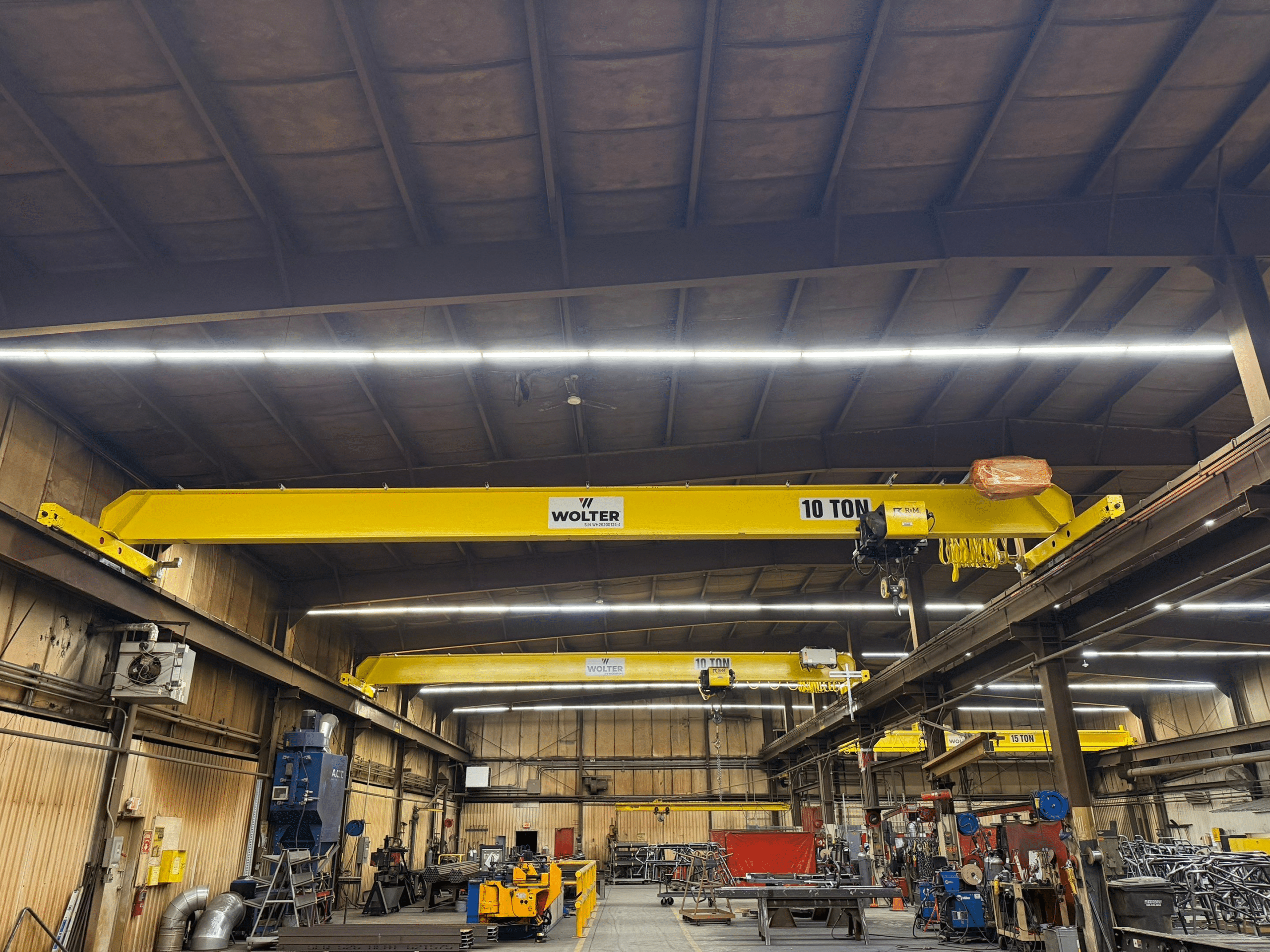
Four Overhead Crane Replacements
IMH removed existing crane equipment and installed four replacement overhead bridge cranes: two 15-ton double-girder cranes and two 10-ton single-girder cranes, including field modifications, electrical integration, alignment, testing, and commissioning.
A Multi-Crane Replacement Requires One Coordinated Field Plan
This project required more than setting new bridge cranes. IMH coordinated removal of existing equipment, delivery and staging of replacement systems, field modifications, mechanical installation, electrical integration, alignment, operational testing, and final commissioning.
The completed scope brought two 15-ton double-girder cranes and two 10-ton single-girder cranes into service while managing the real conditions that emerge inside an operating industrial facility.
Project Scope
Removal And Staging
Existing crane equipment was removed and new equipment was staged around plant access, rigging paths, work zones, and the sequence required to keep the project controlled.
Mechanical And Electrical Installation
The replacement cranes were assembled, set, aligned, wired, and integrated with the facility conditions surrounding each bay.
Testing And Commissioning
Each crane moved through operational checks and final commissioning before being placed into service.
Field Conditions Decide The Installation
Multi-crane projects bring together rigging, access, material staging, existing steel, runway condition, electrical work, controls, and schedule coordination. Unplanned field adjustments must be solved without losing control of the larger installation sequence.
IMH approached the work as one coordinated replacement project rather than four isolated equipment sets. That protected alignment, wiring, testing, commissioning, and the final handoff into service.
Start With A Buildable Plan
Before budget, downtime, or engineering time is committed, the right project details need to be clear. IMH connects the desired outcome with the field conditions that decide whether the system can be installed cleanly and perform reliably after startup.
That means collecting photos, drawings, measurements, production goals, safety requirements, shutdown limits, and maintenance concerns early. It also means explaining tradeoffs in plain language: what should be engineered now, what can be phased later, what needs structural review, and what information is still missing before a final recommendation is responsible.
Four-Crane Replacement Scope
The work combined equipment replacement and field execution across several crane bays.
| Scope item | Project responsibility |
|---|---|
| Existing equipment removal | Plan safe dismantling, rigging, removal path, and staging around the active facility. |
| Two 15-ton double-girder cranes | Coordinate assembly, setting, runway interface, hoists, electrification, alignment, and testing. |
| Two 10-ton single-girder cranes | Install and integrate the lighter-capacity systems with the same field and commissioning discipline. |
| On-site modifications | Resolve field conditions and fit-up requirements discovered during installation. |
| Electrical integration | Complete wiring and coordinate power, controls, travel functions, and operational checks. |
| Alignment and testing | Verify travel behavior, equipment function, and readiness for commissioning. |
| Final commissioning | Complete systematic testing and bring the replacement equipment into operational service. |
What Made The Project Successful
Replacement work succeeds when equipment, field labor, and startup requirements stay connected.
Replacement Work Starts With The Existing Facility
A crane replacement inherits the dimensions, runway conditions, clearances, power path, access limitations, and operating needs of the existing facility. Those conditions need to be verified before installation and managed continuously in the field.
IMH reviews the removal path and new installation together so crews are not forced to solve access, staging, electrical, and alignment problems as separate jobs. That complete view is especially important when several cranes are replaced within one facility.
The Work IMH Is Built Around
IMH Systems is focused on engineered movement overhead, reliable lifting, and field execution inside real manufacturing plants. Overhead conveyors, bridge cranes, and service or installation work remain the center of that story, while secondary equipment is included only where it helps solve the larger project.
Buyers get practical answers instead of generic product language: what details matter, what decisions affect the installed system, what tradeoffs need review, and when a project is ready for a deeper conversation.
For bridge crane and overhead lifting projects, that means reviewing capacity, span, hook coverage, runway support, lift height, duty cycle, controls, electrification, building structure, access below the crane, and installation phasing before recommending a path.
The result should be a crane system that can be quoted responsibly, installed cleanly, aligned correctly, operated confidently, and serviced after startup.
Installed Crane Experience Buyers Can Evaluate
This project demonstrates IMH’s ability to support crane replacement beyond equipment supply. The scope included demolition, field coordination, mechanical installation, electrical integration, alignment, testing, commissioning, and adjustments required by actual site conditions.
For manufacturers planning one crane or a multi-bay replacement, that field capability helps turn an equipment proposal into a realistic installation plan.
A replacement crane is not finished when the bridge is set. It is finished when the equipment is aligned, powered, tested, commissioned, and ready for the plant to use.
Frequently Asked Questions
What cranes were installed?
The project included two 15-ton double-girder overhead cranes and two 10-ton single-girder overhead cranes.
Did IMH remove the old cranes?
Yes. The project scope included removal of existing equipment before installation of the replacement systems.
Was electrical work included?
The documented scope included electrical integration, wiring, operational testing, and commissioning.
Can IMH replace cranes in an operating facility?
IMH plans crane replacement around access, rigging, staging, shutdown requirements, existing runway conditions, power, testing, and the plant’s operating constraints.
What information is needed to review a replacement?
Provide capacity, span, runway length, lift height, existing crane information, runway photos, building drawings, electrical details, site access, project location, and required shutdown timing.
Planning A Bridge Crane Replacement?
Send IMH photos of the existing cranes and runways, capacity, span, lift height, building drawings, project location, electrical information, and target shutdown window.