
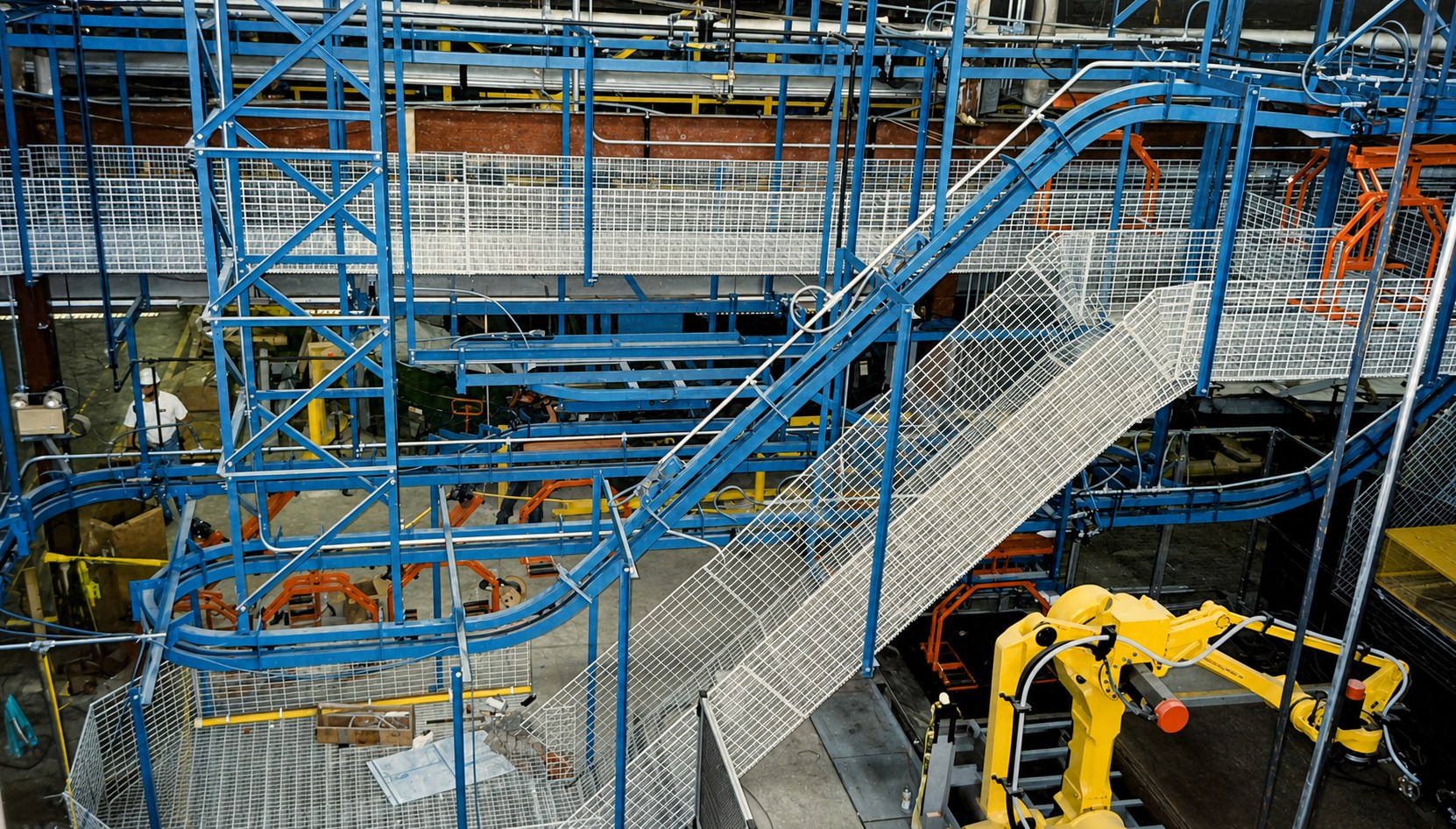
Start with the load path and the floor plan.
The equipment route and the supporting structure affect each other. A desirable conveyor route may create an inconvenient column location; a crane runway may require a structural arrangement that changes the usable work area.
Evaluate these decisions together before equipment selection is fixed.
Record the interfaces.
Existing building steel is not automatically suitable for new equipment loads. The responsible engineer needs the loading information and building data required to evaluate the proposed attachment or independent structure.
- Equipment loads and relevant operating conditions
- Column and bracing locations
- Foundations and anchorage responsibility
- Building connections and utility conflicts
- Access for operators, maintenance, and future equipment moves
Consider how the structure will be installed.
Connection design, member size, shipping arrangements, and site access affect the assembly sequence. Bolt-together construction can help where appropriate; the engineering and application determine whether it is suitable.
Make the finish serve the environment.
Finish selection, preparation, and installation touch-up should reflect the plant environment and the agreed project specification. A clean final appearance starts with deliberate detailing and continues through field execution.
Turn the questions into a useful brief.
Record what is known, keep open items visible, and bring the application to IMH.
Start guided selection