Conveyor & Crane Retrofit Installation
Conveyor and crane retrofit installation planned around existing equipment, support steel, controls interfaces, shutdown windows, and startup responsibilities.
Know who owns every interface.
Build the work around the site.
Agree what completion includes.
Bring clarity to the work.
Retrofit Work Has To Fit What Is Already There
Retrofit installation is different from clean-slate installation because the existing plant gets a vote. Old drawings may be incomplete, access may be blocked, support steel may need review, and worn equipment can expose deeper issues after demolition begins.
IMH plans retrofit installation around field verification, reusable components, replacement sections, controls coordination, shutdown timing, and startup checks so the work solves the right problem.
- System upgrades and modernization
Retrofit Installation Scope
Route changes, replacement sections, carriers, drives, take-ups, controls coordination, and support steel updates.
Runway support, coverage changes, hoist coordination, electrification, controls, and installation sequencing.
Machinery setting, utility handoff, guarding coordination, alignment, and restart planning.
The Best Retrofit Scope Finds The Real Constraint
A retrofit may begin as a request to replace parts, but the root issue may be access, controls, product changes, structural support, wear history, or a shutdown window that is too short for the current plan.
IMH reviews the system as it exists today before recommending what to reuse, what to replace, what to phase, and what should wait for a larger modernization window.
Retrofit Installation Inputs
These details help define the retrofit path and reduce field surprises.
| Input | Why it matters |
|---|---|
| Current system type | Identifies compatibility, likely wear points, reusable components, and replacement path. |
| Problem being solved | Separates reliability, capacity, safety, layout, maintenance, and product-change issues. |
| Existing drawings and photos | Help compare the documented system with current plant conditions. |
| Reusable components | Determines whether supports, drives, take-ups, rails, controls, carriers, or runway sections can remain. |
| Controls condition | Identifies sensors, panels, interlocks, drives, and operator stations that may affect the tie-in. |
| Shutdown limits | Defines phasing, demolition, installation, testing, and restart risk. |
| Access and staging | Controls how crews, lifts, tools, and materials reach the work area. |
Retrofit Readiness Checklist
A retrofit quote gets stronger when the existing condition is documented honestly.
Upgrade the system without creating unnecessary downtime, hidden rework, or a handoff that leaves production guessing.
- Photograph wear points: Show drives, take-ups, track, carriers, hoists, runway, supports, and controls.
- List recurring failures: Failure history helps separate symptoms from root causes.
- Confirm what must stay online: Production constraints shape demolition, tie-ins, and testing.
- Define the desired result: Clarify whether the project needs reliability, capacity, safety, floor-space recovery, or product flexibility.
Retrofit Structure Should Improve Future Work
Retrofit projects are a chance to make future changes easier, not just patch the existing system. Welded frames, inaccessible service points, cramped supports, and blocked maintenance areas can keep causing problems after new components are installed.
IMH reviews support steel and access as part of retrofit planning so replacement work supports future maintenance, expansion, relocation, or modernization.
Retrofit Installation Confidence
IMH has project proof around monorail upgrades, I-beam systems, power and free work, crane installation, modernization, and field support.
Retrofit buyers usually need an experienced eye because the work is rarely just replacement. IMH keeps the existing plant, shutdown window, support steel, and startup path in the conversation from the beginning.
A strong retrofit solves the plant problem, not just the worn component.
How is retrofit installation different from new installation?
Retrofit work must account for existing equipment, old drawings, worn parts, controls compatibility, access limits, and production constraints.
Can IMH reuse existing equipment?
Sometimes. Reuse depends on condition, compatibility, safety, structure, controls, and the target result.
Can retrofit work be phased?
Often, yes. Phasing depends on shutdown limits, tie-ins, access, and what can safely remain in operation.
What causes retrofit projects to get complicated?
Incomplete drawings, hidden wear, obsolete controls, blocked access, structural conflicts, and short shutdown windows are common issues.
What should I send first?
Send photos, drawings, problem history, current system details, production constraints, and shutdown timing.
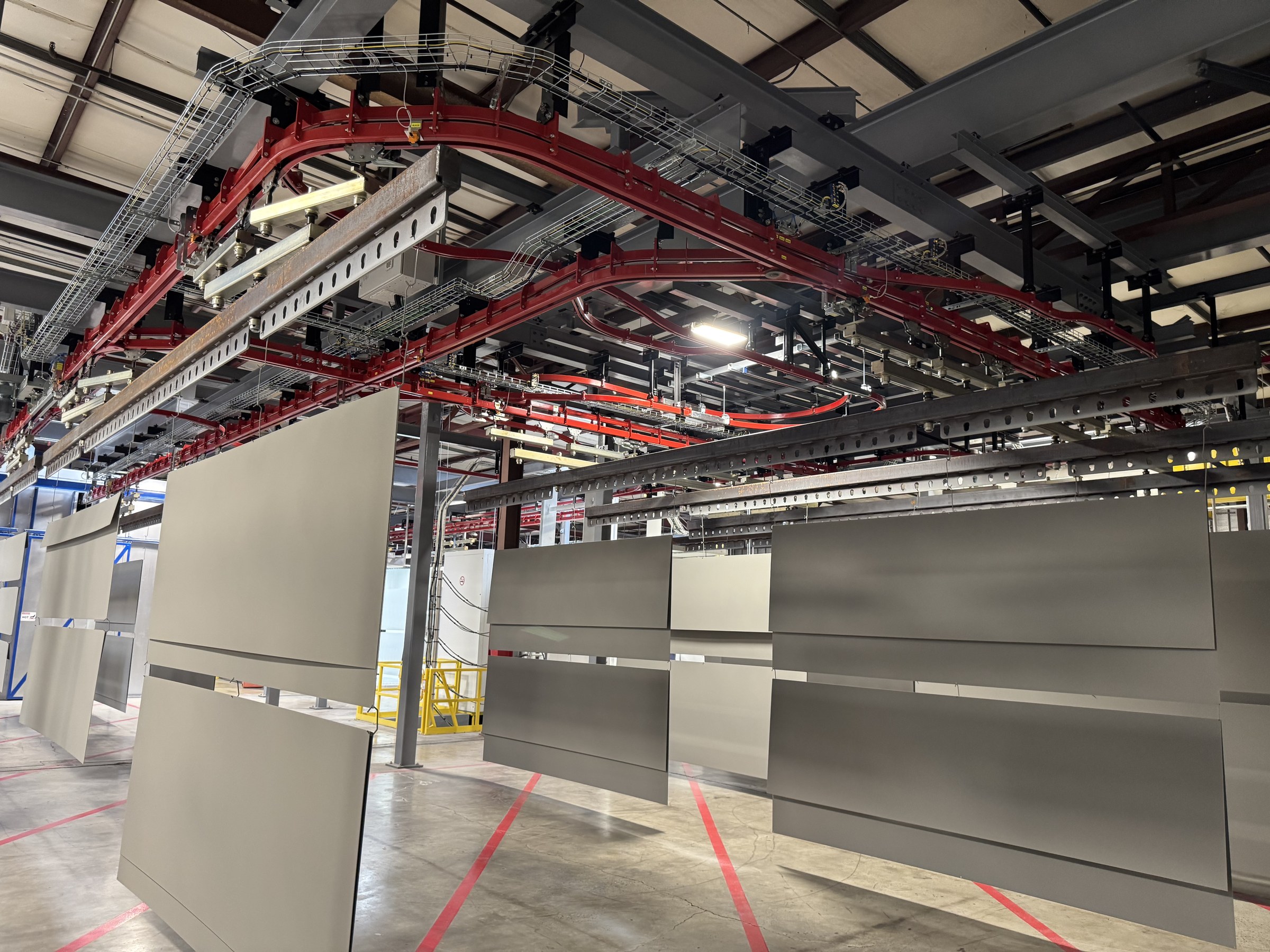
Power & Free. Installed for the Project Team.
Installation of a supplied power-and-free conveyor, with field layout coordination and overhead equipment integration in a finishing area.
- IMH responsibility
- Installation · design and equipment supplied by others
A field scope that fits.
Define delivery, access, assembly, utilities, and handover with the project team.
Your equipment.
A clear installation plan.
Tell us what is being installed, who supplies the equipment, and the site conditions. Build a brief around access, timing, field responsibilities, and handover.
Plan your installation Or call (812) 363-1819