
Machinery Relocation for Production Equipment
Machinery relocation and reinstallation for plant layout changes, with move-path review, equipment setting, anchoring, utility coordination, and startup planning.
Know who owns every interface.
Build the work around the site.
Agree what completion includes.
Bring clarity to the work.
A Machine Move Is Not Finished When The Load Lands
Machinery relocation has to account for the starting location, move path, destination layout, floor condition, utilities, anchoring, alignment, guarding, surrounding conveyors, lifting coverage, and startup needs.
IMH connects machinery relocation to the larger installation picture so equipment is not only moved safely, but reinstalled where production can actually use it.
Machinery Relocation Scope
Equipment size, weight, route, doors, floor path, overhead clearance, staging, and lift equipment.
Setting, alignment coordination, anchoring, utility handoff, guarding, and adjacent equipment review.
Startup checks, operator access, conveyor tie-ins, crane coverage, and punch-list control.
Plan The Destination Before The Move
A move path can be safe and still leave equipment in a poor production position if utilities, conveyors, cranes, operator access, or maintenance space were not reviewed.
IMH reviews how the moved machine fits into the destination area so relocation supports the next production step instead of creating a new layout problem.
Machinery Relocation Inputs
These details help define the move, reinstallation, and startup scope.
| Input | Why it matters |
|---|---|
| Equipment size and weight | Determines lift method, rigging gear, floor route, and staging needs. |
| Start and destination locations | Defines move path, access doors, elevation changes, turns, and destination layout. |
| Utilities | Coordinates disconnect, reconnect, air, power, controls, fluids, and guarding. |
| Anchoring and leveling | Controls reinstallation requirements and restart readiness. |
| Adjacent systems | Identifies conveyor, crane, platform, process equipment, and maintenance-access impacts. |
| Shutdown timing | Defines phasing, move window, reinstallation, and startup expectations. |
| Acceptance requirements | Clarifies what must be verified before the moved equipment returns to production. |
Before A Machinery Relocation Quote
Machine moves go smoother when both the route and destination are documented.
Move equipment safely, set it accurately, and restart it in a layout that supports production.
Relocation Can Change The Whole Material Handling Plan
Moving a machine can change conveyor routes, crane coverage, operator flow, staging, maintenance access, and safety zones.
IMH reviews machinery relocation as part of the broader installation and material handling environment so the move does not create new problems for nearby systems.
Relocation And Reinstallation Confidence
IMH’s installation work connects machinery moving with conveyor, crane, retrofit, shutdown, and startup planning.
That wider view helps protect the details around the move: route, destination, utilities, adjacent equipment, and production restart.
The best machinery relocation is planned around where the machine has to work next.
What information is needed for machinery relocation?
Send equipment dimensions, weight, photos, start location, destination layout, route constraints, utility details, and schedule.
Can IMH reinstall equipment after moving it?
IMH can support setting, anchoring, alignment coordination, utility handoff, and startup planning depending on scope.
Can machinery relocation affect conveyors or cranes?
Yes. A layout change can affect material flow, conveyor routes, lifting coverage, operator access, and maintenance paths.
Does relocation require shutdown planning?
Often, yes. The move, disconnects, reconnects, and startup may need a planned outage.
What should be checked before restart?
Anchors, leveling, utilities, controls, guarding, surrounding access, and functional operation should be reviewed before production use.
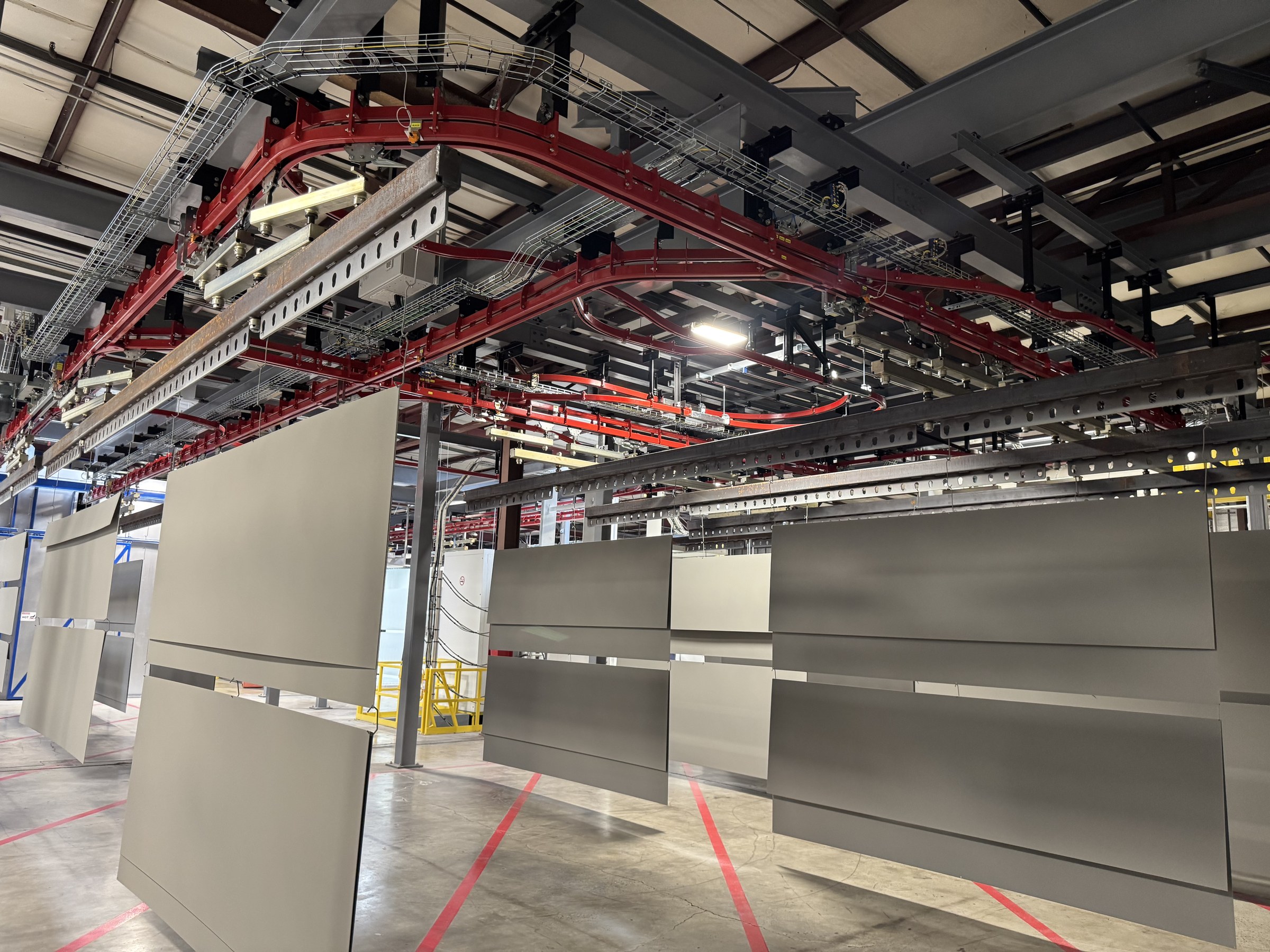
Power & Free. Installed for the Project Team.
Installation of a supplied power-and-free conveyor, with field layout coordination and overhead equipment integration in a finishing area.
- IMH responsibility
- Installation · design and equipment supplied by others
A field scope that fits.
Define delivery, access, assembly, utilities, and handover with the project team.
Your equipment.
A clear installation plan.
Tell us what is being installed, who supplies the equipment, and the site conditions. Build a brief around access, timing, field responsibilities, and handover.
Plan your installation Or call (812) 363-1819