Overhead Conveyor Modernization
Overhead conveyor modernization for route changes, carrier updates, controls, replacement sections, support steel, shutdown planning, and startup support.
Know who owns every interface.
Build the work around the site.
Agree what completion includes.
Bring clarity to the work.
Designed for the application
Overhead conveyor modernization for aging systems that need better reliability, controls, carriers, support steel, maintainability, route changes, or phased replacement.
Modernization Should Solve The Root Problem
An aging overhead conveyor does not always need full replacement. Sometimes the right move is controls modernization, targeted track replacement, carrier updates, drive and take-up work, support steel changes, or improved maintenance access.
IMH reviews symptoms, wear history, component compatibility, production goals, controls condition, structure, and shutdown limits before recommending repair, retrofit, modernization, or replacement.
Modernization Targets
Track, chain, trolleys, drives, take-ups, carriers, curves, supports, and lubrication points.
Sensors, stops, switches, interlocks, panels, operator stations, disconnects, and process handoffs.
Carrier updates, route changes, WIP buffers, service access, new product mix, and maintenance improvements.
Repair, Retrofit, Or Replace
A modernization project should separate symptoms from causes. Chain stretch may point to worn components, poor lubrication, take-up limits, drive load, or operating conditions. Controls problems may expose mechanical issues that need attention before automation is updated.
IMH helps buyers decide what can remain, what should be replaced, what should be staged, and what needs to be reviewed before a permanent recommendation is responsible.
Overhead Conveyor Modernization Inputs
These details help determine the modernization path.
| Input | Why it matters |
|---|---|
| Current system type | Identifies whether the line is power and free, enclosed track, I-beam, hand-pushed, electrified monorail, or a mixed system. |
| Problem history | Shows recurring downtime, chain growth, controls faults, carrier damage, product quality issues, and maintenance burden. |
| Wear condition | Track, chain, trolley wheels, curves, drives, take-ups, lubrication, supports, and carriers may drive scope. |
| Controls condition | Obsolete panels, sensors, starters, interlocks, stops, switches, and operator stations can affect reliability. |
| Production goal | Clarifies whether the project is about uptime, capacity, safety, product change, floor access, or maintainability. |
| Reusable components | Determines whether track, structure, drives, take-ups, controls, or carriers can remain. |
| Shutdown window | Defines phasing, preassembly, tie-ins, startup checks, and risk. |
When To Modernize
Modernization makes sense when the existing system has value but no longer supports the plant well.
Modernization Should Improve The Next Ten Years
A modernization project should not lock the plant into the same old maintenance problems. Support steel, access points, drives, take-ups, controls, and carriers should be reviewed for future serviceability.
When the application allows, bolted support concepts and cleaner layouts can make future changes easier than cut-and-weld field structures.
Should I repair or modernize my overhead conveyor?
That depends on wear, controls condition, downtime history, parts availability, structure, safety, and production goals.
Can controls be modernized without replacing the conveyor?
Sometimes, but mechanical condition should be reviewed before controls are upgraded.
Can IMH replace only part of a conveyor?
That may be possible when compatibility, alignment, supports, controls, and shutdown timing allow it.
What signs point to modernization?
Recurring downtime, chain stretch, worn track, take-up limits, obsolete controls, poor access, and product-change problems.
Can modernization be phased?
Often, yes. Phasing depends on compatibility, access, downtime, controls, and startup requirements.
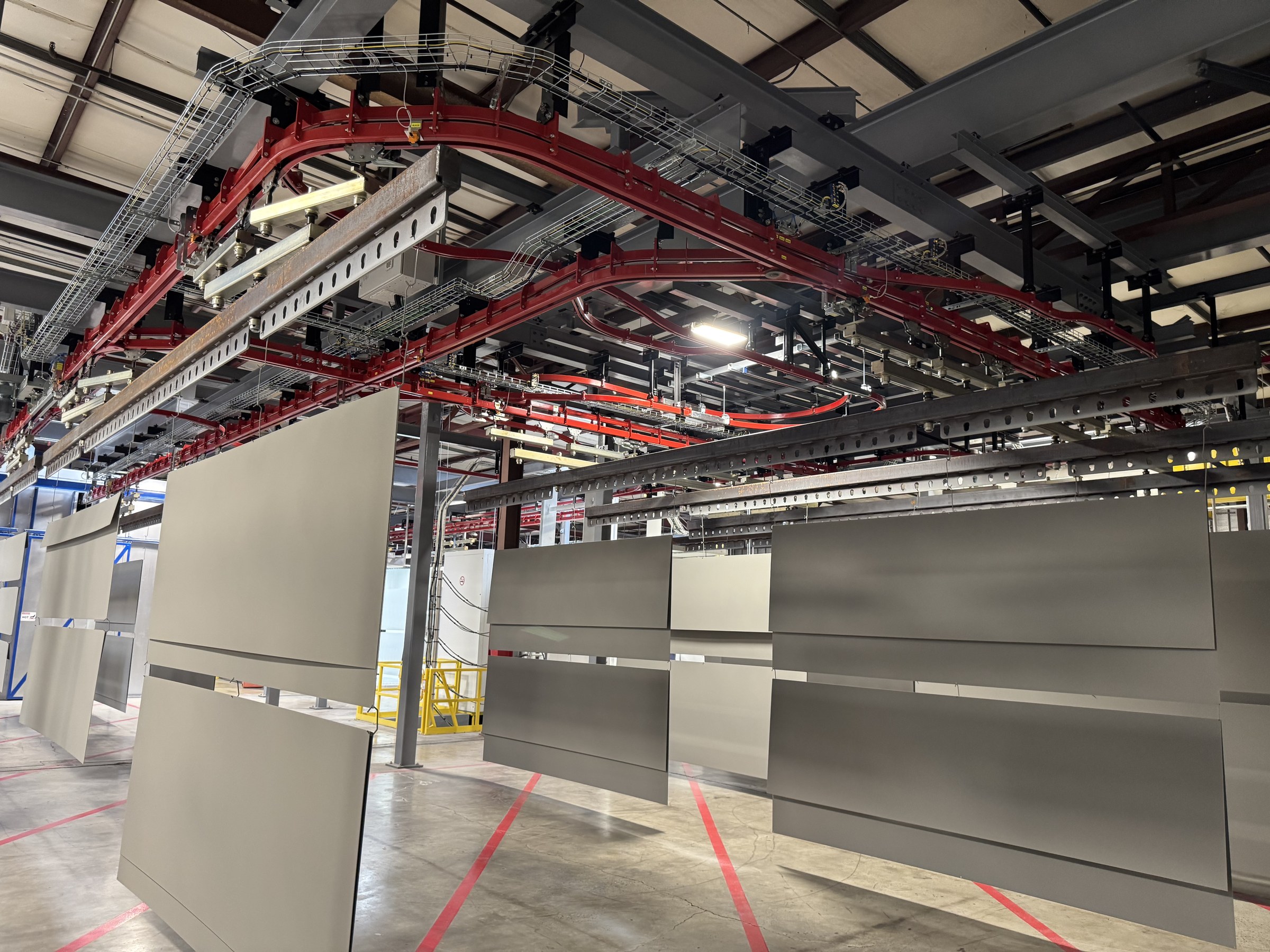
Power & Free. Installed for the Project Team.
Installation of a supplied power-and-free conveyor, with field layout coordination and overhead equipment integration in a finishing area.
- IMH responsibility
- Installation · design and equipment supplied by others
A field scope that fits.
Define delivery, access, assembly, utilities, and handover with the project team.
Tell us what
needs attention.
Share the equipment, symptoms, project location, and production impact. We’ll discuss the service scope and availability. For a time-sensitive need, call directly.
Discuss service Or call (812) 363-1819