Equipment Commissioning and Startup Support
Commissioning and startup support for conveyors, cranes, retrofits, and relocated equipment, with testing and handover responsibilities defined for the project.
Know who owns every interface.
Build the work around the site.
Agree what completion includes.
Bring clarity to the work.
Installation Is Not Finished Until The System Runs
Startup planning brings mechanical checks, controls handoff, clearances, adjustments, and open items into an agreed sequence. Before operation, the project team should define the applicable manufacturer checks, required inspections and tests, acceptance records, and who authorizes handoff.
IMH plans startup support for conveyor, crane, retrofit, relocation, and installation work so the first production run is not the first real test.
Startup Support Areas
Dry runs, carrier clearance, drive and take-up checks, stop and switch behavior, lubrication, and loaded movement.
Travel checks, hoist coordination, controls handoff, runway behavior, electrification review, and testing coordination.
Tie-in review, adjusted settings, punch-list closure, operator feedback, and maintenance notes.
Startup Should Be Planned Before Installation Ends
The crew needs time to verify movement, adjust issues, coordinate controls, and document open items before production restarts.
Startup planning should define who is present, what gets tested, what counts as complete, and how punch-list items are handled after handoff.
Commissioning And Startup Inputs
These details help define the startup process and handoff criteria.
| Input | Why it matters |
|---|---|
| Installed equipment scope | Identifies conveyor, crane, machinery, controls, support, and retrofit items to verify. |
| Controls responsibility | Clarifies who owns PLC, panel, sensors, interlocks, VFDs, operator stations, and process equipment handoff. |
| Dry-run steps | Defines movement checks before loaded operation. |
| Loaded-test expectations | Distinguish production-load trials from any required rated-load or acceptance tests. Agree the test method, loads, responsible personnel, and records for the selected equipment before startup. |
| Safety and guarding | Confirms interlocks, guards, lockout points, and operating zones before handoff. |
| Acceptance criteria | Defines what must happen before production restart or project closeout. |
| Punch-list process | Clarifies who tracks, resolves, and approves remaining items. |
Spanco Ceiling Mounted ALU-Track Bridge Cranes, Manual 103-0033, Rev 08/14
Startup Readiness Checklist
Startup support works best when the plant and installation team agree on what complete means.
- Confirm controls handoff: Know who is responsible for power, panels, PLC changes, sensors, interlocks, and operator stations.
- Prepare test loads: Arrange the parts, carriers, or test weights specified in the agreed test plan. The responsible testing party should confirm the loads and sequence for the selected equipment.
- Reserve restart time: Do not compress dry runs and adjustment into the final minutes of a shutdown.
- Document open items: Track punch-list items clearly so handoff does not depend on memory.
Startup Connects Mechanical And Controls Work
A conveyor or crane can be mechanically installed and still fail startup if controls, sensors, stops, travel limits, clearances, power, or operator workflow are unresolved.
IMH treats startup as a coordinated handoff between installed equipment, plant operations, controls, safety, and maintenance.
What is equipment commissioning?
Commissioning coordinates the checks, adjustments, documentation, and handoff agreed for an installed system. The scope should identify applicable inspections and tests, manufacturer requirements, responsible parties, and the acceptance criteria for release to operation.
What is the difference between dry run and loaded test?
A dry run checks agreed functions without a production load. A production-load trial checks the process with specified parts or carriers. Required crane rated-load and acceptance tests are separate activities, with equipment-specific procedures, loads, personnel, and records.
Does IMH handle controls?
Controls responsibility depends on scope, but controls handoff should be discussed early for any startup plan.
When should startup planning happen?
Startup planning should happen before installation begins, especially when a shutdown restart deadline is involved.
What should I send first?
Send equipment scope, controls expectations, startup deadline, test-load details, and acceptance requirements.
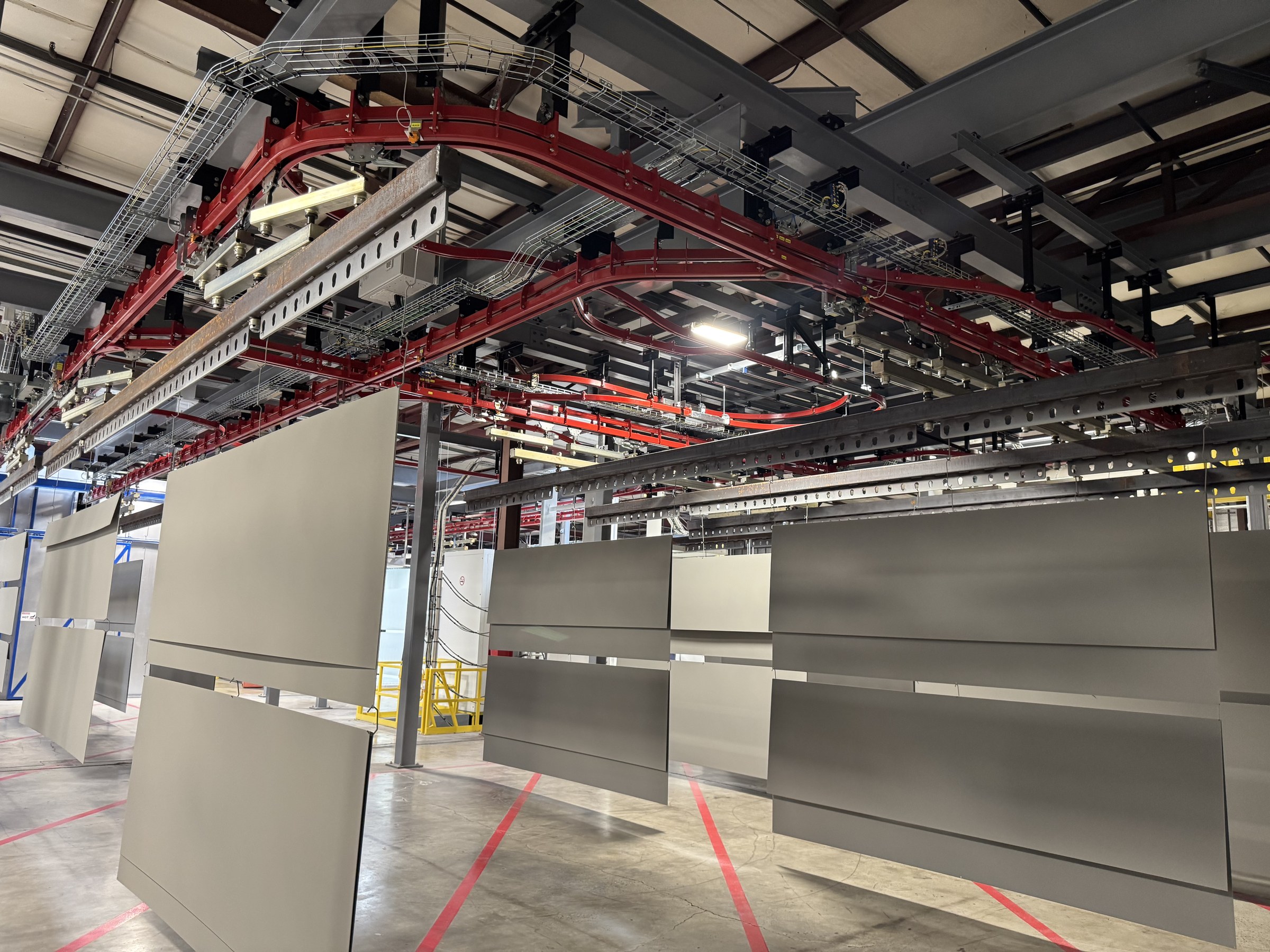
Power & Free. Installed for the Project Team.
Installation of a supplied power-and-free conveyor, with field layout coordination and overhead equipment integration in a finishing area.
- IMH responsibility
- Installation · design and equipment supplied by others
A field scope that fits.
Define delivery, access, assembly, utilities, and handover with the project team.
Your equipment.
A clear installation plan.
Tell us what is being installed, who supplies the equipment, and the site conditions. Build a brief around access, timing, field responsibilities, and handover.
Plan your installation Or call (812) 363-1819