
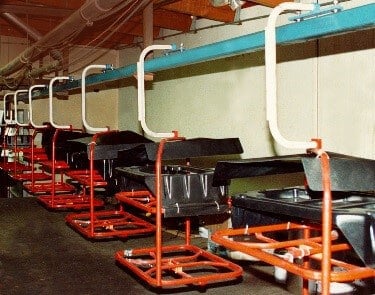
Conveyor & Crane Retrofit Installation
Industrial retrofit installation services for conveyor systems, crane systems, production equipment, support steel, controls tie-ins, phased shutdown work, and startup support.
Retrofit Work Has To Fit What Is Already There
Retrofit installation is different from clean-slate installation because the existing plant gets a vote. Old drawings may be incomplete, access may be blocked, support steel may need review, and worn equipment can expose deeper issues after demolition begins.
IMH plans retrofit installation around field verification, reusable components, replacement sections, controls coordination, shutdown timing, and startup checks so the work solves the right problem.
Retrofit Installation Scope
Conveyor Retrofits
Route changes, replacement sections, carriers, drives, take-ups, controls coordination, and support steel updates.
Crane And Runway Updates
Runway support, coverage changes, hoist coordination, electrification, controls, and installation sequencing.
Production Equipment Tie-Ins
Machinery setting, utility handoff, guarding coordination, alignment, and restart planning.
The Best Retrofit Scope Finds The Real Constraint
A retrofit may begin as a request to replace parts, but the root issue may be access, controls, product changes, structural support, wear history, or a shutdown window that is too short for the current plan.
IMH reviews the system as it exists today before recommending what to reuse, what to replace, what to phase, and what should wait for a larger modernization window.
Start With A Buildable Plan
Before budget, downtime, or engineering time is committed, the right project details need to be clear. IMH connects the desired outcome with the field conditions that decide whether the system can be installed cleanly and perform reliably after startup.
That means collecting photos, drawings, measurements, production goals, safety requirements, shutdown limits, and maintenance concerns early. It also means explaining tradeoffs in plain language: what should be engineered now, what can be phased later, what needs structural review, and what information is still missing before a final recommendation is responsible.
Retrofit Installation Inputs
These details help define the retrofit path and reduce field surprises.
| Input | Why it matters |
|---|---|
| Current system type | Identifies compatibility, likely wear points, reusable components, and replacement path. |
| Problem being solved | Separates reliability, capacity, safety, layout, maintenance, and product-change issues. |
| Existing drawings and photos | Help compare the documented system with current plant conditions. |
| Reusable components | Determines whether supports, drives, take-ups, rails, controls, carriers, or runway sections can remain. |
| Controls condition | Identifies sensors, panels, interlocks, drives, and operator stations that may affect the tie-in. |
| Shutdown limits | Defines phasing, demolition, installation, testing, and restart risk. |
| Access and staging | Controls how crews, lifts, tools, and materials reach the work area. |
Retrofit Readiness Checklist
A retrofit quote gets stronger when the existing condition is documented honestly.
Retrofit Structure Should Improve Future Work
Retrofit projects are a chance to make future changes easier, not just patch the existing system. Welded frames, inaccessible service points, cramped supports, and blocked maintenance areas can keep causing problems after new components are installed.
IMH reviews support steel and access as part of retrofit planning so replacement work supports future maintenance, expansion, relocation, or modernization.
The Work IMH Is Built Around
IMH Systems is focused on engineered movement overhead, reliable lifting, and field execution inside real manufacturing plants. Overhead conveyors, bridge cranes, and service or installation work remain the center of that story, while secondary equipment is included only where it helps solve the larger project.
Buyers get practical answers instead of generic product language: what details matter, what decisions affect the installed system, what tradeoffs need review, and when a project is ready for a deeper conversation.
For bridge crane and overhead lifting projects, that means reviewing capacity, span, hook coverage, runway support, lift height, duty cycle, controls, electrification, building structure, access below the crane, and installation phasing before recommending a path.
The result should be a crane system that can be quoted responsibly, installed cleanly, aligned correctly, operated confidently, and serviced after startup.
Retrofit Installation Confidence
IMH has project proof around monorail upgrades, I-beam systems, power and free work, crane installation, modernization, and field support.
Retrofit buyers usually need an experienced eye because the work is rarely just replacement. IMH keeps the existing plant, shutdown window, support steel, and startup path in the conversation from the beginning.
A strong retrofit solves the plant problem, not just the worn component.
Frequently Asked Questions
How is retrofit installation different from new installation?
Retrofit work must account for existing equipment, old drawings, worn parts, controls compatibility, access limits, and production constraints.
Can IMH reuse existing equipment?
Sometimes. Reuse depends on condition, compatibility, safety, structure, controls, and the target result.
Can retrofit work be phased?
Often, yes. Phasing depends on shutdown limits, tie-ins, access, and what can safely remain in operation.
What causes retrofit projects to get complicated?
Incomplete drawings, hidden wear, obsolete controls, blocked access, structural conflicts, and short shutdown windows are common issues.
What should I send first?
Send photos, drawings, problem history, current system details, production constraints, and shutdown timing.
Ready To Review A Retrofit Installation?
Send IMH your photos, drawings, problem history, target result, and shutdown limits.