

Paint Line Conveyor Retrofit Guide
A retrofit guide for paint line overhead conveyors, including booths, washers, ovens, cure zones, carriers, dwell time, shutdown planning, and active-line constraints.
Paint Line Retrofits Are Different
Paint line conveyor retrofit work usually happens around fixed process equipment. Booth openings, washers, ovens, cure zones, load areas, unload areas, utilities, and maintenance access can limit the route before a new conveyor section is ever selected.
IMH reviews the existing line, carrier behavior, process timing, support steel, controls, and shutdown limits before recommending replacement, reroute, carrier changes, or a larger modernization path.
Retrofit Constraints To Solve
Process Openings
Booth, washer, oven, and cure-zone openings set hard clearance and route constraints.
Carrier Behavior
Swing, spacing, finish protection, masking, part orientation, and load ergonomics affect quality.
Shutdown Window
Demolition, tie-ins, controls, testing, and restart must fit production realities.
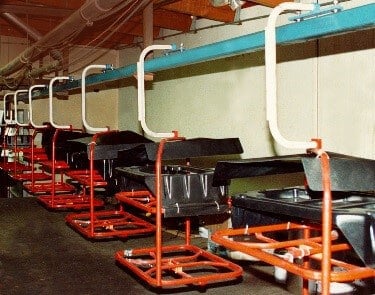
The Existing Line Sets The Rules
The easiest route on paper may be blocked by utilities, ceiling steel, heat exposure, process equipment, or floor access. Old drawings may also be incomplete or wrong.
IMH uses field verification, photos, drawings, and line-history details to decide what can stay, what should be replaced, and what needs a phased installation plan.
Start With A Buildable Plan
Before budget, downtime, or engineering time is committed, the right project details need to be clear. IMH connects the desired outcome with the field conditions that decide whether the system can be installed cleanly and perform reliably after startup.
That means collecting photos, drawings, measurements, production goals, safety requirements, shutdown limits, and maintenance concerns early. It also means explaining tradeoffs in plain language: what should be engineered now, what can be phased later, what needs structural review, and what information is still missing before a final recommendation is responsible.
Paint Line Retrofit Review Inputs
These inputs help separate a simple replacement from a larger process or modernization project.
| Input | Why it matters |
|---|---|
| Existing conveyor type | Identifies compatibility, replacement path, and whether power and free, enclosed track, or I-beam issues are involved. |
| Part and carrier details | Affects spacing, stability, booth clearance, oven clearance, finish quality, and loading ergonomics. |
| Process timing | Defines dwell time, line speed, accumulation, stop zones, and cure requirements. |
| Booth, washer, and oven dimensions | Sets route, clearances, vertical changes, and installation constraints. |
| Wear history | Chain stretch, trolley wear, lubrication issues, frozen wheels, and take-up travel may drive scope. |
| Controls condition | Stops, sensors, interlocks, panels, and operator stations may need retrofit coordination. |
| Shutdown limits | Defines preassembly, demo sequence, tie-ins, testing, and restart timing. |
Before A Paint Conveyor Retrofit Quote
These details make the first review more useful and help identify hidden constraints.
Retrofit Structure Should Preserve The Line
Paint lines often have little spare space around process equipment. Extra columns, poor bracing, or inaccessible service points can make a retrofit harder to run than the worn system it replaced.
IMH reviews support steel, floor access, maintenance zones, and future line changes before treating the retrofit structure as settled.
The Work IMH Is Built Around
IMH Systems is focused on engineered movement overhead, reliable lifting, and field execution inside real manufacturing plants. Overhead conveyors, bridge cranes, and service or installation work remain the center of that story, while secondary equipment is included only where it helps solve the larger project.
Buyers get practical answers instead of generic product language: what details matter, what decisions affect the installed system, what tradeoffs need review, and when a project is ready for a deeper conversation.
For conveyor projects, that means reviewing load weight, carrier behavior, drive and take-up locations, controls, support steel, access below the line, maintenance points, and shutdown phasing before recommending a path.
A strong system can be quoted responsibly, installed cleanly, and serviced after startup.
Paint Retrofit Confidence
The existing paint and finishing page already frames conveyor planning around dwell time, carrier stability, contamination control, and process equipment. This retrofit guide deepens that bottom-funnel angle.
It should link strongly from the paint page and the overhead conveyor installation and retrofit page.
A paint line retrofit succeeds when the conveyor fits the process that already exists.
Frequently Asked Questions
Can IMH retrofit an existing paint line conveyor?
Yes. IMH can review replacement sections, route changes, carrier updates, controls coordination, and shutdown planning.
What makes paint conveyor retrofits hard?
Fixed process equipment, heat, contamination, finish quality, carrier behavior, utilities, and limited shutdown windows.
Should carriers be reviewed during a retrofit?
Yes. Carriers can affect finish quality, spacing, ergonomics, clearance, and product stability.
Can power and free help a paint line?
Yes, when accumulation, stops, transfers, dwell time, or process timing control are needed.
What should I send first?
Photos, existing drawings, part details, process timing, carrier photos, and the shutdown window.
Ready To Review A Paint Line Retrofit?
Send IMH photos of the line, carrier details, process timing, current problems, and your shutdown limits.