

Automotive and Assembly Material Handling Systems
Automotive and assembly material handling planning for overhead conveyors, power and free systems, bridge cranes, workcell lifting, and installation work inside active production environments.
Assembly Flow Needs Controlled Movement
Automotive and assembly plants need material handling systems that support sequence, takt time, ergonomic access, part presentation, and safe movement through production.
IMH reviews overhead conveyor routes, power and free accumulation, carriers, workcell lifting, bridge crane coverage, vertical movement, installation phasing, and support steel so the system fits the way the plant actually builds product.
Automotive And Assembly Priorities
Part Flow
Move work through stations without crowding aisles, carts, or forklift paths.
Carrier Control
Plan spacing, accumulation, stopping, release timing, and part orientation around the process.
Field Execution
Coordinate shutdowns, tie-ins, support steel, controls, and startup in active plants.
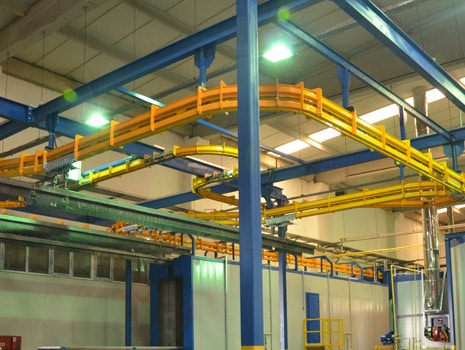
The System Has To Respect The Line
A conveyor or crane in an assembly area has to support operators, fixtures, tooling, maintenance access, and product changes. It cannot only move the part; it has to help the work happen cleanly.
IMH looks at station spacing, load/unload ergonomics, floor access, controls, lift points, and installation timing before recommending equipment.
Start With A Buildable Plan
Before budget, downtime, or engineering time is committed, the right project details need to be clear. IMH connects the desired outcome with the field conditions that decide whether the system can be installed cleanly and perform reliably after startup.
That means collecting photos, drawings, measurements, production goals, safety requirements, shutdown limits, and maintenance concerns early. It also means explaining tradeoffs in plain language: what should be engineered now, what can be phased later, what needs structural review, and what information is still missing before a final recommendation is responsible.
Automotive And Assembly Inputs
These details help define the correct conveyor, crane, or installation path.
| Input | Why it matters |
|---|---|
| Part size and weight | Defines carrier, lift, crane, support, and ergonomic requirements. |
| Station sequence | Connects conveyor movement to takt time, WIP, and operator workflow. |
| Accumulation needs | Determines whether power and free, stops, buffers, or controls are needed. |
| Load and unload method | Affects carrier design, hook access, workcell lifting, and operator safety. |
| Existing equipment | Fixtures, robots, carts, lifts, and utilities shape routing and access. |
| Shutdown window | Controls tie-ins, demolition, installation, testing, and restart planning. |
Where IMH Helps
Assembly projects need a practical mix of equipment selection and field planning.
Support Steel Should Protect Assembly Space
Assembly floors need open movement for people, carts, lifts, maintenance, and product changes. Conveyor support steel and crane columns should not create a maze under the equipment.
IMH reviews column placement, bracing, service access, and future flexibility so the installed system supports the line instead of choking it.
The Work IMH Is Built Around
IMH Systems is focused on engineered movement overhead, reliable lifting, and field execution inside real manufacturing plants. Overhead conveyors, bridge cranes, and service or installation work remain the center of that story, while secondary equipment is included only where it helps solve the larger project.
Buyers get practical answers instead of generic product language: what details matter, what decisions affect the installed system, what tradeoffs need review, and when a project is ready for a deeper conversation.
For automotive and assembly work, that means reviewing part presentation, carrier behavior, station access, accumulation, lift coverage, controls, support steel, and shutdown phasing before recommending a system.
The right material handling system improves production flow without creating new access or installation problems.
Assembly-Focused Material Handling
IMH’s documented overhead conveyor, power and free, carrier, retrofit, crane, and installation experience supports assembly-focused conversations.
The strongest assembly projects connect equipment choice to production timing and field execution.
Assembly material handling works when movement, access, and installation all fit the line.
Frequently Asked Questions
What conveyor is best for assembly?
It depends on load, station sequence, accumulation, carrier design, controls, and installation constraints.
When is power and free useful?
When carriers need to stop, accumulate, transfer, index, or move through different timing than the main chain.
Can cranes support assembly cells?
Yes. Workstation, jib, gantry, and bridge cranes can support local lifting when coverage and floor access are reviewed.
Can IMH retrofit an assembly conveyor?
Yes. Retrofit work can include route changes, carriers, stops, controls, support steel, and shutdown planning.
What should I send first?
Part details, station layout, photos, desired movement, production rate, and downtime limits.
Ready To Review An Assembly Project?
Send IMH your part details, station layout, photos, production timing, and installation window.