
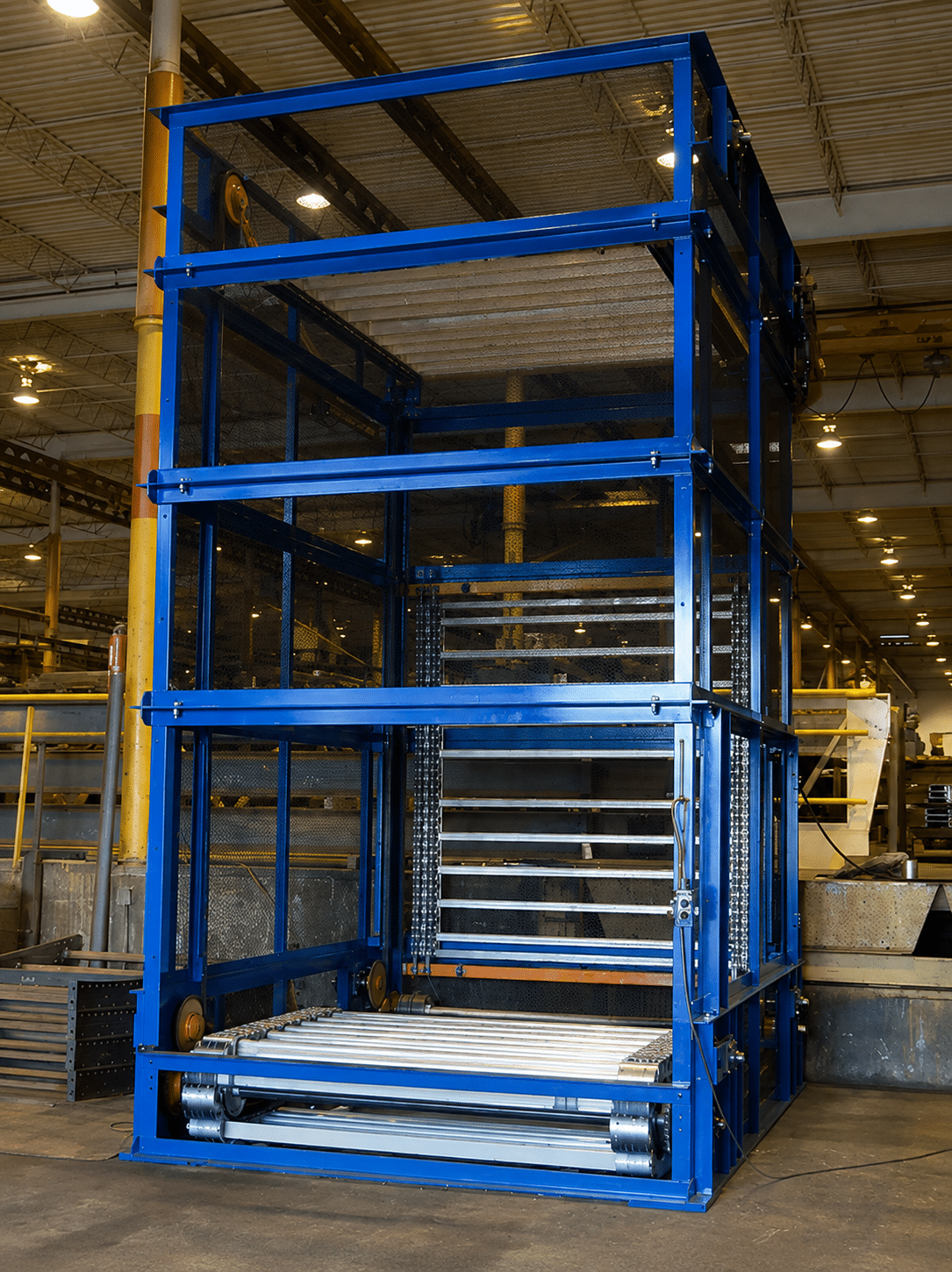
Vertical Conveyors and VRC Material Lifts
Vertical conveyor and material lift planning for manufacturers that need to move product between floor levels, mezzanines, platforms, and process areas without creating new safety, access, or maintenance problems.
Vertical Movement Needs More Than A Lift
A vertical conveyor or VRC-style material lift has to fit the load, landing points, guarding, controls, structure, traffic flow, and installation conditions around it. The equipment may move vertically, but the project succeeds or fails in the details around the lift.
IMH reviews pallet size, cart size, load weight, travel height, loading method, mezzanine openings, floor conditions, gates, interlocks, forklift access, maintenance access, and startup needs before treating vertical conveyor as the right solution.
Vertical Conveyor Planning Priorities
Load And Carrier
Pallets, carts, bins, fixtures, and irregular loads need the platform, clear opening, and control method reviewed together.
Landing And Guarding
Upper and lower gates, interlocks, enclosures, handrail tie-ins, and operator access shape the final scope.
Field Installation
Floor openings, mezzanine steel, anchors, power, lift access, shutdown timing, and startup checks need early planning.
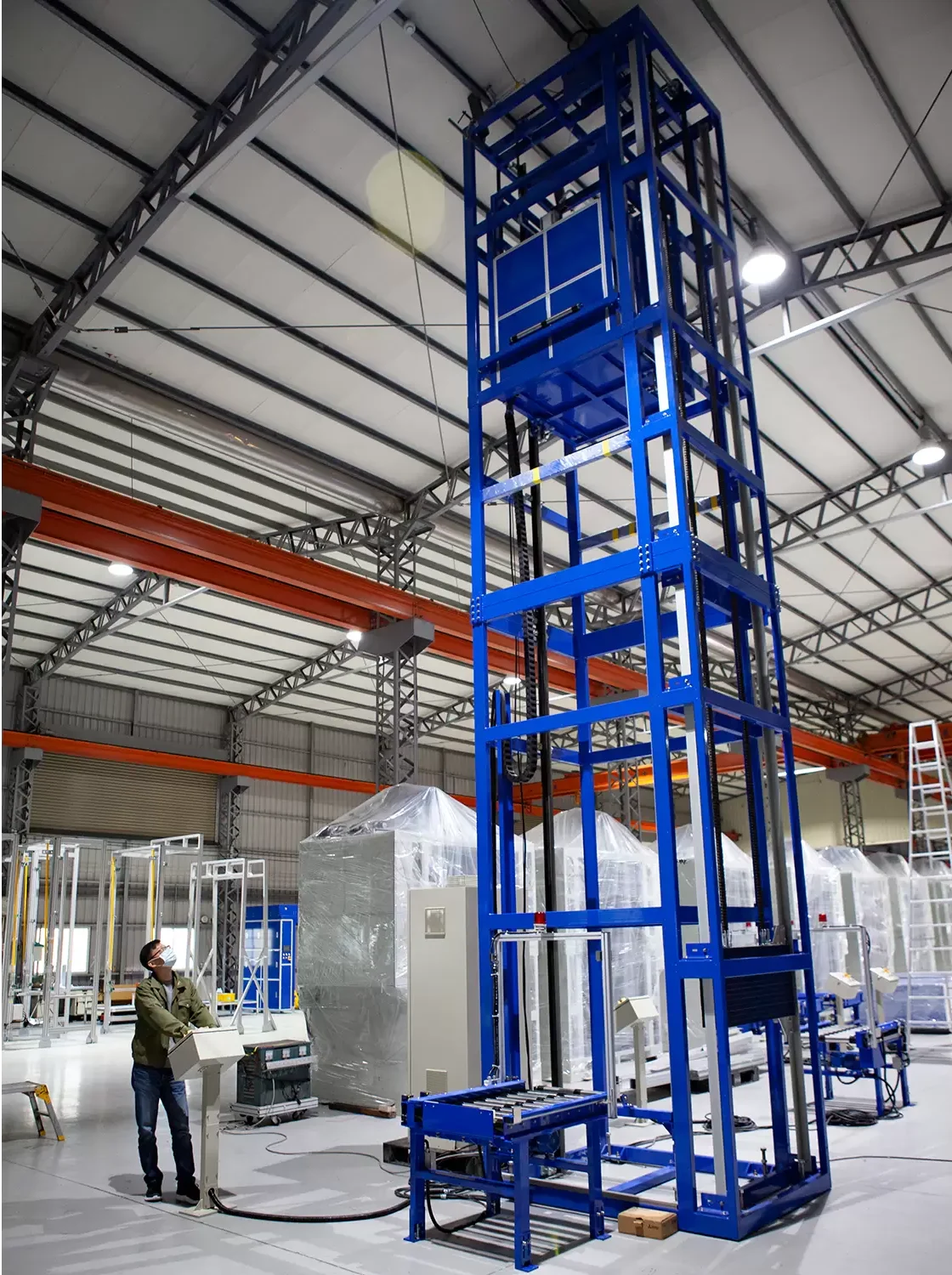
Move Product Between Levels Without Creating A Bottleneck
Vertical conveyors are useful when material needs to move between floors, mezzanines, platforms, storage areas, production cells, or process levels without tying up forklifts or forcing awkward manual handling.
IMH plans the lift around the way product actually arrives and leaves: forklift approach, cart access, staging room, gate swing, operator position, controls, guarding, and the next movement after the load reaches the landing.
Start With A Buildable Plan
Before budget, downtime, or engineering time is committed, the right project details need to be clear. IMH connects the desired outcome with the field conditions that decide whether the system can be installed cleanly and perform reliably after startup.
That means collecting photos, drawings, measurements, production goals, safety requirements, shutdown limits, and maintenance concerns early. It also means explaining tradeoffs in plain language: what should be engineered now, what can be phased later, what needs structural review, and what information is still missing before a final recommendation is responsible.
Vertical Conveyor Quote Inputs
These details help define whether vertical conveyor, material lift, or another handling method fits the project.
| Input | Why it matters |
|---|---|
| Load size and weight | Determines platform size, capacity, structure, guarding, and safety review. |
| Load type | Pallets, carts, bins, fixtures, parts, and uneven loads affect platform, stops, and loading method. |
| Travel height | Defines lift stroke, landing arrangement, structure, controls, and installation requirements. |
| Landing layout | Upper and lower access, mezzanine openings, gate swing, forklift approach, and staging room affect usability. |
| Building and support conditions | Floor, mezzanine steel, anchors, pits, openings, walls, and surrounding equipment shape the install. |
| Controls and safety devices | Coordinates call stations, interlocks, gates, guarding, lockout, and operator workflow. |
| Installation window | Defines demolition, opening work, setting, power handoff, testing, and startup sequence. |
Where Vertical Conveyors Fit
Vertical conveyor is strongest when the plant needs controlled material movement between levels and the floor plan needs to stay practical.
The Landings Decide How Useful The Lift Feels
A vertical conveyor can have the right capacity and still feel awkward if the landing layout is wrong. Forklift approach, cart turning, gate location, platform depth, guardrail tie-ins, staging space, and control position all affect daily use.
IMH reviews the floor below, the level above, and the route into and out of the lift so the system improves flow instead of creating a new traffic pinch point.
The Work IMH Is Built Around
IMH Systems is focused on engineered movement overhead, reliable lifting, and field execution inside real manufacturing plants. Overhead conveyors, bridge cranes, and service or installation work remain the center of that story, while secondary equipment is included only where it helps solve the larger project.
Buyers get practical answers instead of generic product language: what details matter, what decisions affect the installed system, what tradeoffs need review, and when a project is ready for a deeper conversation.
For vertical conveyor and material lift projects, that means reviewing load size, weight, travel height, landing arrangement, guarding, gates, controls, mezzanine or floor openings, forklift access, maintenance access, and installation phasing before recommending a path.
A strong vertical movement system protects people, moves product predictably between levels, fits the building, and can be maintained after startup.
Vertical Conveyor Planning Confidence
Vertical conveyor work fits IMH’s larger strength: connecting material handling equipment to the field conditions that decide whether it can be installed cleanly and used safely.
Instead of treating vertical movement as a catalog lift, IMH reviews load details, building constraints, landing flow, guarding, controls, and installation steps so buyers understand the full project before committing.
A vertical conveyor is only as good as the landings, guarding, and field plan around it.
Frequently Asked Questions
What is a vertical conveyor used for?
Vertical conveyors and material lifts move product, pallets, carts, bins, fixtures, or supplies between floor levels, mezzanines, platforms, and process areas.
Is a vertical conveyor the same as a personnel elevator?
No. Vertical conveyors and VRC-style material lifts are planned for material movement, not passenger elevator use.
What information is needed for a quote?
Load size, weight, travel height, landing layout, photos, building information, access needs, controls requirements, and installation timing.
Can a vertical conveyor be added to an existing mezzanine?
Often, but the structure, opening, guarding, access, anchors, controls, and installation plan must be reviewed.
Can IMH install the lift?
IMH can support vertical conveyor planning and installation conversations, including access, setting, power coordination, guarding review, and startup planning.
What makes a vertical conveyor project difficult?
Limited landing space, unclear load details, weak access, existing equipment conflicts, guarding gaps, power coordination, and tight shutdown windows can all affect the project.
Ready To Review A Vertical Conveyor Project?
Send IMH your load size, weight, travel height, landing photos, building details, and target installation window.