
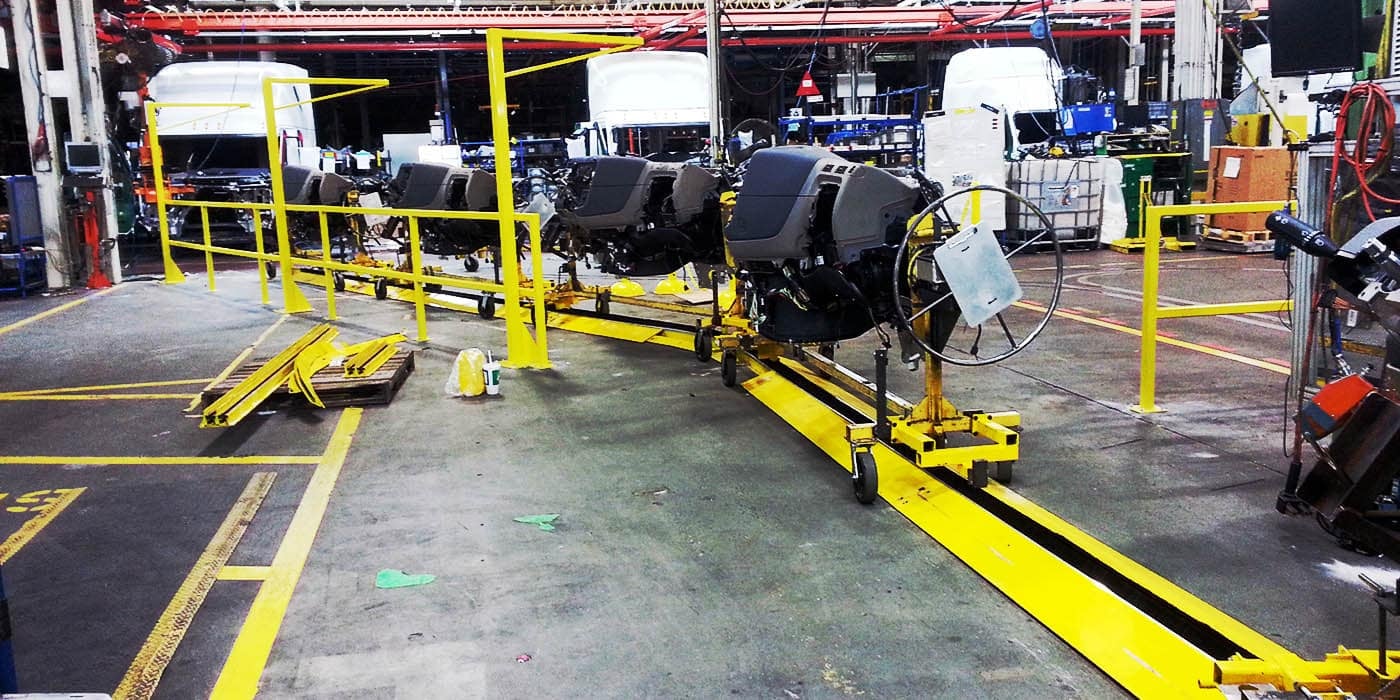
Floor Conveyor Systems
Floor conveyor systems for specialized applications where towline, roller, pallet, slat, accumulation, or custom floor-level movement supports the larger material handling plan.
Floor Conveyor Support Starts With Towline
IMH leads with overhead conveyors when the plant needs to free floor space, bridge cranes when the load needs lifting coverage, and installation work when the project has to be executed inside a real facility. When the best answer is controlled floor-level cart or fixture movement, towline becomes the strongest floor conveyor conversation.
Roller, pallet, slat, accumulation, and other specialized floor conveyor options remain available when they fit the bigger scope. IMH keeps those options in the conversation without letting them dilute the main website focus: overhead conveyor systems, bridge cranes, service/installations, and serious towline conveyor projects.
Floor Conveyor Work IMH Supports
Towline And Cart Movement
In-floor or low-profile tow paths for repeatable cart movement, heavy assembly flow, live storage, dispatching, and controlled plant routes.
Inverted Conveyor Options
Inverted power and free or inverted monorail can support floor-mounted carrier control when the process needs routing, indexing, or clean access.
Other Floor Conveyor Support
Roller, pallet, slat, and accumulation sections remain available for specialized applications inside larger projects.
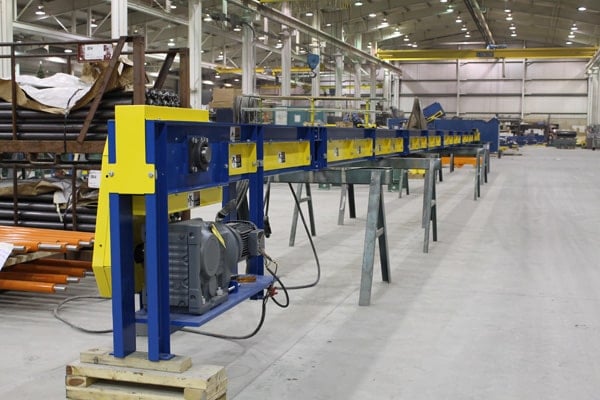
Keep Floor Conveyor In The Right Role
Overhead conveyors are still the main floor-space strategy because they move product above the work area and help preserve forklift paths, maintenance access, and open production space.
Floor conveyor becomes the right conversation when the process needs carts, fixtures, pallets, skids, indexing, accumulation, or heavy assembly movement at floor level. IMH uses towline as the lead floor-level product and brings in other floor conveyor types only when the larger project calls for them.
Start With A Buildable Plan
Before budget, downtime, or engineering time is committed, the right project details need to be clear. IMH connects the desired outcome with the field conditions that decide whether the system can be installed cleanly and perform reliably after startup.
That means collecting photos, drawings, measurements, production goals, safety requirements, shutdown limits, and maintenance concerns early. It also means explaining tradeoffs in plain language: what should be engineered now, what can be phased later, what needs structural review, and what information is still missing before a final recommendation is responsible.
Floor Conveyor Planning Inputs
These details help decide whether floor conveyor is the right tool or whether overhead movement, lifting, or vertical transfer should be reviewed first.
| Input | Why it matters |
|---|---|
| Load type and stability | Defines whether carts, pallets, fixtures, cartons, bins, or irregular loads can move safely on the selected conveyor. |
| Route and floor traffic | Shows conflicts with forklifts, operators, aisles, doors, equipment access, and safety zones. |
| Accumulation or dispatching | Determines whether loads need live storage, stop zones, automatic release, or simple transfer. |
| Transfer points | Coordinates loading, unloading, turns, cross transfers, scales, stops, lifts, and adjacent equipment. |
| Environment | Washdown, debris, temperature, impact, abrasives, and cleanliness affect the conveyor type and maintenance plan. |
| Controls and safety | Plans starts, stops, sensors, interlocks, guarding, e-stops, and operator interaction. |
| Installation scope | Defines anchors, pits, concrete work, utilities, shutdown timing, startup, and future access. |
Where Floor Conveyor Fits
The strongest floor conveyor projects have a clear route, a repeatable load, and a process reason for keeping movement at floor level.
Floor Conveyor Should Not Become Floor Clutter
A floor conveyor occupies the same space used by people, forklifts, carts, maintenance crews, and production equipment. That makes routing discipline important.
IMH reviews floor conveyor around the whole plant flow: access around the line, transfer points, guarding, maintenance space, cleaning needs, controls, installation work, and how the system will affect future layout changes.
The Work IMH Is Built Around
IMH Systems is focused on engineered movement overhead, reliable lifting, and field execution inside real manufacturing plants. Overhead conveyors, bridge cranes, and service or installation work remain the center of that story, while secondary equipment is included only where it helps solve the larger project.
Buyers get practical answers instead of generic product language: what details matter, what decisions affect the installed system, what tradeoffs need review, and when a project is ready for a deeper conversation.
For conveyor projects, that means reviewing load weight, carrier behavior, drive and take-up locations, controls, support steel, access below the line, maintenance points, and shutdown phasing before recommending a path.
A strong system can be quoted responsibly, installed cleanly, and serviced after startup.
Floor Conveyor As A Supporting Strength
IMH can support floor conveyor conversations when they connect to serious material handling, production flow, retrofit, or installation needs.
Towline is the strongest floor-level product focus because it supports repeatable cart and fixture movement for real production environments. Other floor conveyor options remain available when they are the right piece of a larger material handling plan.
The right conveyor is the one that improves the route without stealing the plant around it.
Frequently Asked Questions
Does IMH offer floor conveyor systems?
Yes. IMH can review towline, inverted conveyor, roller, pallet, slat, and accumulation conveyor projects when they fit the material handling scope.
Is towline a stronger focus than general floor conveyor?
Yes. Towline is treated as the primary floor-level conveyor product because it supports repeatable cart and fixture movement for serious assembly, production, and heavy equipment flow.
When is overhead conveyor better than floor conveyor?
Overhead conveyors are usually stronger when the project needs to free floor space, preserve forklift access, reduce floor congestion, and keep the work area open below the system.
What information is needed?
Load details, cart or carrier details, route, photos, layout, traffic concerns, accumulation needs, controls, environment, and installation timing.
Can IMH install floor conveyor?
IMH can support installation planning, tie-ins, utilities, controls coordination, startup, and field execution depending on scope.
Ready To Review A Floor Conveyor Project?
Send IMH your load details, route, photos, traffic constraints, and production goal so the right conveyor approach can be reviewed.