
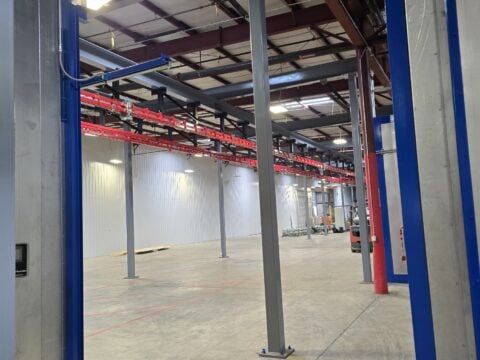
Industrial Field Support for Conveyor and Crane Installation
Industrial field support for overhead conveyor installation, bridge crane installation, retrofit tie-ins, machinery setting, commissioning, and production startup inside active manufacturing plants.
Field Support Should Strengthen The Whole Project
Equipment installation is not just labor after the sale. Access, rigging, anchors, support steel, utilities, controls, safety rules, and shutdown timing often decide whether the project succeeds.
IMH plans field work around the systems customers care about most: overhead conveyors, bridge cranes, runway systems, retrofit tie-ins, machinery setting connected to production flow, and startup support.
Installation Work IMH Plans Around
Conveyor Installation
Overhead conveyor, power and free, I-beam, enclosed track, retrofit, and support steel installation.
Crane Installation
Runway systems, bridge cranes, workstation cranes, local lifting, electrification, and startup coordination.
Retrofit And Shutdowns
Phased work, demolition, tie-ins, commissioning, punch-list control, and restart support.
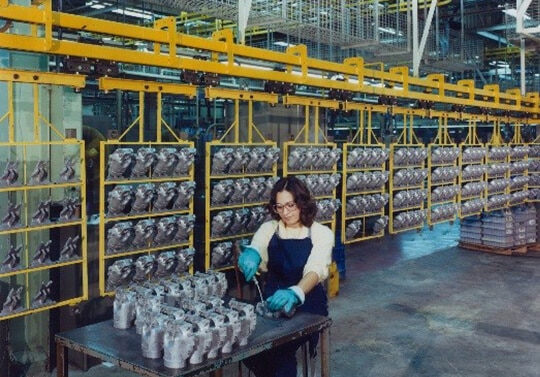
Active Plants Need Better Planning
Most installation problems are visible before the crew arrives: blocked access, missing parts, unclear power scope, poor staging, weak drawings, or unrealistic shutdown windows.
IMH reviews those details early so installation can be phased, sequenced, and handed off with fewer surprises.
Start With A Buildable Plan
Before budget, downtime, or engineering time is committed, the right project details need to be clear. IMH connects the desired outcome with the field conditions that decide whether the system can be installed cleanly and perform reliably after startup.
That means collecting photos, drawings, measurements, production goals, safety requirements, shutdown limits, and maintenance concerns early. It also means explaining tradeoffs in plain language: what should be engineered now, what can be phased later, what needs structural review, and what information is still missing before a final recommendation is responsible.
Installation Planning Inputs
These details help IMH plan the field work responsibly.
| Input | Why it matters |
|---|---|
| Scope of work | Defines what is being installed, modified, removed, tied in, or started up. |
| Photos and drawings | Help identify access, utilities, structure, and layout constraints. |
| Shutdown window | Controls phasing, crew plan, and restart risk. |
| Rigging and access | Determines lift equipment, staging, doors, aisles, and floor path. |
| Utilities and controls | Coordinates power, air, disconnects, sensors, interlocks, and handoff. |
| Safety requirements | Defines permits, barricades, lift plans, hot work, and site rules. |
Installation Services
IMH focuses installation work around material handling systems and the field work connected to them.
Field Conditions Shape The Scope
Installation planning should include the building, people, equipment, and schedule around the work.
IMH reviews access, rigging, support steel, anchors, utilities, controls, and commissioning so the field crew is not forced to solve avoidable problems during the shutdown.
The Work IMH Is Built Around
IMH Systems is focused on engineered movement overhead, reliable lifting, and field execution inside real manufacturing plants. Overhead conveyors, bridge cranes, and service or installation work remain the center of that story, while secondary equipment is included only where it helps solve the larger project.
Buyers get practical answers instead of generic product language: what details matter, what decisions affect the installed system, what tradeoffs need review, and when a project is ready for a deeper conversation.
For bridge crane and overhead lifting projects, that means reviewing capacity, span, hook coverage, runway support, lift height, duty cycle, controls, electrification, building structure, access below the crane, and installation phasing before recommending a path.
The result should be a crane system that can be quoted responsibly, installed cleanly, aligned correctly, operated confidently, and serviced after startup.
Installation Confidence
IMH has documented conveyor, crane, retrofit, and installation work in real industrial facilities.
The strongest installations are planned around shutdown timing, support steel, utilities, controls, safety, and restart needs before the job begins.
A strong installation plan makes the field work feel deliberate, not improvised.
Frequently Asked Questions
What equipment does IMH install?
IMH focuses on conveyors, bridge cranes, support steel, material handling systems, retrofit work, and related industrial equipment.
Can installation happen during production?
Sometimes. Active-plant work depends on access, safety, noise, lifts, power, and production constraints.
Do I need a shutdown?
Some work can be phased; tie-ins, lifts, demolition, and startup often require planned downtime.
Does IMH support commissioning?
Yes. Startup support, functional checks, punch-list review, and handoff should be discussed during planning.
What should I send first?
Photos, drawings, scope notes, equipment details, site rules, and the target schedule.
Ready To Plan Field Installation Work?
Send IMH your scope, photos, drawings, access constraints, and shutdown timing.