
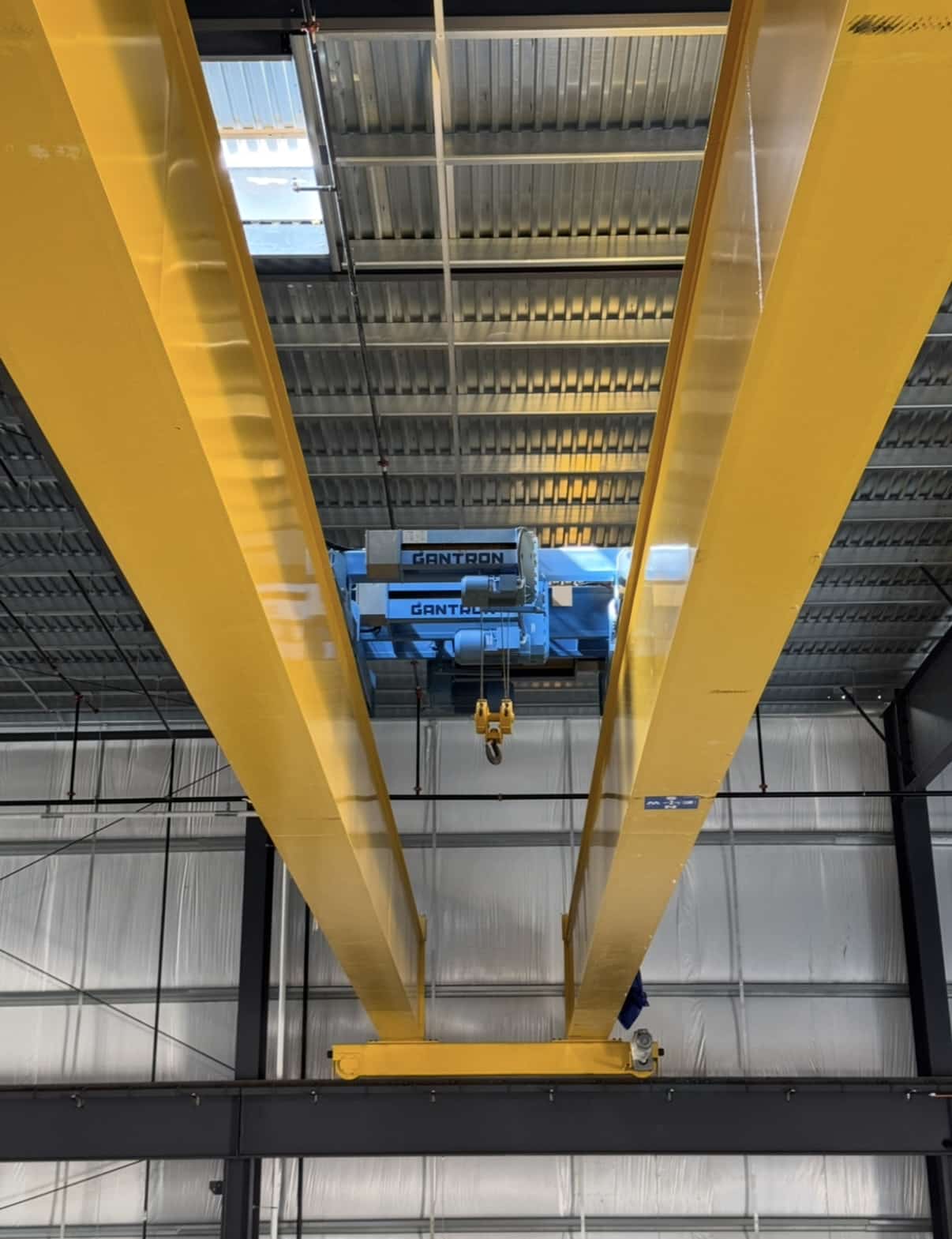
Top Running Bridge Cranes
Top running bridge crane planning for facilities that need crane coverage supported by runway beams, rail alignment, building review, and installation coordination.
A Common Bridge Crane Path With Real Structural Questions
Top-running bridge cranes travel on rails supported by runway beams. They are common in manufacturing bays where the building or freestanding runway can support the crane loads and the desired hook coverage.
IMH reviews top-running options against single-girder, double-girder, underhung, workstation, jib, and gantry cranes so the final recommendation fits capacity, span, lift height, runway support, and installation reality.
Top-Running Planning Factors
Capacity And Span
Crane size, hoist selection, and runway loads are tied together.
Runway Alignment
Rail condition, end stops, bracing, and alignment affect long-term travel.
Building Fit
Existing steel, freestanding support, clearances, and installation access drive the scope.
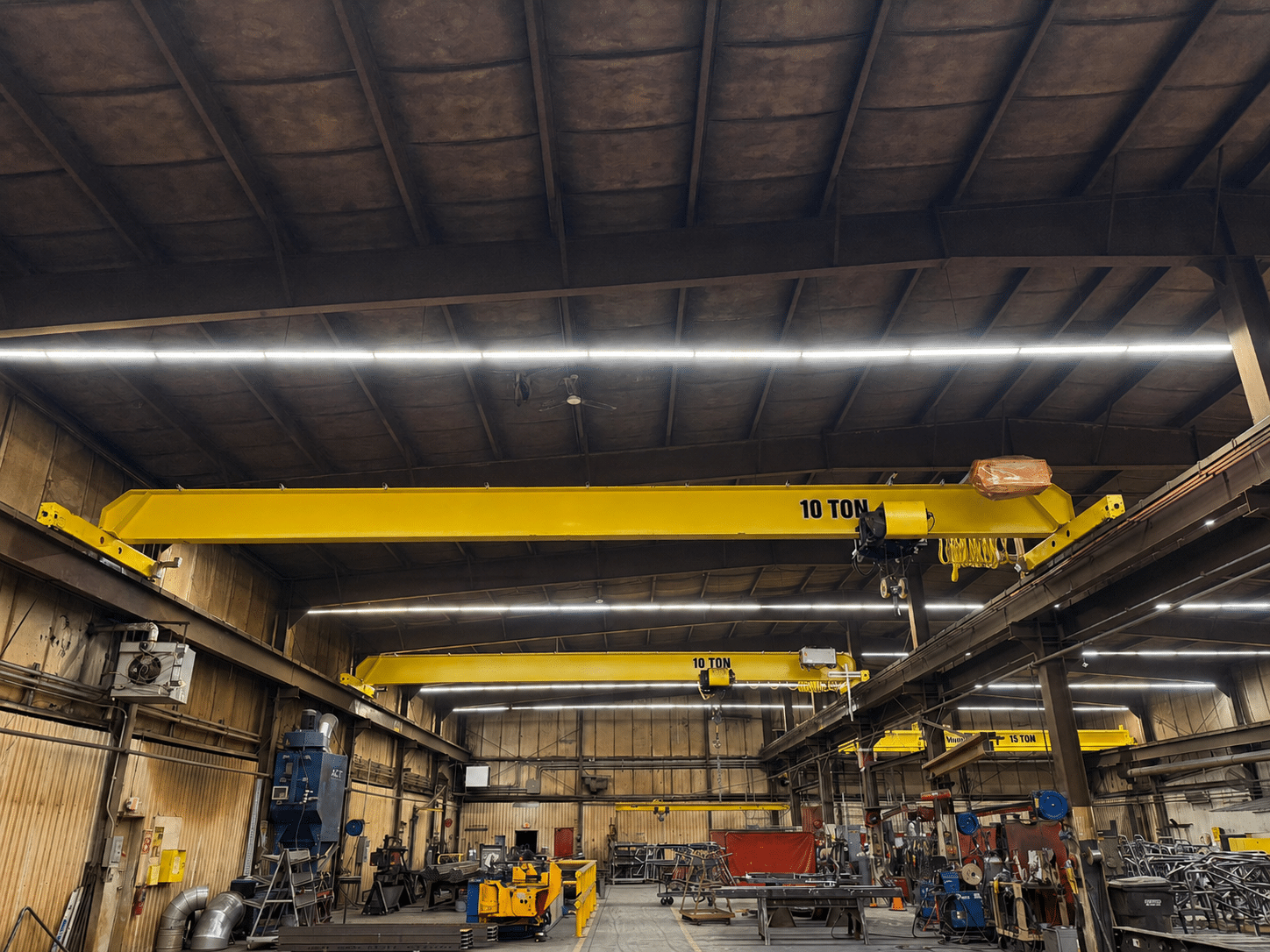
Compare Top-Running And Underhung Early
Top-running and underhung cranes can both create useful overhead coverage, but they solve different building and support problems.
IMH helps buyers compare support structure, lift height, hook approach, runway loads, obstructions, and installation access before choosing the crane style.
Start With A Buildable Plan
Before budget, downtime, or engineering time is committed, the right project details need to be clear. IMH connects the desired outcome with the field conditions that decide whether the system can be installed cleanly and perform reliably after startup.
That means collecting photos, drawings, measurements, production goals, safety requirements, shutdown limits, and maintenance concerns early. It also means explaining tradeoffs in plain language: what should be engineered now, what can be phased later, what needs structural review, and what information is still missing before a final recommendation is responsible.
Top-Running Crane Inputs
These details help define whether top-running support is practical.
| Input | Why it matters |
|---|---|
| Capacity | Determines bridge, hoist, end trucks, wheel loads, runway loads, and structure review. |
| Span | Sets bridge width, hook coverage, deflection discussion, and support requirements. |
| Runway length | Defines travel area, rail length, end stops, and column placement. |
| Lift height | Confirms usable hook travel and headroom. |
| Runway support | Clarifies building-supported versus freestanding structure. |
| Rail and alignment | Rail condition, elevation, straightness, and end approach influence travel quality. |
| Electrical path | Coordinates conductor bar, festoon, disconnects, controls, and startup. |
Where Top-Running Cranes Fit
Top-running bridge cranes are useful when runway support can be planned cleanly around the building and work area.
Runway Rail Quality Shapes Performance
A top-running crane depends on the runway. Alignment, rail condition, beam support, bracing, end stops, and electrification all affect travel and reliability.
IMH treats runway review as part of top-running crane selection so the quote reflects the actual installed system.
Top-Running Describes The Runway Interface
A top-running crane travels on rail above the runway beam. It may use single- or double-girder bridge construction, so capacity, span, hook height, wheel loads, duty, rail, and support structure still determine the final arrangement.
IMH separates the running-style decision from the girder decision and then coordinates the runway, electrification, installation, alignment, and commissioning around both.
For bridge crane and overhead lifting projects, that means reviewing capacity, span, hook coverage, runway support, lift height, duty cycle, controls, electrification, building structure, access below the crane, and installation phasing before recommending a path.
The result should be a crane system that can be quoted responsibly, installed cleanly, aligned correctly, operated confidently, and serviced after startup.
Top-Running Crane Selection Evidence
IMH’s crane pages are built to help buyers understand the support, installation, and building decisions behind the crane type.
Top-running bridge crane planning is strongest when runway questions are answered early.
Top-running crane selection is really crane and runway selection.
Frequently Asked Questions
What is a top-running bridge crane?
It is a bridge crane that travels on top of runway rails supported by building steel or freestanding runway structure.
Is top-running better than underhung?
It depends on capacity, span, lift height, support structure, and building conditions.
Can an existing runway be reused?
Sometimes, but rail condition, alignment, support, end stops, and loads must be reviewed.
Can top-running cranes be freestanding?
Yes, when an independent runway support system is designed for the application.
What information is needed?
Capacity, span, runway length, lift height, building photos, drawings, power needs, and installation timing.
Ready To Compare Top-Running Cranes?
Send IMH your crane capacity, target coverage, building photos, runway information, and schedule.