
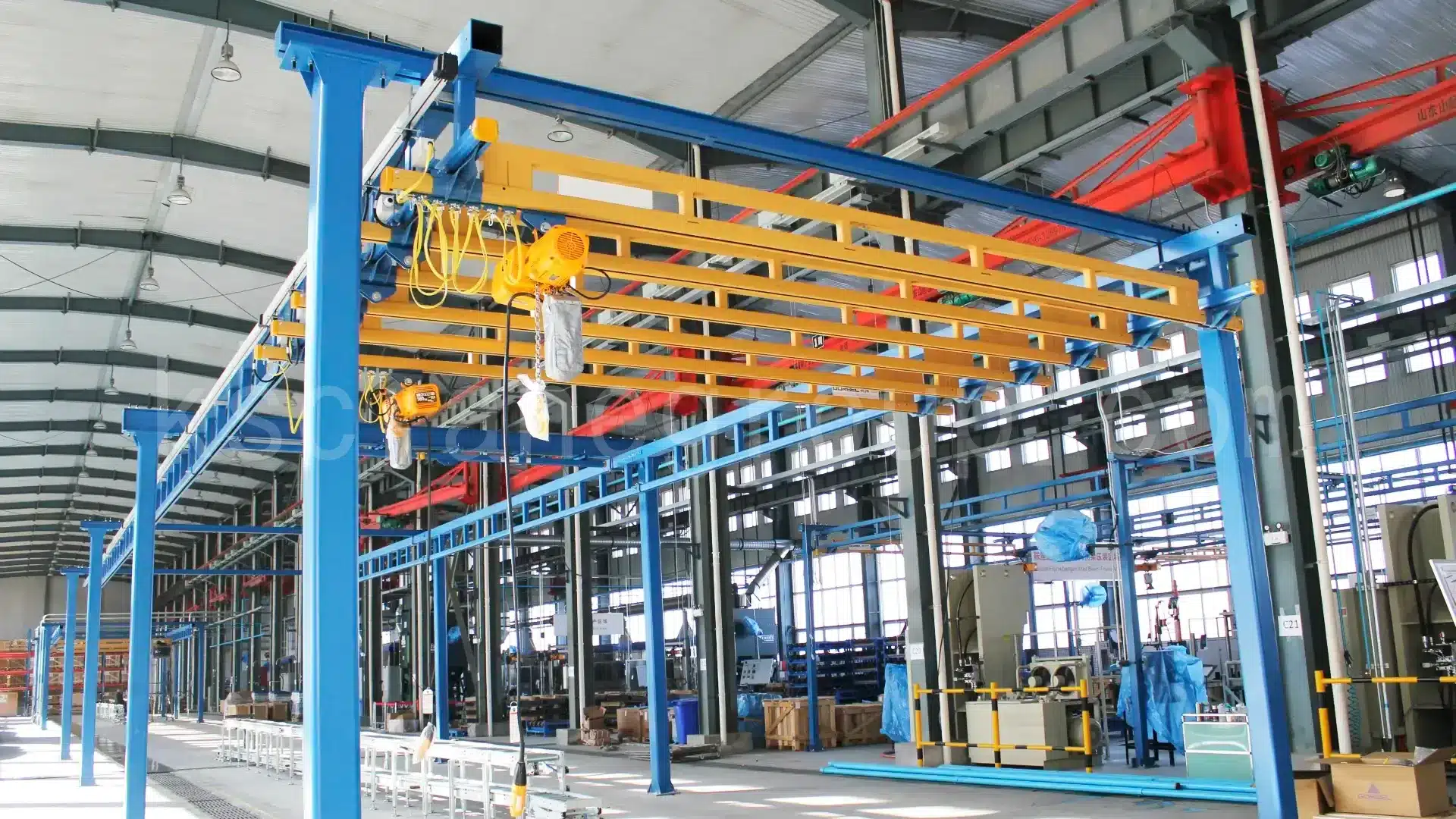
Freestanding Crane Runway Systems
Freestanding crane runway systems for facilities that need bridge crane coverage without relying entirely on existing building steel.
When The Building Should Not Carry The Crane
A freestanding crane runway uses its own support structure instead of depending entirely on existing building steel. That can be useful when the building was not designed for crane loads, when coverage needs to move outside the best structural bay, or when future flexibility matters.
IMH reviews capacity, span, runway length, floor and foundation conditions, column placement, hook coverage, power delivery, installation access, and production flow before recommending a freestanding runway approach.
Freestanding Runway Planning Priorities
Coverage
Runway length, span, hook approach, and column layout decide whether the crane reaches the work.
Floor Impact
Column locations, anchors, slab condition, and traffic paths affect the plant below the crane.
Installation
Support steel delivery, rigging, alignment, power, and startup need early planning.
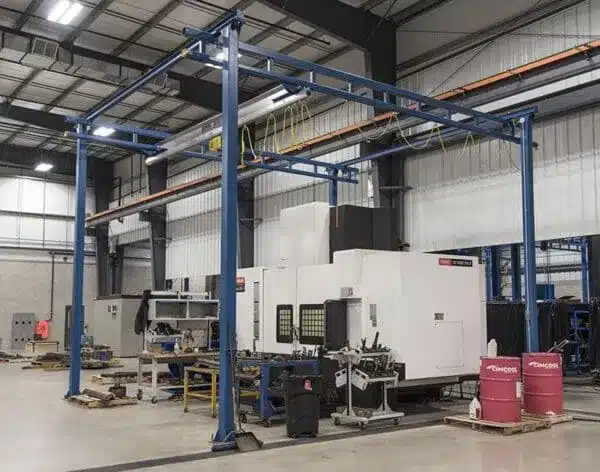
Support Steel Should Not Create A New Problem
Freestanding runway systems can solve a structural problem while creating a floor-space problem if column placement is not reviewed carefully.
IMH plans runway support around equipment access, aisle movement, maintenance paths, future process changes, and how the steel will be installed in the real facility.
Start With A Buildable Plan
Before budget, downtime, or engineering time is committed, the right project details need to be clear. IMH connects the desired outcome with the field conditions that decide whether the system can be installed cleanly and perform reliably after startup.
That means collecting photos, drawings, measurements, production goals, safety requirements, shutdown limits, and maintenance concerns early. It also means explaining tradeoffs in plain language: what should be engineered now, what can be phased later, what needs structural review, and what information is still missing before a final recommendation is responsible.
Freestanding Runway Quote Inputs
These details help IMH determine whether a freestanding runway is the right support path.
| Input | Why it matters |
|---|---|
| Crane capacity | Determines wheel loads, runway loads, support structure, and foundation review. |
| Span and runway length | Defines hook coverage, bay fit, bridge travel, and support spacing. |
| Floor and foundation information | Identifies slab, footing, anchor, column-base, and load-transfer questions. |
| Column layout constraints | Protects production aisles, machines, maintenance access, and future flexibility. |
| Rail and alignment needs | Runway rail, clips, end stops, and alignment tolerances affect crane travel. |
| Power and controls | Coordinates electrification, disconnects, conductor bar or festoon, pendant or radio control, and startup. |
| Installation access | Defines staging, lifts, shutdown timing, and steel placement. |
When Freestanding Runway Makes Sense
A freestanding runway is most useful when crane coverage is needed but building-supported runway is not the cleanest answer.
Column Placement Is A Production Decision
The best freestanding runway is not simply the strongest steel layout. It is the strongest layout that still lets the plant work.
IMH reviews support spacing, anchor points, floor traffic, forklifts, carts, operator access, maintenance zones, and future equipment moves before treating the runway layout as final.
The Work IMH Is Built Around
IMH Systems is focused on engineered movement overhead, reliable lifting, and field execution inside real manufacturing plants. Overhead conveyors, bridge cranes, and service or installation work remain the center of that story, while secondary equipment is included only where it helps solve the larger project.
Buyers get practical answers instead of generic product language: what details matter, what decisions affect the installed system, what tradeoffs need review, and when a project is ready for a deeper conversation.
For bridge crane and overhead lifting projects, that means reviewing capacity, span, hook coverage, runway support, lift height, duty cycle, controls, electrification, building structure, access below the crane, and installation phasing before recommending a path.
The result should be a crane system that can be quoted responsibly, installed cleanly, aligned correctly, operated confidently, and serviced after startup.
Freestanding Runway Planning Evidence
IMH’s bridge crane and installation work gives buyers a practical path from crane concept to runway support and startup.
Freestanding runway planning fits IMH’s larger strength: make the equipment work inside the building, not just on paper.
A freestanding runway should solve the lift without turning the floor into a maze.
Frequently Asked Questions
What is a freestanding crane runway?
It is an independent runway support system that carries the bridge crane rather than relying entirely on existing building steel.
When should I use one?
When existing structure is not suitable, when coverage needs do not align with building steel, or when independent support gives the plant a better long-term path.
Does the floor need review?
Yes. Slab, foundation, anchor, and column-base conditions should be reviewed.
Can it be installed in an active plant?
Often, but access, safety zones, lifts, shutdown timing, and production flow need planning.
What should I send first?
Capacity, desired coverage, photos, drawings, floor details if available, and known column restrictions.
Ready To Review Freestanding Runway?
Send IMH your target crane coverage, capacity, photos, building information, floor constraints, and schedule.