
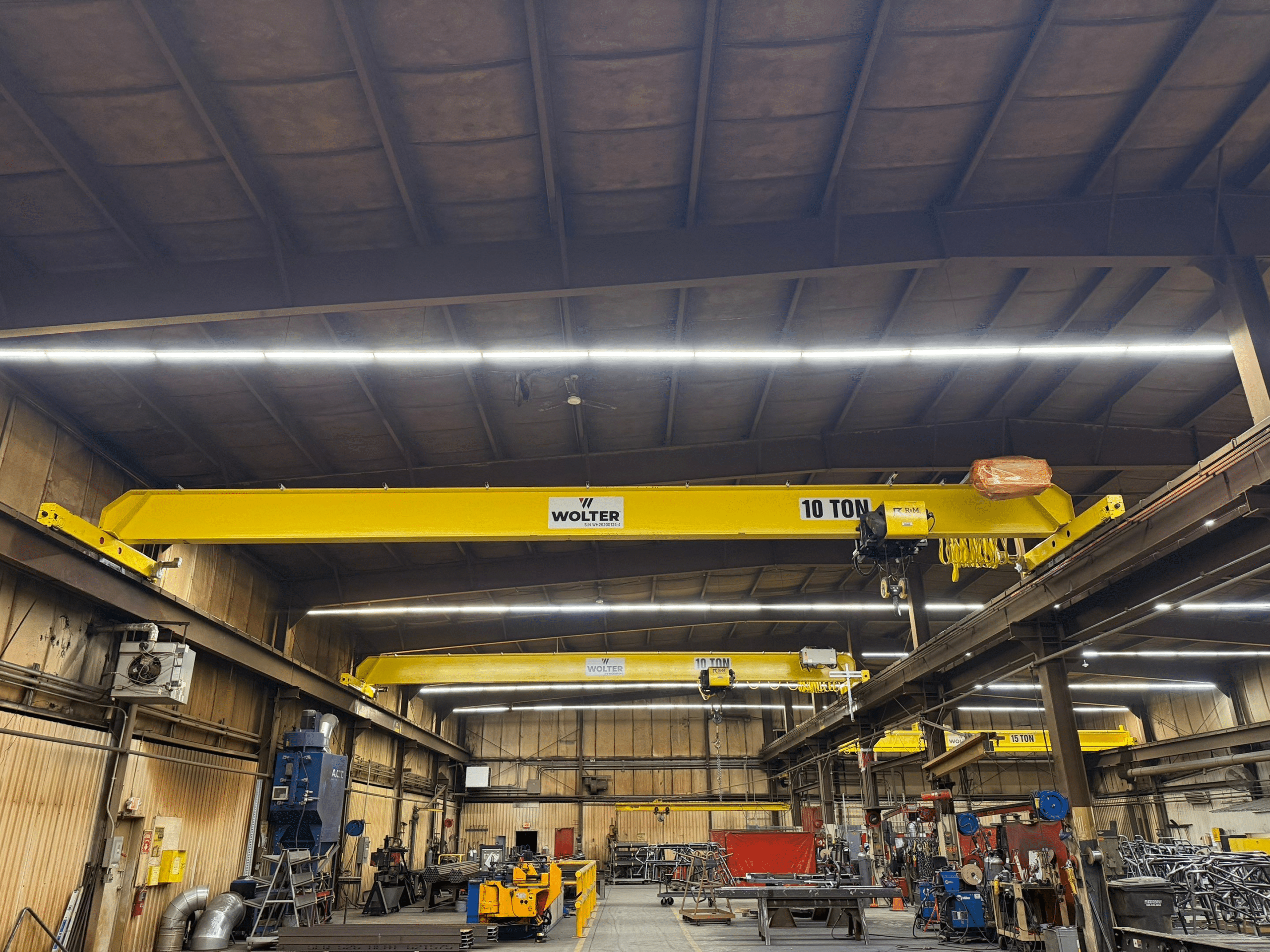
Overhead Crane Specification and Quote Guide
A practical buyer guide for gathering the capacity, span, lift height, hook coverage, runway, controls, and installation details needed for a better overhead crane quote.
A Crane Quote Needs More Than Capacity
A strong overhead crane quote starts with clear lift requirements, but capacity is only the beginning.
IMH uses span, lift height, duty cycle, hook coverage, runway conditions, controls, building information, and installation details to move from idea to buildable scope.
Quote Mistakes To Avoid
Capacity Only
A crane with the right capacity can still be wrong if coverage, runway, or controls do not fit.
Late Building Review
Existing steel, foundations, and clearances can change the crane approach.
Ignoring Installation
Rigging access, shutdown windows, and electrical coordination can affect cost and schedule.
How To Speed Up The Quote Process
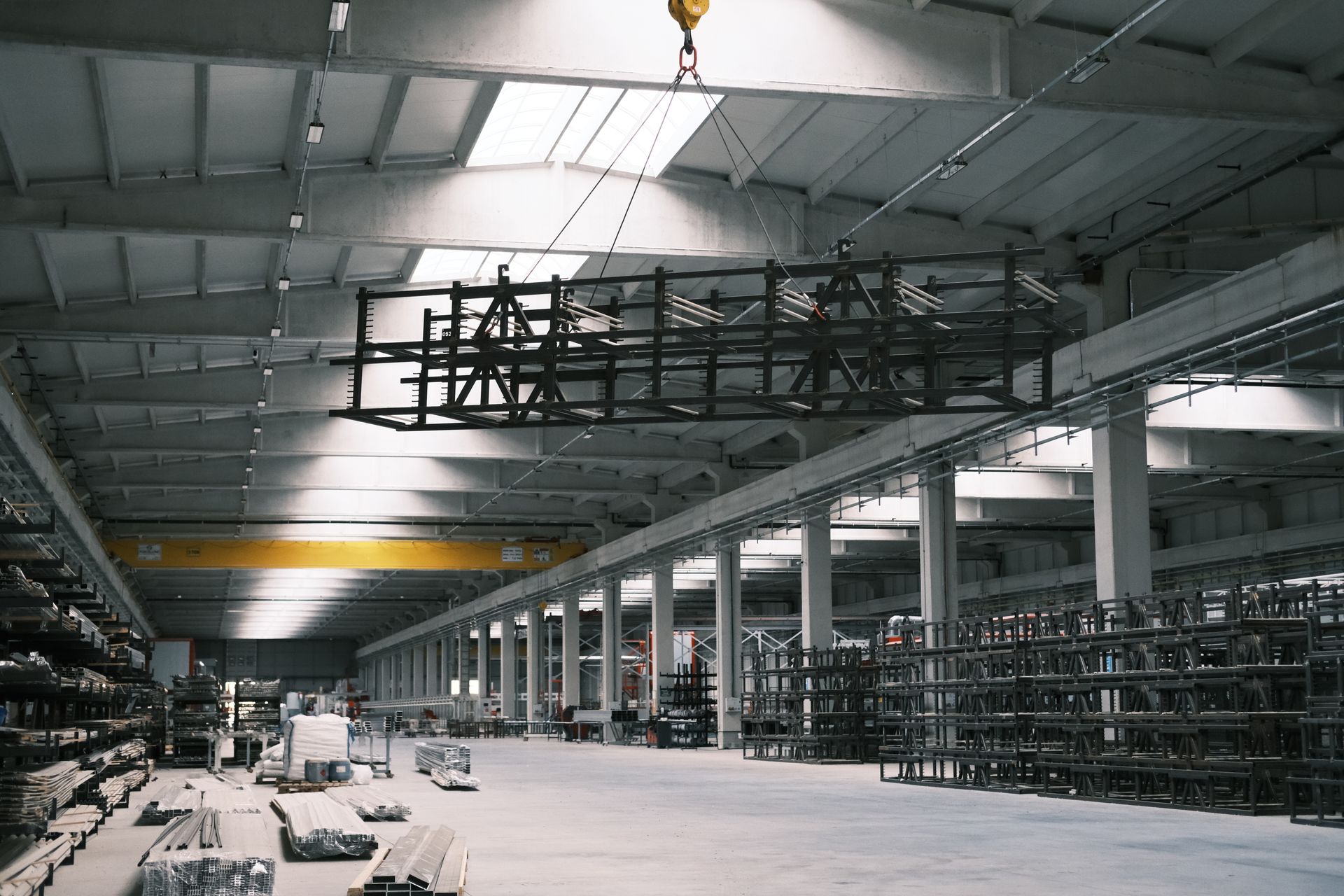
Mark the desired coverage area on a sketch or floor plan. Take photos of the bay, columns, ceiling steel, existing equipment, electrical area, and access doors.
If a project has a deadline, share it early because lead times, installation windows, building review, and power coordination can drive the schedule.
Start With A Buildable Plan
Before budget, downtime, or engineering time is committed, the right project details need to be clear. IMH connects the desired outcome with the field conditions that decide whether the system can be installed cleanly and perform reliably after startup.
That means collecting photos, drawings, measurements, production goals, safety requirements, shutdown limits, and maintenance concerns early. It also means explaining tradeoffs in plain language: what should be engineered now, what can be phased later, what needs structural review, and what information is still missing before a final recommendation is responsible.
Crane Quote Checklist
Use this checklist before requesting pricing so IMH can respond with a more realistic path.
| Required detail | How to think about it |
|---|---|
| Maximum load weight | Include the heaviest load plus below-the-hook devices, fixtures, magnets, grabs, or lifting beams if applicable. |
| Span | Measure the distance the bridge must cover across the work area. |
| Runway length | Identify the length of travel needed to reach required work zones. |
| Lift height | Define how high the hook must raise the load and what clearance is available. |
| Duty cycle | Estimate how often the crane will lift and whether it is production, maintenance, or high-cycle use. |
| Controls | Decide whether pendant, radio, two-speed, variable speed, or special control features are needed. |
| Electrification | Identify power source, conductor bar or festoon preference, disconnect locations, and bridge travel needs. |
| Building information | Provide drawings, bay dimensions, photos, column spacing, known structural limits, and runway details if they exist. |
Questions To Answer First
These questions help IMH understand the work behind the lift.
Do Not Leave Support Steel Out Of The Quote
Support steel is often where a low-detail quote and a strong long-term system separate. A strong proposal clarifies whether the structure preserves access, minimizes unnecessary obstacles, installs cleanly, and can support future changes.
IMH reviews floor movement, equipment paths, access doors, maintenance zones, and future expansion before treating the support layout as settled. The structure is part of the system’s value, not just a line item under the crane or conveyor.
The Work IMH Is Built Around
IMH Systems is focused on engineered movement overhead, reliable lifting, and field execution inside real manufacturing plants. Overhead conveyors, bridge cranes, and service or installation work remain the center of that story, while secondary equipment is included only where it helps solve the larger project.
Buyers get practical answers instead of generic product language: what details matter, what decisions affect the installed system, what tradeoffs need review, and when a project is ready for a deeper conversation.
For bridge crane and overhead lifting projects, that means reviewing capacity, span, hook coverage, runway support, lift height, duty cycle, controls, electrification, building structure, access below the crane, and installation phasing before recommending a path.
The result should be a crane system that can be quoted responsibly, installed cleanly, aligned correctly, operated confidently, and serviced after startup.
Crane Quote Guidance Buyers Can Use
Many crane buyers are handed product language before they know what information a strong quote actually requires.
IMH helps buyers gather the details that matter while reinforcing documented crane and material handling work with national credibility rather than a narrow regional footprint.
Better crane inputs create better crane conversations.
Frequently Asked Questions
What is the first detail needed for a crane quote?
Maximum load is the starting point, but span, lift height, runway length, hook coverage, and building conditions are also needed.
What is duty cycle?
Duty cycle describes how often and how intensely the crane will be used.
Do I need building drawings?
They are helpful. Photos, measurements, and a field review can also help start the conversation.
Can IMH help decide between crane types?
Yes. IMH can help compare single-girder, double-girder, underhung, workstation, jib, gantry, and other approaches.
Can IMH quote without a site visit?
IMH may be able to start with photos and measurements, but final recommendations often require field verification.
Ready To Start A Crane Quote?
Send IMH your crane checklist details, photos, building information, and target schedule.