Coating compatibility
Ambient-cure, waterborne, solventborne, and bake-cure products have different handling requirements. Select the coating first, then develop the booth, flash-off, and drying sequence.
Match overspray capture and airflow to the coating, the part, and the application method.
Discuss your finishing line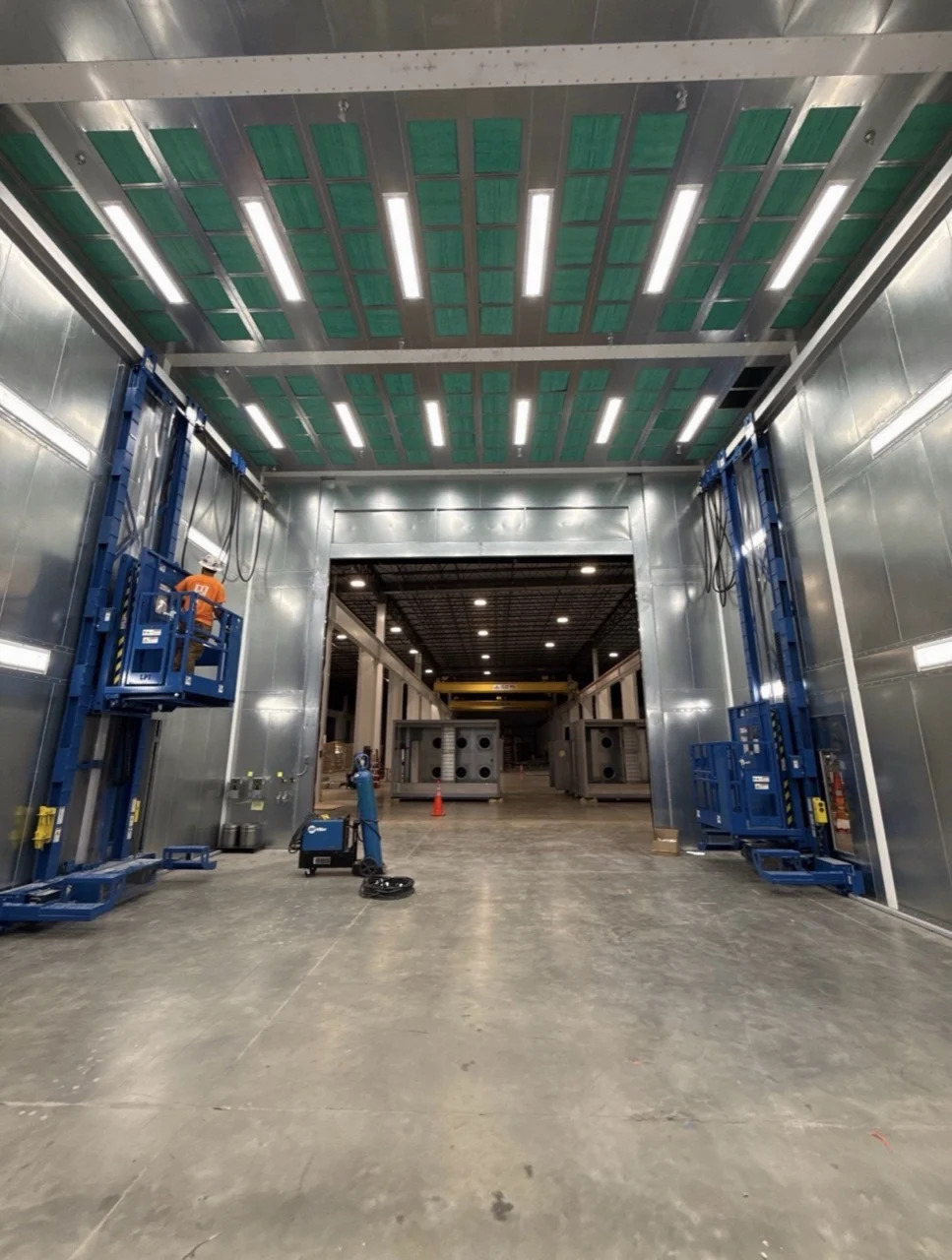 IMH FIELD PHOTOGRAPHY / MATERIAL HANDLING & INSTALLATION
Liquid coatings are a strong option when the specification calls for a particular primer or topcoat, when large or assembled parts cannot follow a conventional powder bake, or when the selected liquid chemistry offers the required appearance and repairability.
Ambient-cure, waterborne, solventborne, and bake-cure products have different handling requirements. Select the coating first, then develop the booth, flash-off, and drying sequence.
Open-face, enclosed, and conveyorized arrangements depend on part size, application equipment, and workflow. Airflow and filtration should support overspray control and finish quality.
Frequent color changes, masking, touch-up, flash-off time, and multiple coats affect throughput. A booth alone does not define the complete production capacity.
Provide the coating data sheets, application method, part envelope, production rate, colors, and required finish. Include supply air, exhaust, filtration, drying or curing, utilities, and equipment approval requirements in the project scope.
Liquid paint is not automatically heat-free: some formulations need baking. Solvents and curing chemistry influence ventilation and equipment selection. Do not substitute a powder booth for a liquid booth without a specific equipment and process evaluation.
Talk with IMH about your parts, finish requirements, equipment interfaces, conveyor route, support structure, and installation scope.
Start a project conversationTechnical background: PPG: electrocoating · Despatch: powder cure · PowderX: booth processes. Equipment and coating requirements are confirmed during project development.