Spray washers
Useful for conveyorized parts with surfaces the spray pattern can reach. Nozzle layout, pressure, chemistry, and dwell time must match the soils and part geometry.
Remove process soils and prepare the surface before the coating is applied.
Discuss your finishing line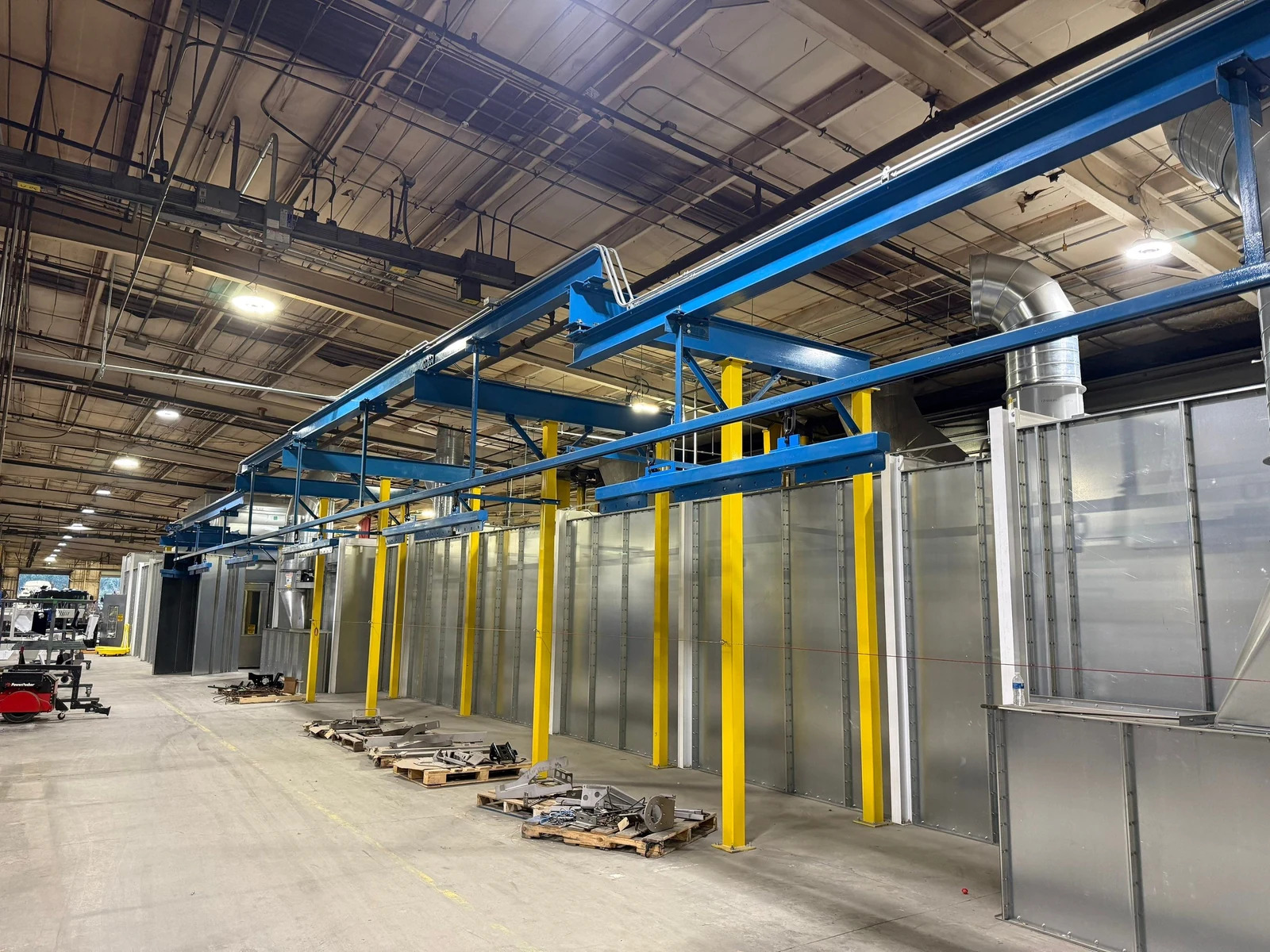 IMH FIELD PHOTOGRAPHY / MATERIAL HANDLING & INSTALLATION
Oil, coolant, shop dirt, and other contamination can interrupt coating adhesion. A washer provides a controlled cleaning and rinsing sequence; a compatible conversion pretreatment can also improve the performance of the complete coating system.
Useful for conveyorized parts with surfaces the spray pattern can reach. Nozzle layout, pressure, chemistry, and dwell time must match the soils and part geometry.
Useful when tank processing better fits the geometry or treatment sequence. Check air pockets, drainage, solution carryover, and access to internal passages.
Cleaning, rinsing, conversion treatment, and final water quality follow the substrate and finish requirement. There is no universal stage count.
Define the metal types, incoming soils, corrosion requirement, part drainage, production rate, water quality, and space. Include chemical management, bath heating, filtration, exhaust, and wastewater handling in equipment planning.
A standard cleaning washer is not a substitute for removing heavy rust, mill scale, or existing coatings. Blasting, stripping, or another preparation step may be required. Mixed metals need chemistry selected for all substrates in the load.
Talk with IMH about your parts, finish requirements, equipment interfaces, conveyor route, support structure, and installation scope.
Start a project conversationTechnical background: PPG: electrocoating · Despatch: powder cure · PowderX: booth processes. Equipment and coating requirements are confirmed during project development.