
Dry-off
Select temperature, airflow, and dwell to remove retained moisture. Account for cavities and cool the part as needed before coating.
Separate moisture removal from coating cure, and size the oven around the part—not just the air temperature.
Discuss your finishing line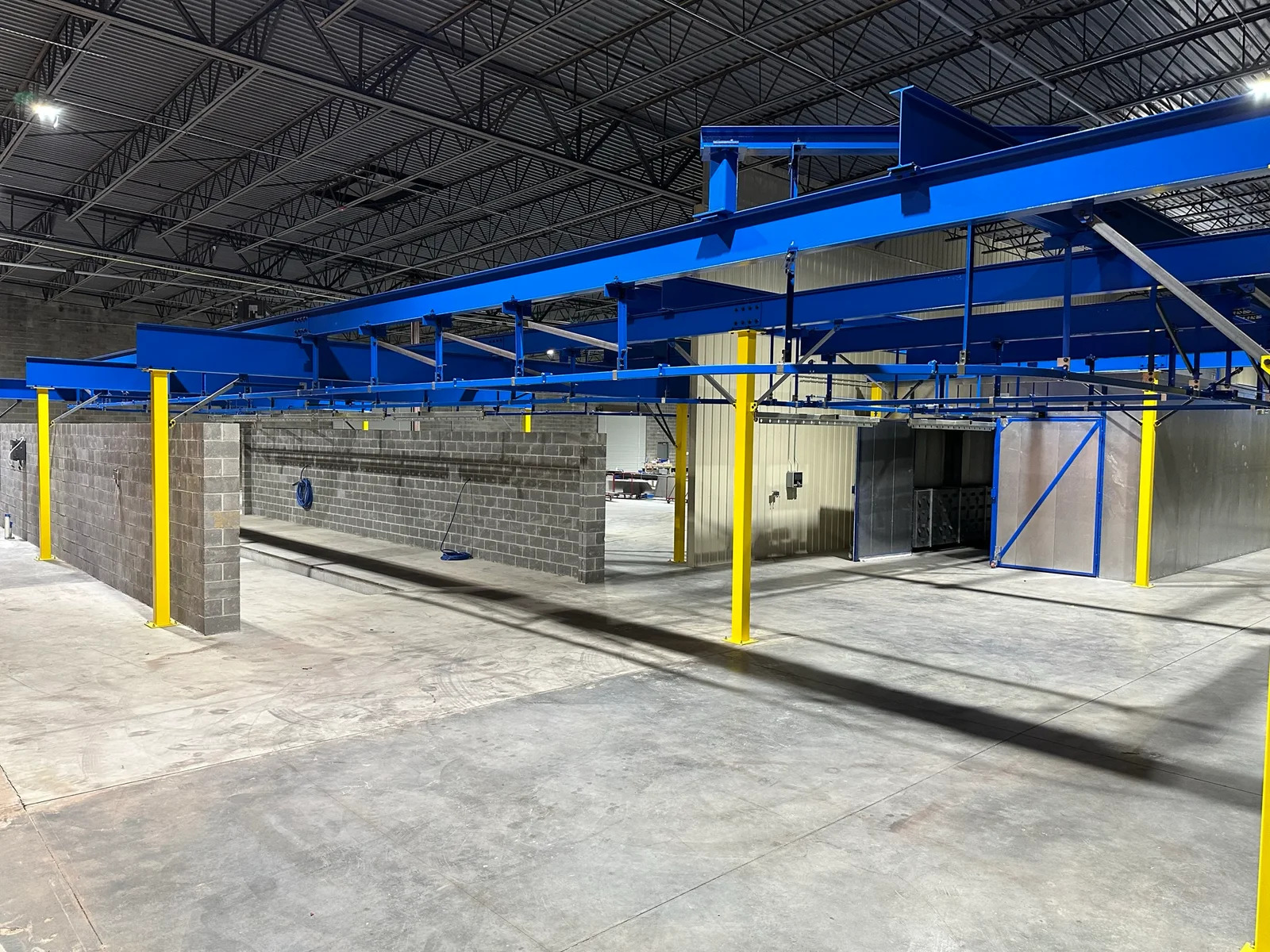 IMH FIELD PHOTOGRAPHY / MATERIAL HANDLING & INSTALLATION
Dry-off ovens remove residual water after aqueous pretreatment. Cure ovens deliver the time and temperature needed to develop the coating’s properties. Liquid paint may need flash-off, drying, or baking depending on its formulation.
Select temperature, airflow, and dwell to remove retained moisture. Account for cavities and cool the part as needed before coating.
For thermoset powder, the cure schedule is based on the part reaching the specified temperature for the specified time. Heavy sections take longer to heat than thin sheet.
Batch ovens suit variable schedules and lower-volume work. Conveyor ovens suit a defined flow; required dwell and conveyor speed determine the heated path length.
Start with the coating supplier’s schedule, part mass and thickness, carrier loading, throughput, utilities, and footprint. Plan temperature profiling, cooling, access, exhaust, and the oven configuration appropriate to the materials and vapors present.
Heat-sensitive seals, assembled electronics, plastics, and other materials need a process-specific temperature review. Mixed thermal masses can require separate recipes or an adjusted production sequence. A dry-off oven and a cure oven are not interchangeable by default.
Talk with IMH about your parts, finish requirements, equipment interfaces, conveyor route, support structure, and installation scope.
Start a project conversationTechnical background: PPG: electrocoating · Despatch: powder cure · PowderX: booth processes. Equipment and coating requirements are confirmed during project development.