Conveyor Transfer Systems
Connect conveyor lines, distribute loads, and reposition products between operations.
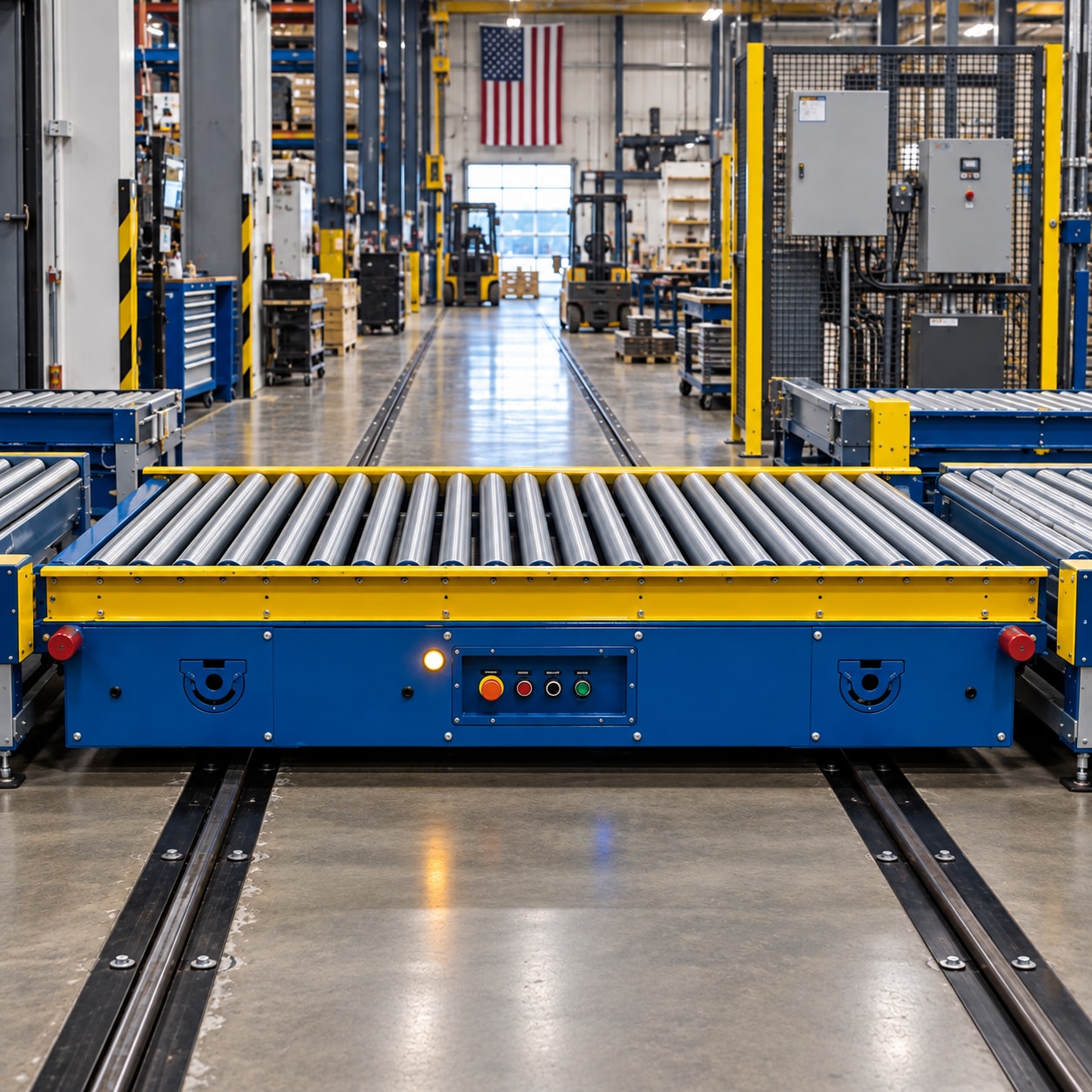
Rail-mounted transfer car · A roller deck connects conveyor lines along the travel path.
Start with the product and its contact surface.
Connect the route, rate, and station timing.
Plan access, controls, and field work together.
The details shape the system.
Make the connection part of the system.
Transfers move loads between conveyor lanes or change their orientation for the next operation. They help connect the route where a straight conveyor alone cannot complete the movement.
Choose the motion the handoff needs.
The incoming and outgoing conveyor elevations, available space, and load support determine the mechanism.
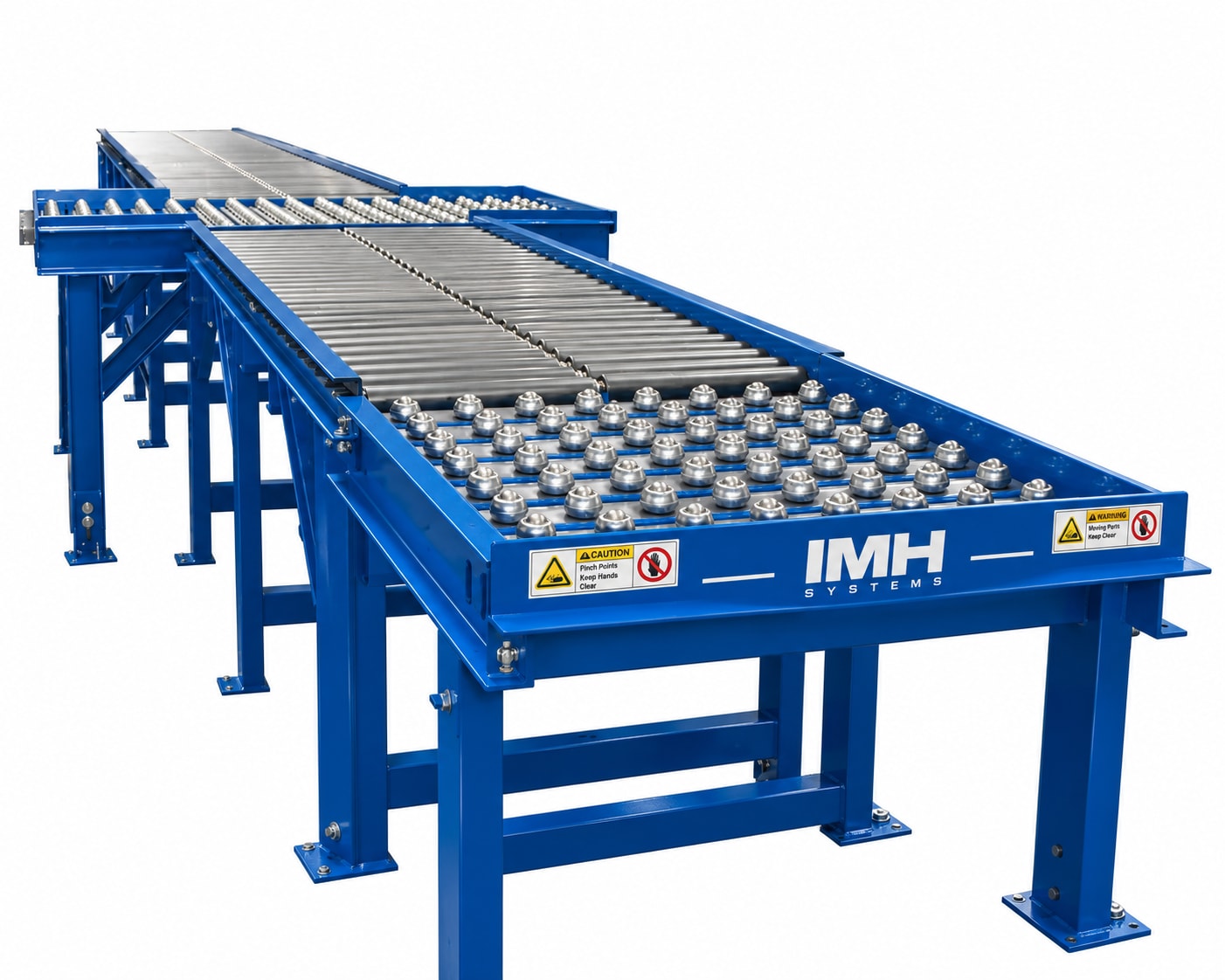
- Ball-transfer tables for multidirectional positioning of suitable flat-bottomed loads.
- Pop-up transfers for perpendicular movement between lanes.
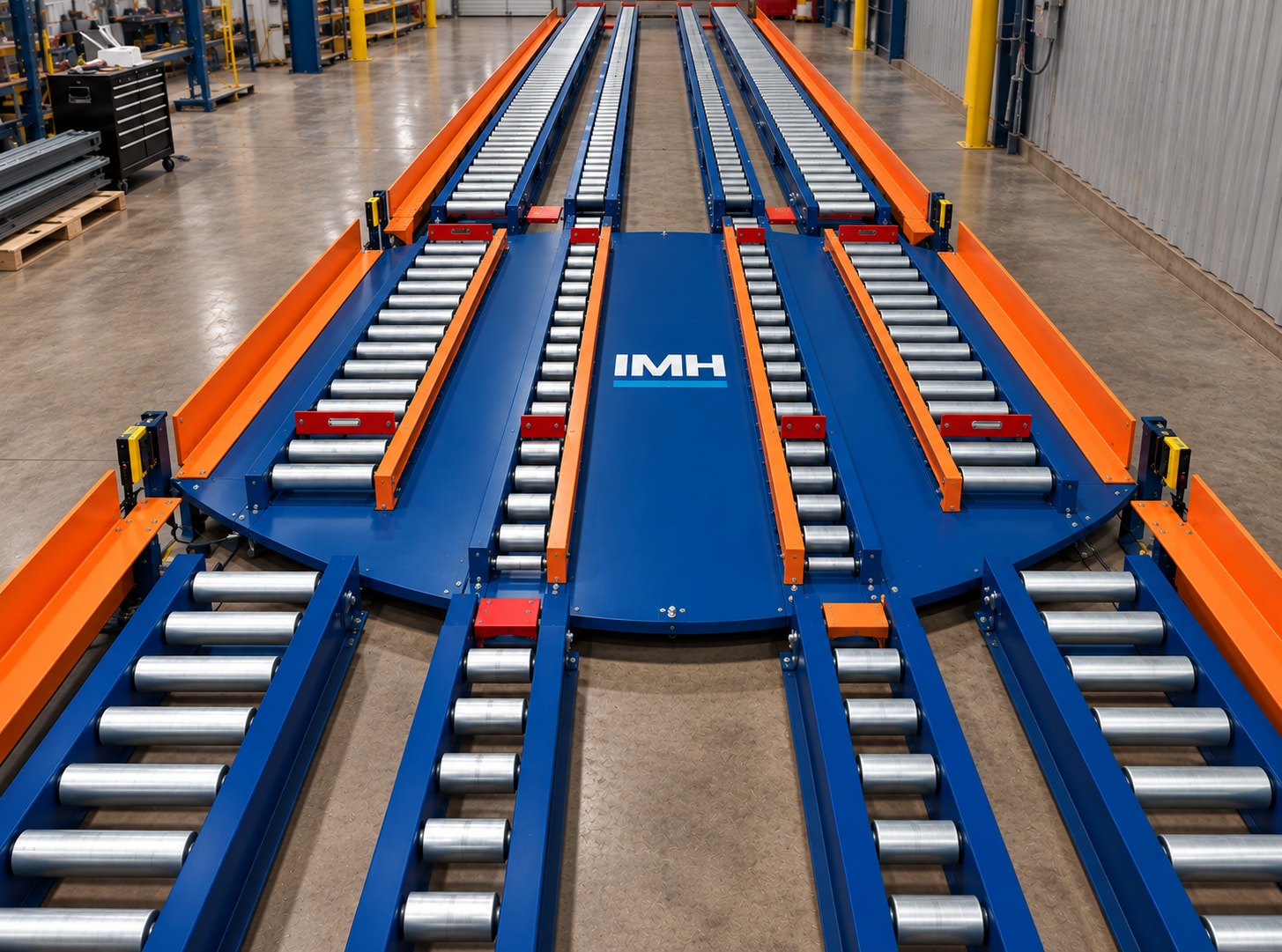
- Turntables when the product needs to rotate.
- Transfer cars or shuttles to move loads between lines or bays.
Direction and orientation are separate decisions.
Changing the direction of travel does not always mean rotating the load. Share both requirements, along with the product base, cycle time, stopping positions, and equipment signals. IMH considers the mechanical handoff and controls together.
Explore the arrangements.
Look closer at the configurations that suit your production.
Plan the movement.
Coordinate the controls.
Starts, stops, accumulation, and transfers need to work with the equipment around them. Plan the operating sequence across floor and overhead conveyors together.
Explore system controlsWhat are you moving next?
Bring the product, production goal, and a rough layout. IMH will help work through the equipment, interfaces, and installation scope.
Discuss your conveyor project Or call (812) 363-1819