
Slat Conveyors
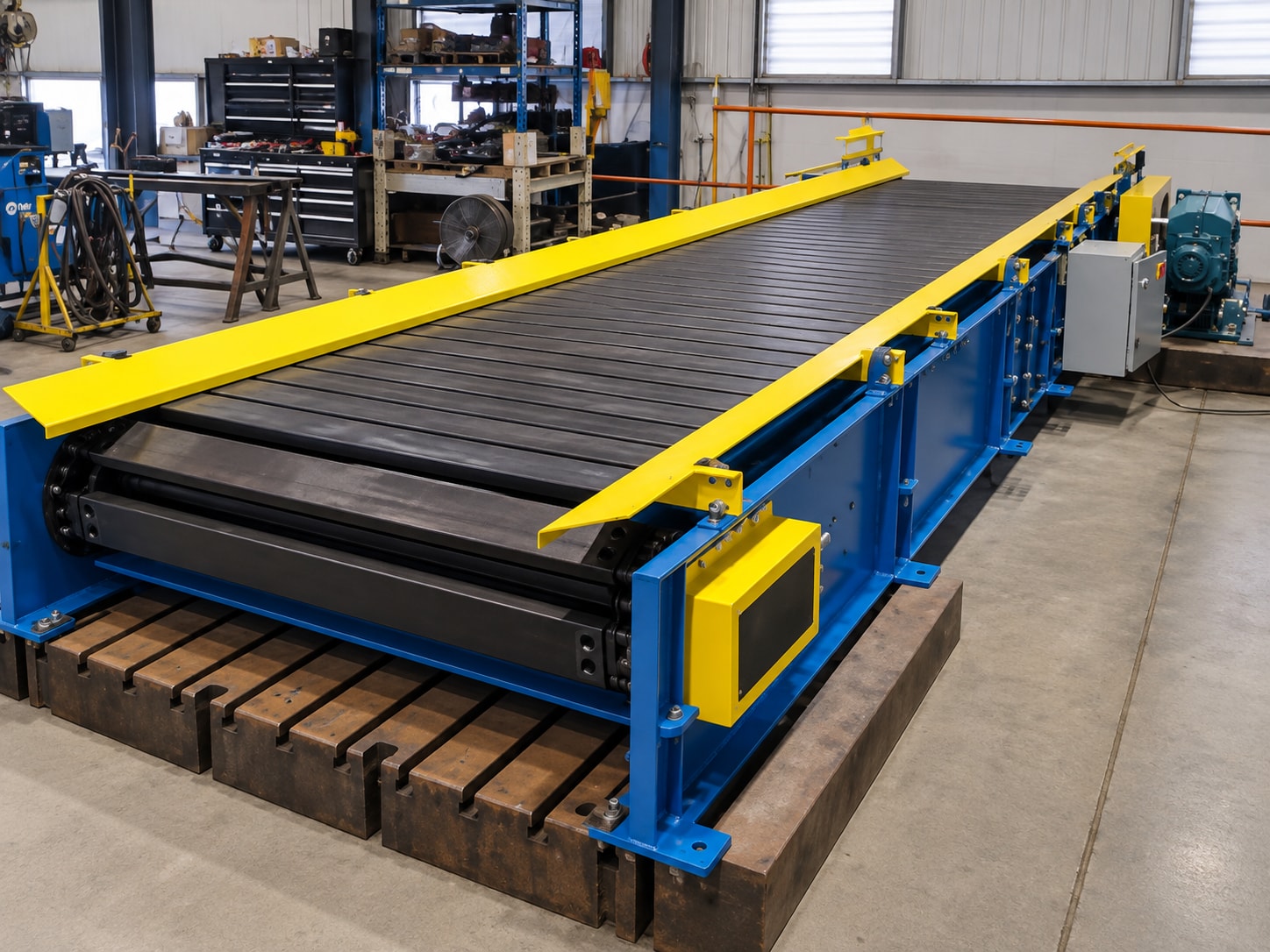
Support irregular components and assembly work on slats attached to chains.
Slat conveyor · Rigid slats form the conveying surface within the blue frame.
Start with the product and its contact surface.
Connect the route, rate, and station timing.
Plan access, controls, and field work together.
The details shape the system.
A work surface that moves with the product.
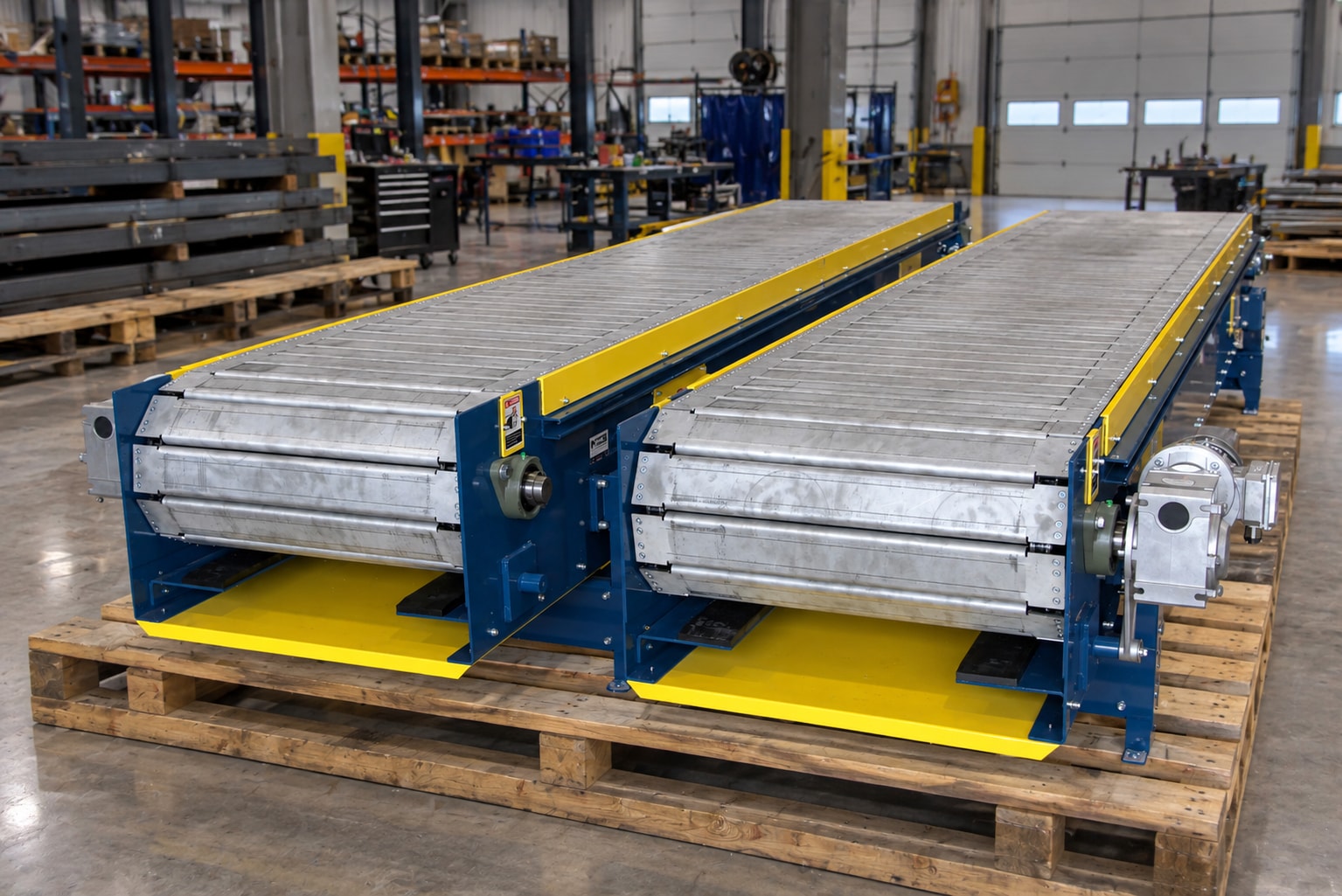
Slat conveyors use rigid slats attached to chains to support parts through a production sequence. They are useful where the product needs a firm conveying surface, controlled orientation, or dedicated fixtures.
Select the surface and movement together.
Slat construction, contact materials, and reinforcement depend on the load and process. Continuous and indexed movement can be considered around workstation timing.
- Steel, wood, or plastic contact surfaces selected for the application.
- Fixtures or guides to locate parts during transport.
- Workstation access and clearances along the conveyor route.
- Temperature, surface protection, and wear requirements.
Bring the contact points into the discussion.
Share the product footprint, weight distribution, handling orientation, and work performed at each station. Accumulation and stopping requirements need specific review; they are not inherent to every slat conveyor.
Explore the arrangements.
Look closer at the configurations that suit your production.
Plan the movement.
Coordinate the controls.
Starts, stops, accumulation, and transfers need to work with the equipment around them. Plan the operating sequence across floor and overhead conveyors together.
Explore system controlsWhat are you moving next?
Bring the product, production goal, and a rough layout. IMH will help work through the equipment, interfaces, and installation scope.
Discuss your conveyor project Or call (812) 363-1819