
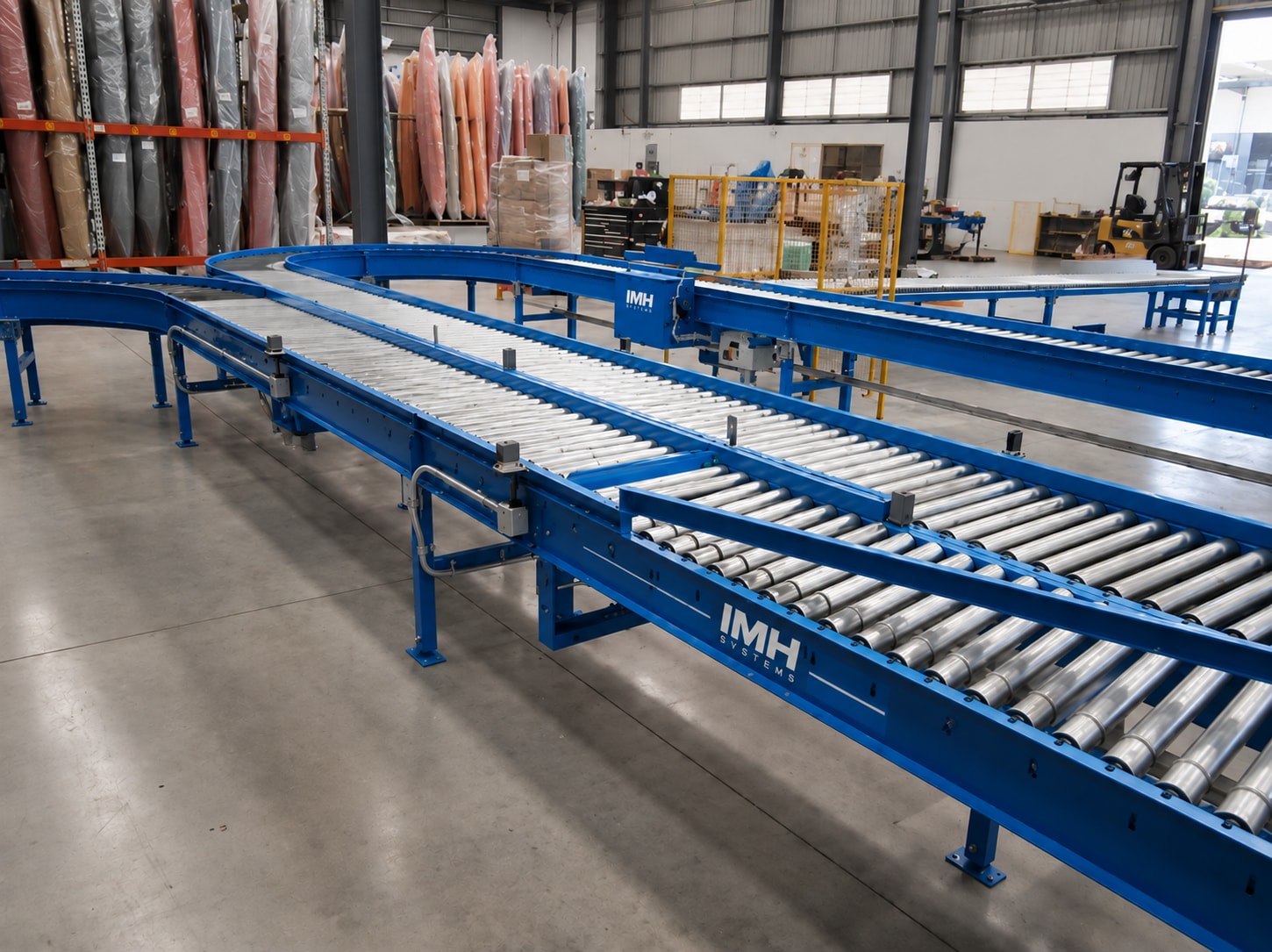
Live Roller Conveyors
Move suitable cartons, totes, pallets, and fixtures on powered rollers.
Live roller conveyors · Straight runs and curved sections connect the floor layout.
Start with the product and its contact surface.
Connect the route, rate, and station timing.
Plan access, controls, and field work together.
The details shape the system.
Powered rollers carry the load.
Live roller conveyors, also called powered roller conveyors, move unit loads on a series of driven rollers. They connect production, inspection, staging, and shipping operations. The product needs a base that stays supported across the selected roller spacing.
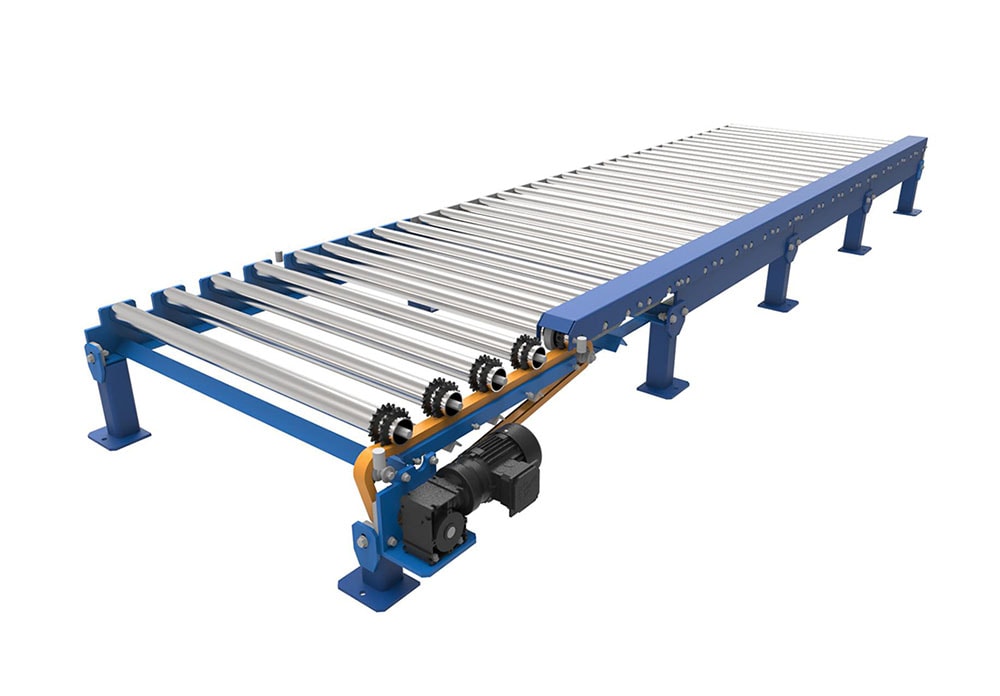
Choose the drive and zone behavior.
Chain-driven live roller (CDLR), belt-driven, and lineshaft arrangements suit different loads and operating conditions. In CDLR, chains drive the rollers; the rollers support the product.
- Review pallet runners and underside geometry before selecting roller spacing.
- Specify accumulation zones and allowable contact between loads.
- Coordinate sensors, stops, and transfers with upstream and downstream equipment.
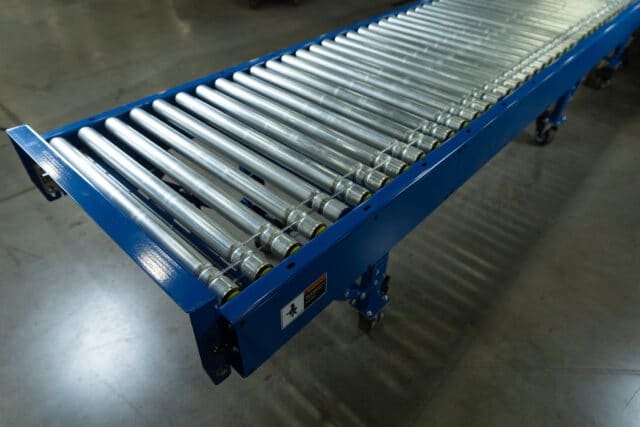
Plan what happens when the line stops.
Accumulation behavior must be designed into the system; powered rollers alone do not provide zero-pressure accumulation. Bring the load range, rate, stopping positions, and release sequence to the planning conversation.
Explore the arrangements.
Look closer at the configurations that suit your production.
Plan the movement.
Coordinate the controls.
Starts, stops, accumulation, and transfers need to work with the equipment around them. Plan the operating sequence across floor and overhead conveyors together.
Explore system controlsWhat are you moving next?
Bring the product, production goal, and a rough layout. IMH will help work through the equipment, interfaces, and installation scope.
Discuss your conveyor project Or call (812) 363-1819